




Will Donald Trump win Nobel Peace Prize 2026? Key facts and timeline
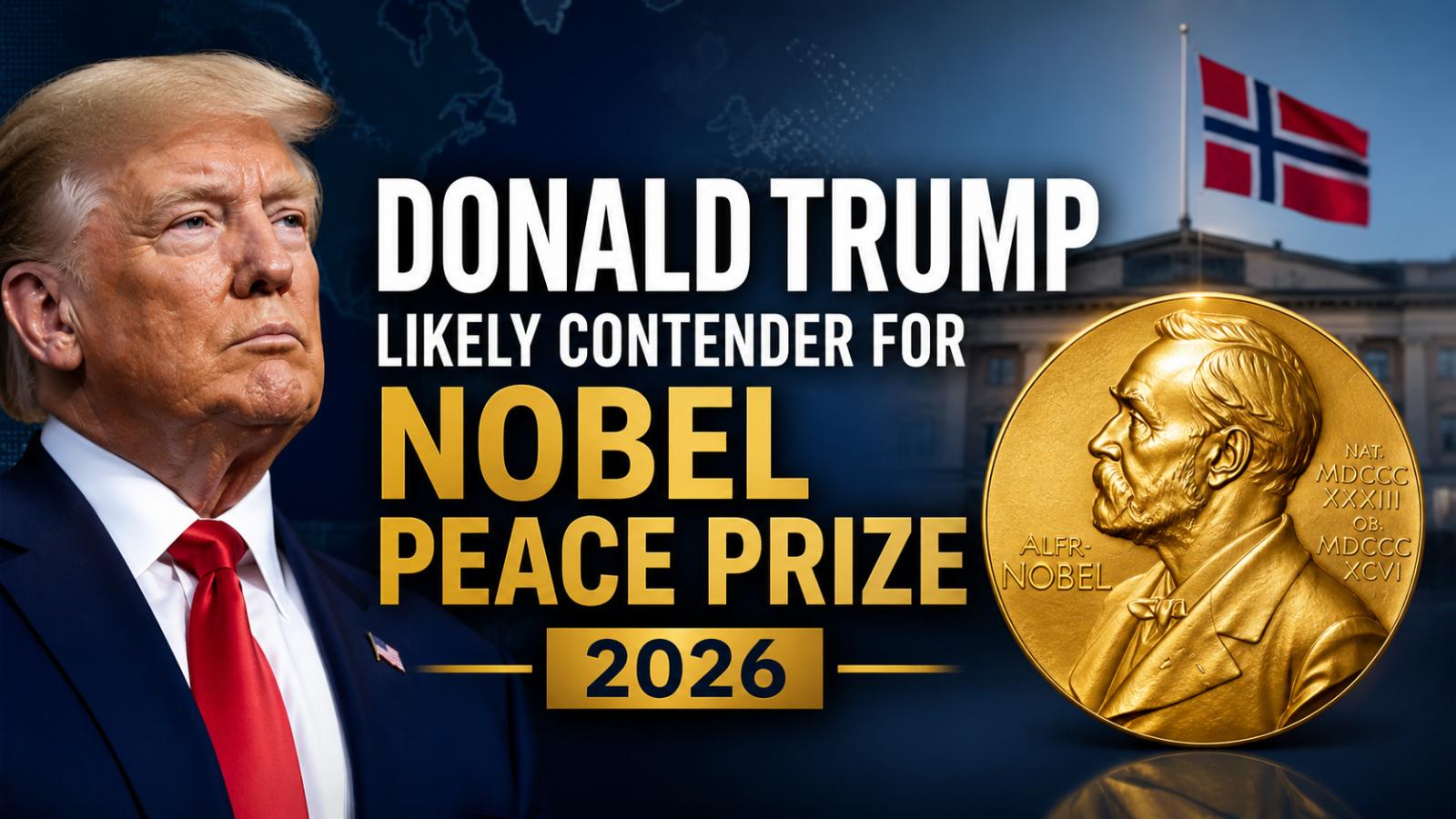
Nobel Peace Prize 2026: Trump emerges as likely contender Donald Trump is being seen as a likely contender for the Nobel Peace Prize 2026, with 287 candidates under review, but the final list remains strictly confidential. Kristian Berg Harpviken, secretary of the Norwegian Nobel Committee, confirmed that the total nominations include 208 individuals and 79 organisations, highlighting strong global participation despite ongoing conf
Will Donald Trump win Nobel Peace Prize 2026? Key facts and timeline
Nobel Peace Prize 2026: Trump emerges as likely contender Donald Trump is being seen as a likely contender for the Nobel Peace Prize 2026, with 287 candidates under review, but the final list remains strictly confidential. Kristian Berg Harpviken, secretary of the Norwegian Nobel Committee, confirmed that the total nominations include 208 individuals and 79 organisations, highlighting strong global participation despite ongoing conf
Trump Comments on Ukraine and Iran Wars Spark Confusion
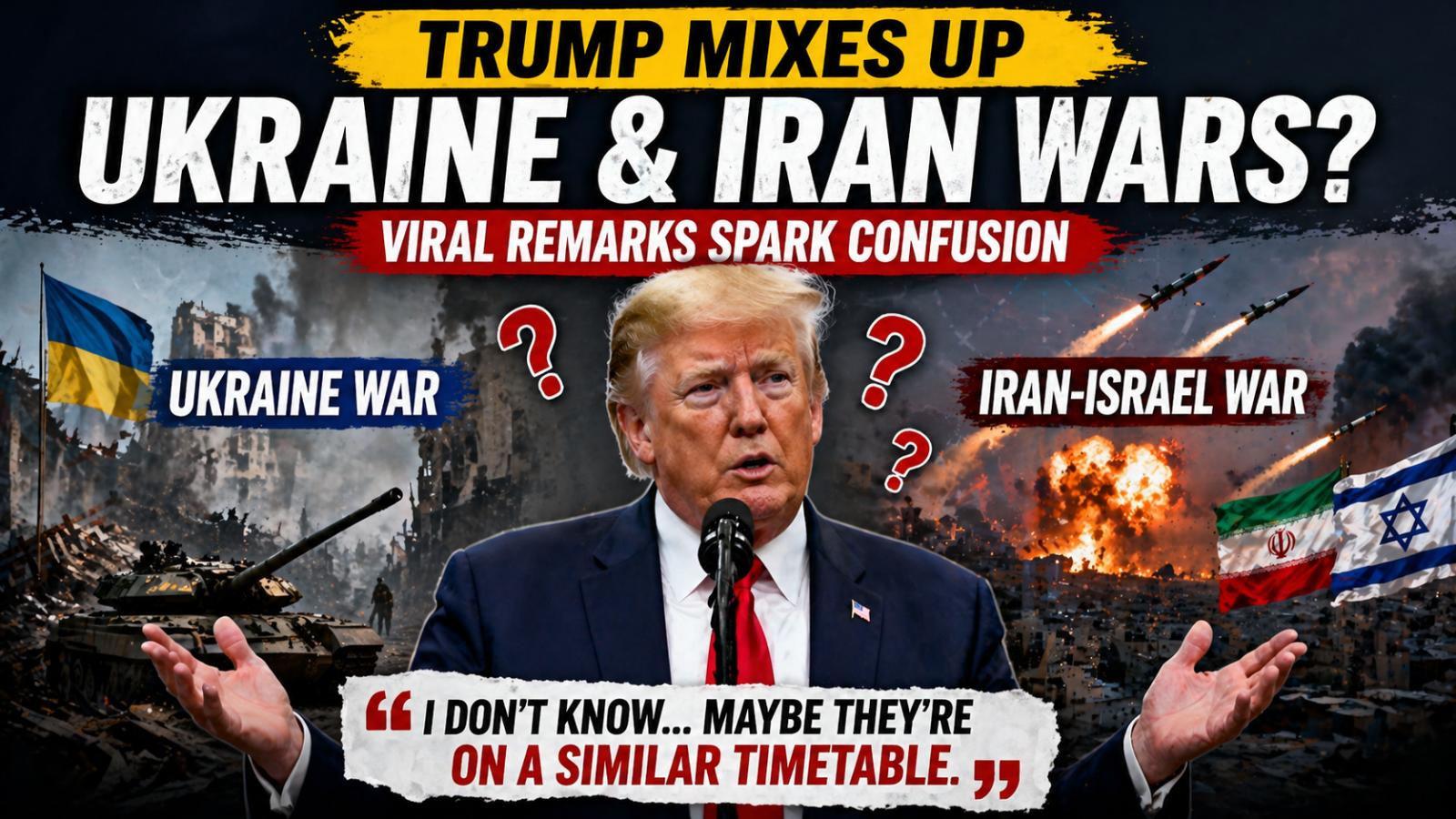
US President Donald Trump drew attention during a recent press interaction after appearing to confuse details while discussing two major international conflicts. The exchange took place as Trump addressed reporters during an event linked to the Artemis II mission crew, where he was asked which conflict might conclude first: the prolonged Russia-Ukraine war or the ongoing tensions involving Iran and Israel. In response, Trump suggested that both situations could follow a similar timeline, stating that he was uncertain which would end sooner. However, his subsequent remarks raised questions as he began describing military conditions that appeared inconsistent or unclear in context. He claimed that Ukraine was militarily defeated, referencing significant naval and air losses, including statements about ships being destroyed and aircraft being eliminated. Trump also cited reductions in missile and drone capabilities, though his comments did not clearly distinguish whether he was referring to Ukraine or Iran at various points. This lack of clarity led to widespread attention, with observers noting the difficulty in separating his analysis of the two conflicts. The Russia-Ukraine war has continued for years with ongoing military engagements, while tensions involving Iran, Israel, and US involvement have added another layer of complexity to global security dynamics. Trump’s remarks came at a time when both conflicts remain active and under close international observation. The moment quickly gained traction due to the ambiguity in the president’s statements, highlighting the challenges of addressing multiple geopolitical crises simultaneously in public forums.
Trump Comments on Ukraine and Iran Wars Spark Confusion
US President Donald Trump drew attention during a recent press interaction after appearing to confuse details while discussing two major international conflicts. The exchange took place as Trump addressed reporters during an event linked to the Artemis II mission crew, where he was asked which conflict might conclude first: the prolonged Russia-Ukraine war or the ongoing tensions involving Iran and Israel. In response, Trump suggested that both situations could follow a similar timeline, stating that he was uncertain which would end sooner. However, his subsequent remarks raised questions as he began describing military conditions that appeared inconsistent or unclear in context. He claimed that Ukraine was militarily defeated, referencing significant naval and air losses, including statements about ships being destroyed and aircraft being eliminated. Trump also cited reductions in missile and drone capabilities, though his comments did not clearly distinguish whether he was referring to Ukraine or Iran at various points. This lack of clarity led to widespread attention, with observers noting the difficulty in separating his analysis of the two conflicts. The Russia-Ukraine war has continued for years with ongoing military engagements, while tensions involving Iran, Israel, and US involvement have added another layer of complexity to global security dynamics. Trump’s remarks came at a time when both conflicts remain active and under close international observation. The moment quickly gained traction due to the ambiguity in the president’s statements, highlighting the challenges of addressing multiple geopolitical crises simultaneously in public forums.
Trump Renames Strait of Hormuz Amid Rising US-Iran Tensions
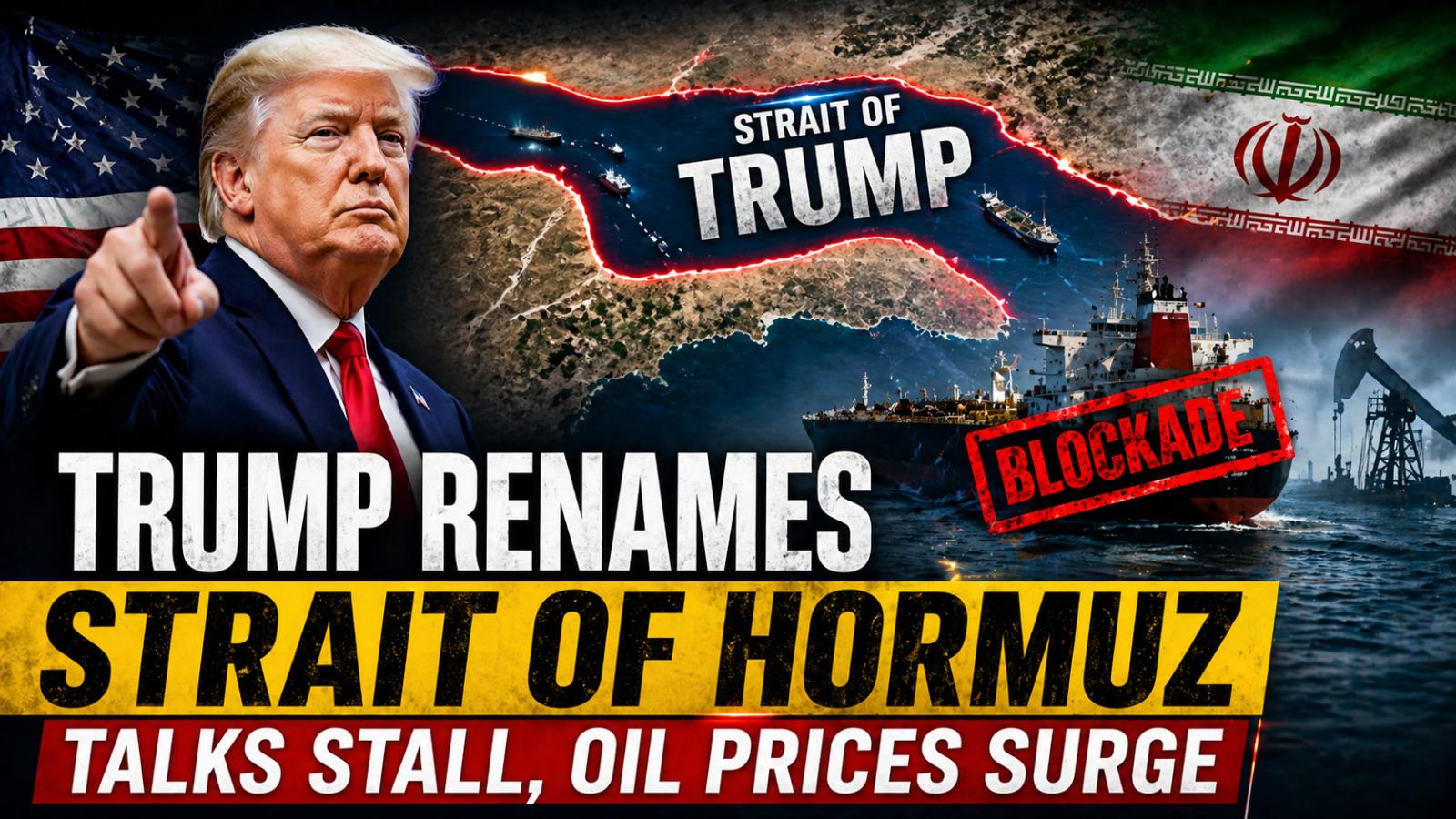
US President Donald Trump has drawn attention after sharing a modified map referring to the Strait of Hormuz as the “Strait of Trump,” a move that comes amid escalating tensions and stalled negotiations with Iran. The strategic waterway remains a focal point in the ongoing standoff, with both sides maintaining a blockade despite a previously agreed ceasefire. Trump indicated that discussions to end the conflict are continuing remotely, describing them as telephonic due to logistical challenges. At the same time, Iran has attempted to revive dialogue by sending a proposal through Pakistan, facilitated by Foreign Minister Abbas Araghchi. However, indications suggest that the US administration is dissatisfied with the terms and is unlikely to accept the framework presented. The proposal reportedly outlined a three-stage approach, beginning with a complete cessation of hostilities, followed by lifting the naval blockade and restoring maritime traffic through the Strait of Hormuz. The final stage involved renewed negotiations over Iran’s nuclear program. Despite these efforts, talks remain at an impasse, with both sides maintaining firm positions. Trump defended the blockade, describing it as effective and emphasizing its economic impact on Iran. He stated that the pressure strategy would continue until Iran concedes. Meanwhile, energy markets reacted sharply, with Brent crude prices rising significantly, reflecting concerns over supply disruptions linked to the strategic route. The Strait of Hormuz remains critical to global oil flows, and its continued closure by both US and Iranian forces underscores the fragile state of the ceasefire. Diplomatic efforts have yet to regain momentum, leaving the situation uncertain as geopolitical and economic pressures continue to build.
Trump Renames Strait of Hormuz Amid Rising US-Iran Tensions
US President Donald Trump has drawn attention after sharing a modified map referring to the Strait of Hormuz as the “Strait of Trump,” a move that comes amid escalating tensions and stalled negotiations with Iran. The strategic waterway remains a focal point in the ongoing standoff, with both sides maintaining a blockade despite a previously agreed ceasefire. Trump indicated that discussions to end the conflict are continuing remotely, describing them as telephonic due to logistical challenges. At the same time, Iran has attempted to revive dialogue by sending a proposal through Pakistan, facilitated by Foreign Minister Abbas Araghchi. However, indications suggest that the US administration is dissatisfied with the terms and is unlikely to accept the framework presented. The proposal reportedly outlined a three-stage approach, beginning with a complete cessation of hostilities, followed by lifting the naval blockade and restoring maritime traffic through the Strait of Hormuz. The final stage involved renewed negotiations over Iran’s nuclear program. Despite these efforts, talks remain at an impasse, with both sides maintaining firm positions. Trump defended the blockade, describing it as effective and emphasizing its economic impact on Iran. He stated that the pressure strategy would continue until Iran concedes. Meanwhile, energy markets reacted sharply, with Brent crude prices rising significantly, reflecting concerns over supply disruptions linked to the strategic route. The Strait of Hormuz remains critical to global oil flows, and its continued closure by both US and Iranian forces underscores the fragile state of the ceasefire. Diplomatic efforts have yet to regain momentum, leaving the situation uncertain as geopolitical and economic pressures continue to build.
Iran Pushes Back on Trump’s Oil Warnings, Defends Export Capacity
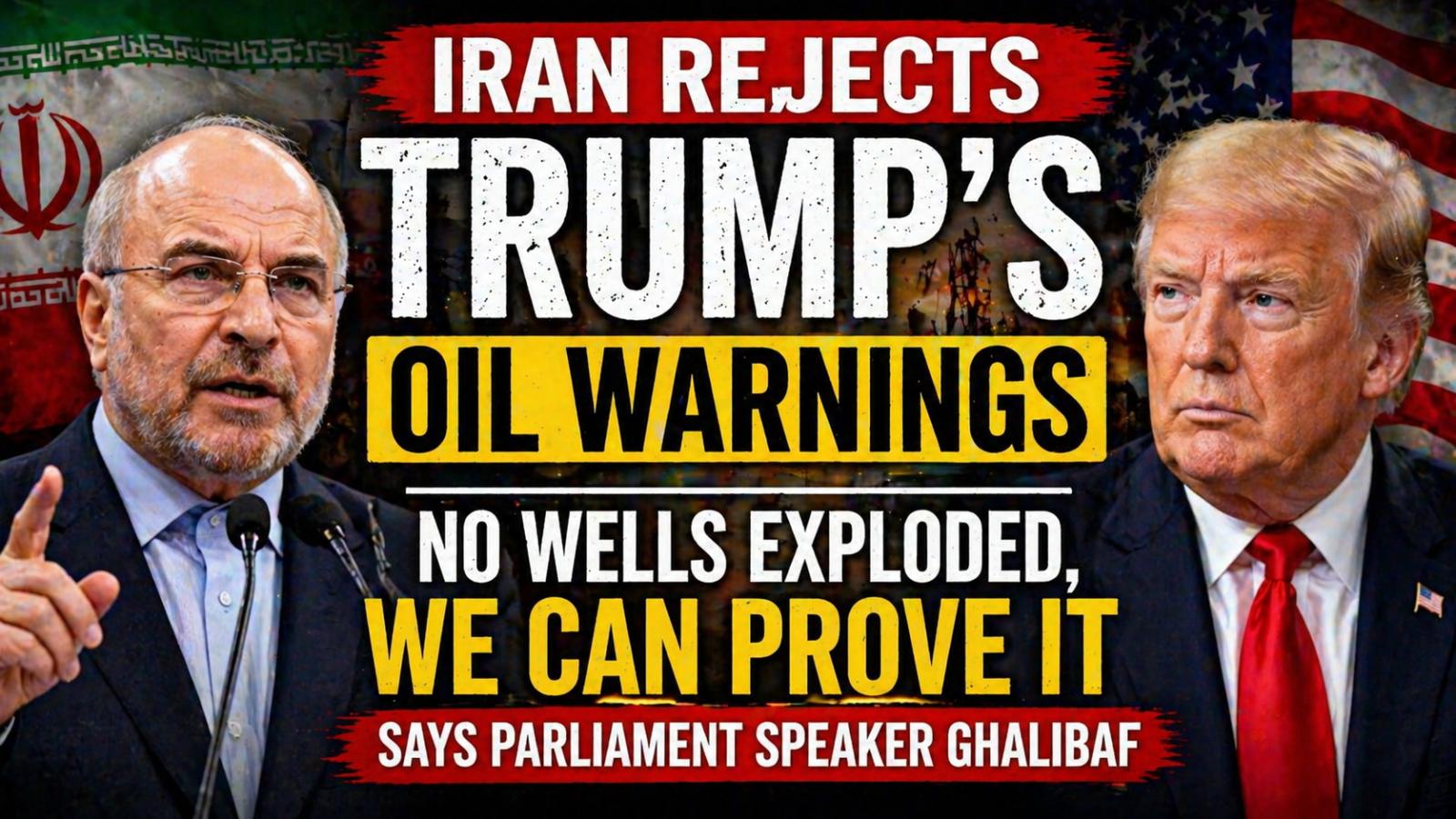
The Speaker of Iran’s Parliament, Mohammad Bagher Ghalibaf, has rejected recent claims made by US President Donald Trump regarding the stability of Iran’s oil infrastructure. Responding to warnings that Iran’s oil facilities were nearing critical failure, Ghalibaf dismissed the remarks as inaccurate and politically motivated, stating that conditions on the ground do not support such assessments. He emphasized that several days have passed without any reported incidents and suggested that extended monitoring could further demonstrate the resilience of Iran’s oil sector. Ghalibaf also criticized the broader economic reasoning behind US policy measures, arguing that sanctions-based strategies have produced unintended consequences. He stated that approaches centered on economic pressure have contributed to rising oil prices rather than stabilizing global markets. According to his remarks, such policies reflect not only flawed strategies but also a deeper issue in decision-making. The exchange follows recent developments in US policy toward Iranian oil exports. Washington moved to temporarily ease restrictions on a significant volume of Iranian crude already stored on tankers, allowing limited transactions involving existing shipments. US officials described the move as a calculated effort to influence oil markets while maintaining restrictions on new production or expanded trade. Earlier, Trump had suggested that storage limitations and sanctions pressure could lead to disruptions in Iran’s oil infrastructure. However, Iranian officials have consistently maintained that both land-based and offshore storage capacities remain sufficient to manage production and exports. They argue that the country’s energy sector continues to operate within manageable limits despite ongoing sanctions. The situation highlights continuing tensions between Tehran and Washington over energy policy and economic measures. As both sides present differing assessments, the broader impact on global oil markets and geopolitical stability remains closely watched.
Iran Pushes Back on Trump’s Oil Warnings, Defends Export Capacity
The Speaker of Iran’s Parliament, Mohammad Bagher Ghalibaf, has rejected recent claims made by US President Donald Trump regarding the stability of Iran’s oil infrastructure. Responding to warnings that Iran’s oil facilities were nearing critical failure, Ghalibaf dismissed the remarks as inaccurate and politically motivated, stating that conditions on the ground do not support such assessments. He emphasized that several days have passed without any reported incidents and suggested that extended monitoring could further demonstrate the resilience of Iran’s oil sector. Ghalibaf also criticized the broader economic reasoning behind US policy measures, arguing that sanctions-based strategies have produced unintended consequences. He stated that approaches centered on economic pressure have contributed to rising oil prices rather than stabilizing global markets. According to his remarks, such policies reflect not only flawed strategies but also a deeper issue in decision-making. The exchange follows recent developments in US policy toward Iranian oil exports. Washington moved to temporarily ease restrictions on a significant volume of Iranian crude already stored on tankers, allowing limited transactions involving existing shipments. US officials described the move as a calculated effort to influence oil markets while maintaining restrictions on new production or expanded trade. Earlier, Trump had suggested that storage limitations and sanctions pressure could lead to disruptions in Iran’s oil infrastructure. However, Iranian officials have consistently maintained that both land-based and offshore storage capacities remain sufficient to manage production and exports. They argue that the country’s energy sector continues to operate within manageable limits despite ongoing sanctions. The situation highlights continuing tensions between Tehran and Washington over energy policy and economic measures. As both sides present differing assessments, the broader impact on global oil markets and geopolitical stability remains closely watched.
Putin Proposes Ukraine Ceasefire as He Speaks With Trump on Global Crises
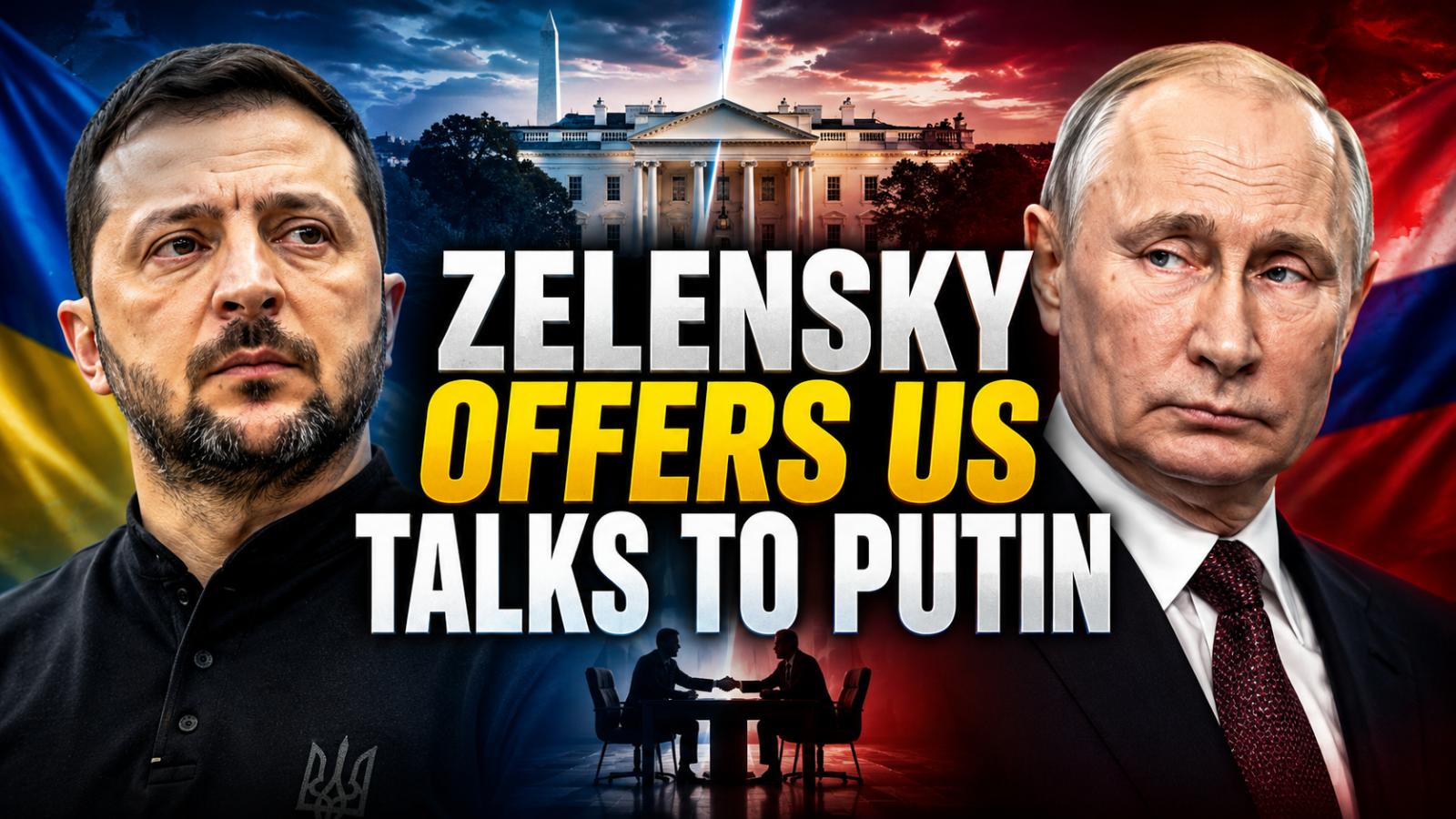
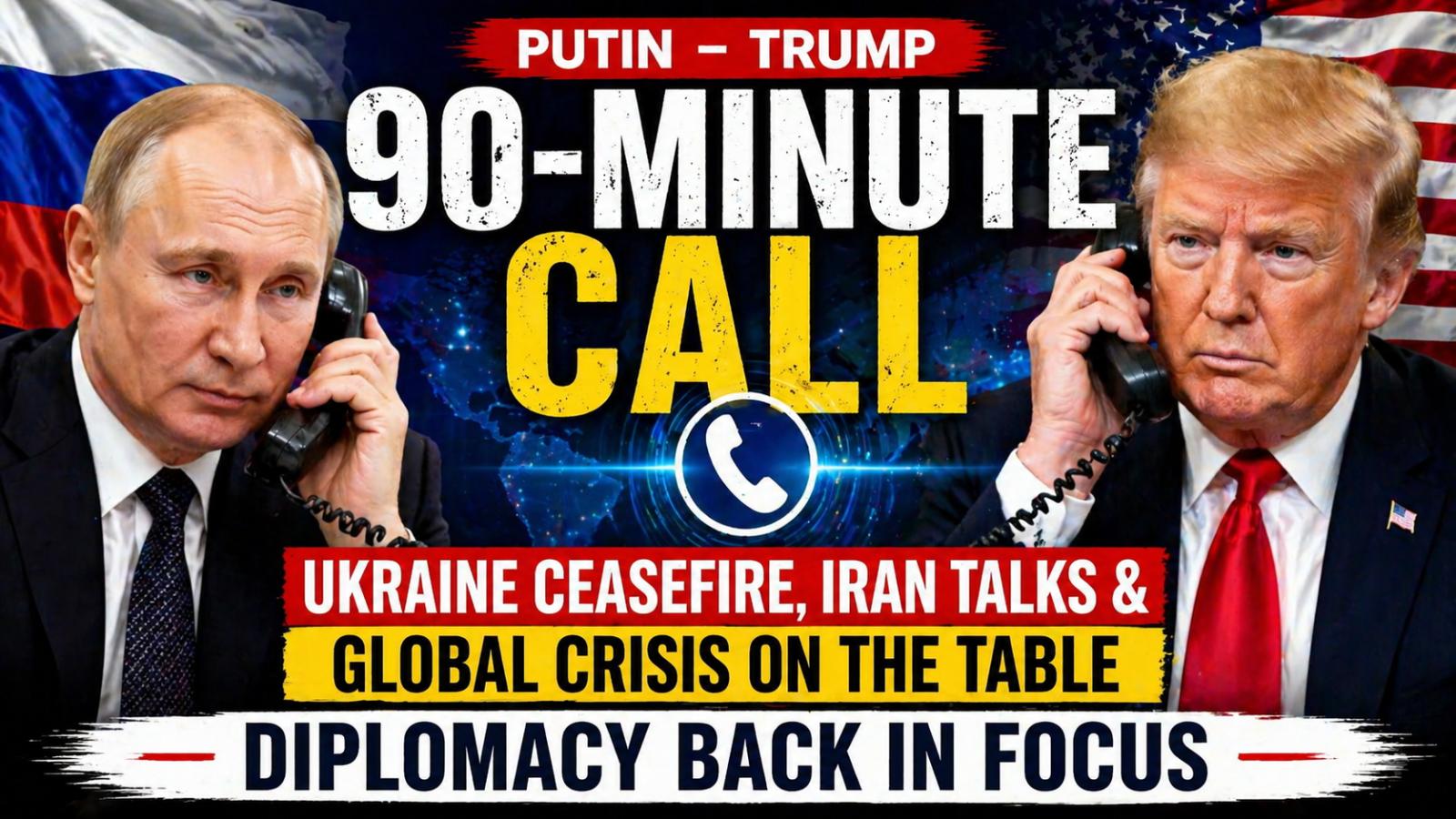
Russian President Vladimir Putin and US President Donald Trump held a phone call on Wednesday, discussing key global issues including the ongoing Ukraine war and rising tensions in the Middle East. The conversation, which lasted approximately 90 minutes, marked their first known direct contact since March and reflected continued diplomatic engagement between the two countries. According to Kremlin aide Yuri Ushakov, both leaders focused extensively on developments in the Middle East, particularly the situation involving Iran and the broader Persian Gulf region. Ushakov said Putin supported Trump’s decision to extend a ceasefire with Iran, noting that such a move could create space for negotiations and contribute to regional stability. The discussion also included specific proposals from Russia regarding Iran, though details were not publicly disclosed. The Ukraine conflict was another central topic of the call. Putin reportedly expressed readiness to declare a temporary ceasefire to coincide with Russia’s Victory Day on May 9, an annual commemoration of the Soviet Union’s victory in World War II. The proposal is seen as a symbolic gesture tied to a major national observance, although its broader implications remain unclear. During the call, Putin also condemned the recent shooting at the White House Correspondents’ Association dinner and conveyed support in response to the incident. Additionally, he extended birthday greetings to Melania Trump and acknowledged her efforts in humanitarian matters, including initiatives aimed at reconnecting families affected by the Russia-Ukraine conflict. Victory Day, observed annually in Moscow with a military parade, will reportedly be scaled back this year due to security concerns, including potential threats of retaliatory strikes. The call highlights ongoing dialogue between the two leaders amid complex geopolitical challenges.
Putin Proposes Ukraine Ceasefire as He Speaks With Trump on Global Crises
Russian President Vladimir Putin and US President Donald Trump held a phone call on Wednesday, discussing key global issues including the ongoing Ukraine war and rising tensions in the Middle East. The conversation, which lasted approximately 90 minutes, marked their first known direct contact since March and reflected continued diplomatic engagement between the two countries. According to Kremlin aide Yuri Ushakov, both leaders focused extensively on developments in the Middle East, particularly the situation involving Iran and the broader Persian Gulf region. Ushakov said Putin supported Trump’s decision to extend a ceasefire with Iran, noting that such a move could create space for negotiations and contribute to regional stability. The discussion also included specific proposals from Russia regarding Iran, though details were not publicly disclosed. The Ukraine conflict was another central topic of the call. Putin reportedly expressed readiness to declare a temporary ceasefire to coincide with Russia’s Victory Day on May 9, an annual commemoration of the Soviet Union’s victory in World War II. The proposal is seen as a symbolic gesture tied to a major national observance, although its broader implications remain unclear. During the call, Putin also condemned the recent shooting at the White House Correspondents’ Association dinner and conveyed support in response to the incident. Additionally, he extended birthday greetings to Melania Trump and acknowledged her efforts in humanitarian matters, including initiatives aimed at reconnecting families affected by the Russia-Ukraine conflict. Victory Day, observed annually in Moscow with a military parade, will reportedly be scaled back this year due to security concerns, including potential threats of retaliatory strikes. The call highlights ongoing dialogue between the two leaders amid complex geopolitical challenges.
Global military spending hits $2.9 trillion in 2025 amid rising tensions
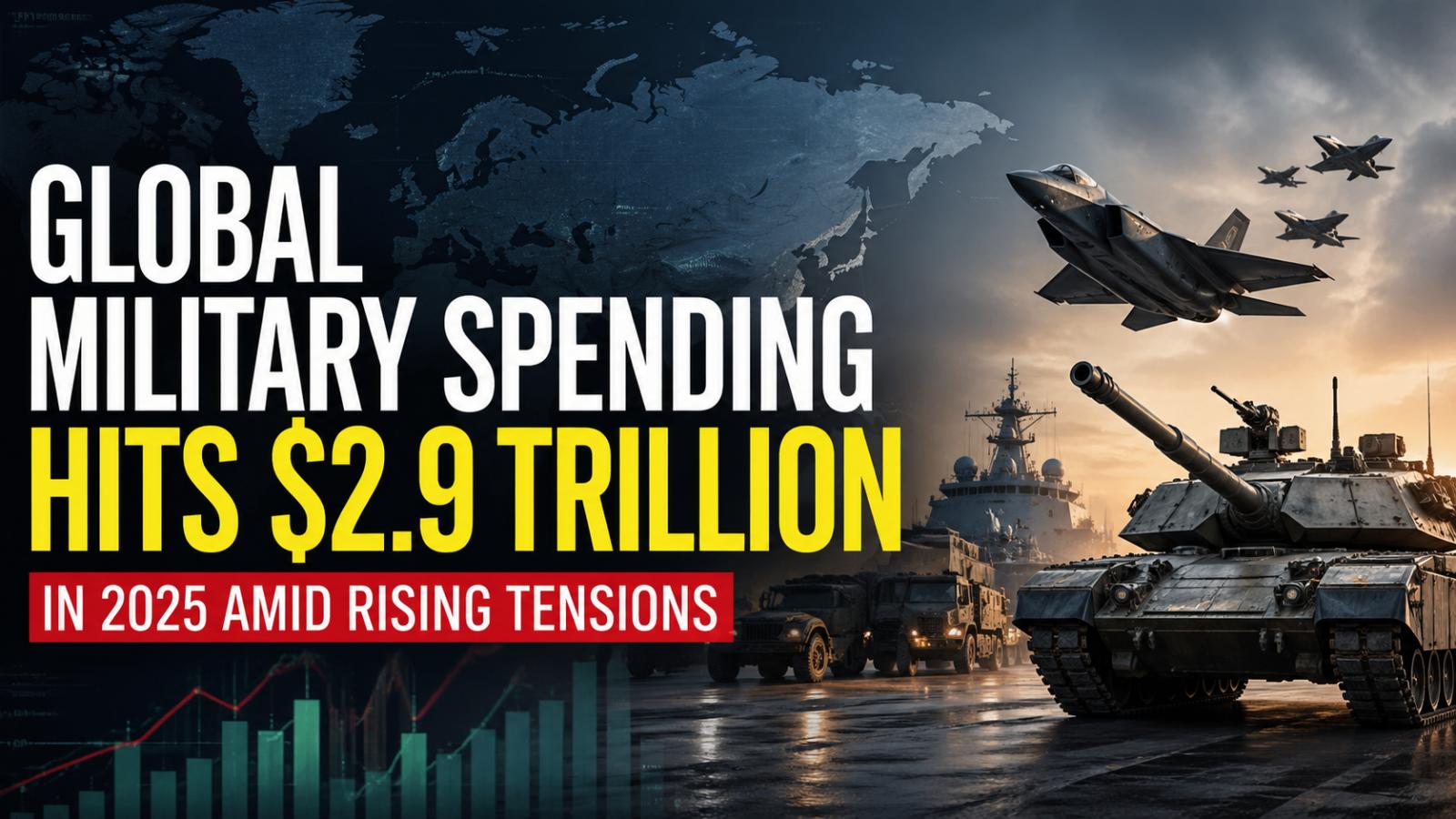
Global military spending 2025 overview Global military spending in 2025 has reached nearly $2.9 trillion, clearly showing how countries are increasing defence budgets as global tensions continue to rise. The total spending stood at $2887 billion in 2025, marking a 2.9 per cent increase from 2024, highlighting a steady rise in military expenditure trends worldwide. This reflects a world becoming less secure, with nations investing more in defence to protect themselves. The United States, Russia, and China remained the top three military spenders, with a combined total of $1.48 trillion. These nations continue to dominate global defence spending, shaping international security dynamics. Experts say this rise in defence budget growth shows that countries are preparing for both current conflicts and future uncertainties. Europe witnessed a major surge, with military spending increasing by 14 per cent to $864 billion in 2025. This sharp rise is mainly driven by the ongoing Russia-Ukraine war and reduced dependence on the United States for security. Countries like Germany increased spending by 24 per cent to $114 billion, while Spain recorded a significant 50 per cent jump to $40.2 billion, crossing two per cent of GDP for the first time in decades. The United States remained the largest spender despite a decline of 7.5 per cent, bringing its total to $954 billion in 2025. The decrease is linked to reduced financial aid approvals for Ukraine, although future budgets suggest spending could exceed $1 trillion in 2026, indicating a possible rebound. In Eastern Europe, Russia increased its military expenditure by 5.9 per cent to $190 billion, while Ukraine saw a sharp rise of 20 per cent to $84.1 billion. Ukraine’s defence spending now accounts for a large share of its GDP, showing the intensity of the ongoing conflict. Asia and Oceania recorded one of the fastest growth rates, with spending reaching $681 billion in 2025, an 8.5 per cent increase. China led the region with $336 billion, followed by Japan and India. India increased its defence budget by 8.9 per cent to $92.1 billion, making it the fifth-largest military spender globally. This growth highlights rising security concerns across the region. In the Middle East, spending patterns were mixed. Iran’s defence expenditure fell by 5.6 per cent to $7.4 billion, mainly due to high inflation. Israel also saw a decline of 4.9 per cent to $48.3 billion after reducing military operations following a ceasefire in early 2025, although its spending remains significantly higher compared to earlier years. Regional tensions continue to influence defence strategies across the Middle East. Overall, the SIPRI report shows that global military spending is steadily increasing as countries respond to rising geopolitical tensions and conflicts. The trend highlights a shift toward stronger military preparedness, reflecting uncertainty in the global security environment.
Global military spending hits $2.9 trillion in 2025 amid rising tensions
Global military spending 2025 overview Global military spending in 2025 has reached nearly $2.9 trillion, clearly showing how countries are increasing defence budgets as global tensions continue to rise. The total spending stood at $2887 billion in 2025, marking a 2.9 per cent increase from 2024, highlighting a steady rise in military expenditure trends worldwide. This reflects a world becoming less secure, with nations investing more in defence to protect themselves. The United States, Russia, and China remained the top three military spenders, with a combined total of $1.48 trillion. These nations continue to dominate global defence spending, shaping international security dynamics. Experts say this rise in defence budget growth shows that countries are preparing for both current conflicts and future uncertainties. Europe witnessed a major surge, with military spending increasing by 14 per cent to $864 billion in 2025. This sharp rise is mainly driven by the ongoing Russia-Ukraine war and reduced dependence on the United States for security. Countries like Germany increased spending by 24 per cent to $114 billion, while Spain recorded a significant 50 per cent jump to $40.2 billion, crossing two per cent of GDP for the first time in decades. The United States remained the largest spender despite a decline of 7.5 per cent, bringing its total to $954 billion in 2025. The decrease is linked to reduced financial aid approvals for Ukraine, although future budgets suggest spending could exceed $1 trillion in 2026, indicating a possible rebound. In Eastern Europe, Russia increased its military expenditure by 5.9 per cent to $190 billion, while Ukraine saw a sharp rise of 20 per cent to $84.1 billion. Ukraine’s defence spending now accounts for a large share of its GDP, showing the intensity of the ongoing conflict. Asia and Oceania recorded one of the fastest growth rates, with spending reaching $681 billion in 2025, an 8.5 per cent increase. China led the region with $336 billion, followed by Japan and India. India increased its defence budget by 8.9 per cent to $92.1 billion, making it the fifth-largest military spender globally. This growth highlights rising security concerns across the region. In the Middle East, spending patterns were mixed. Iran’s defence expenditure fell by 5.6 per cent to $7.4 billion, mainly due to high inflation. Israel also saw a decline of 4.9 per cent to $48.3 billion after reducing military operations following a ceasefire in early 2025, although its spending remains significantly higher compared to earlier years. Regional tensions continue to influence defence strategies across the Middle East. Overall, the SIPRI report shows that global military spending is steadily increasing as countries respond to rising geopolitical tensions and conflicts. The trend highlights a shift toward stronger military preparedness, reflecting uncertainty in the global security environment.
World leaders denounce shooting targeting Trump, stress rejection of violence
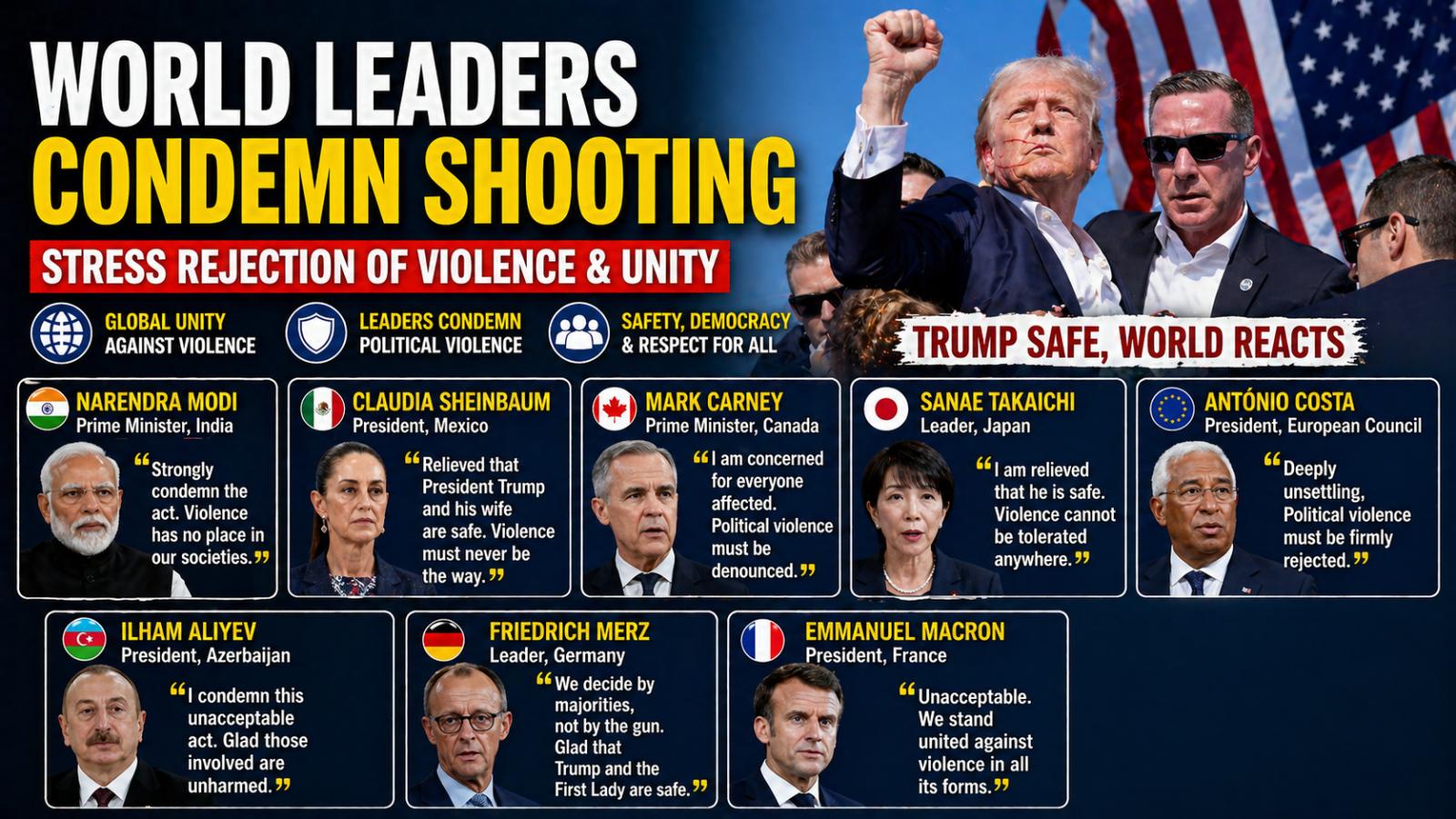
Global leaders condemn shooting incident involving President Trump as a wave of international reactions underscored a shared rejection of political violence and relief that the former U.S. president and other attendees were unharmed. The incident prompted swift responses from leaders across continents, reflecting concern over rising threats to public figures and democratic processes. Narendra Modi Indian Prime Minister
World leaders denounce shooting targeting Trump, stress rejection of violence
Global leaders condemn shooting incident involving President Trump as a wave of international reactions underscored a shared rejection of political violence and relief that the former U.S. president and other attendees were unharmed. The incident prompted swift responses from leaders across continents, reflecting concern over rising threats to public figures and democratic processes. Narendra Modi Indian Prime Minister
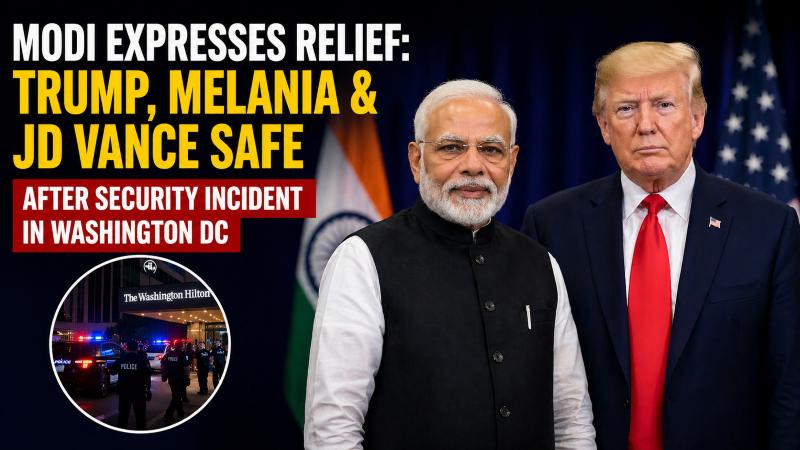
Narendra Modi Reacts to Washington DC Incident: Trump, Melania, JD Vance Safe
Prime Minister Narendra Modi expressed relief that Donald Trump, Melania Trump, and
Narendra Modi Reacts to Washington DC Incident: Trump, Melania, JD Vance Safe
Prime Minister Narendra Modi expressed relief that Donald Trump, Melania Trump, and
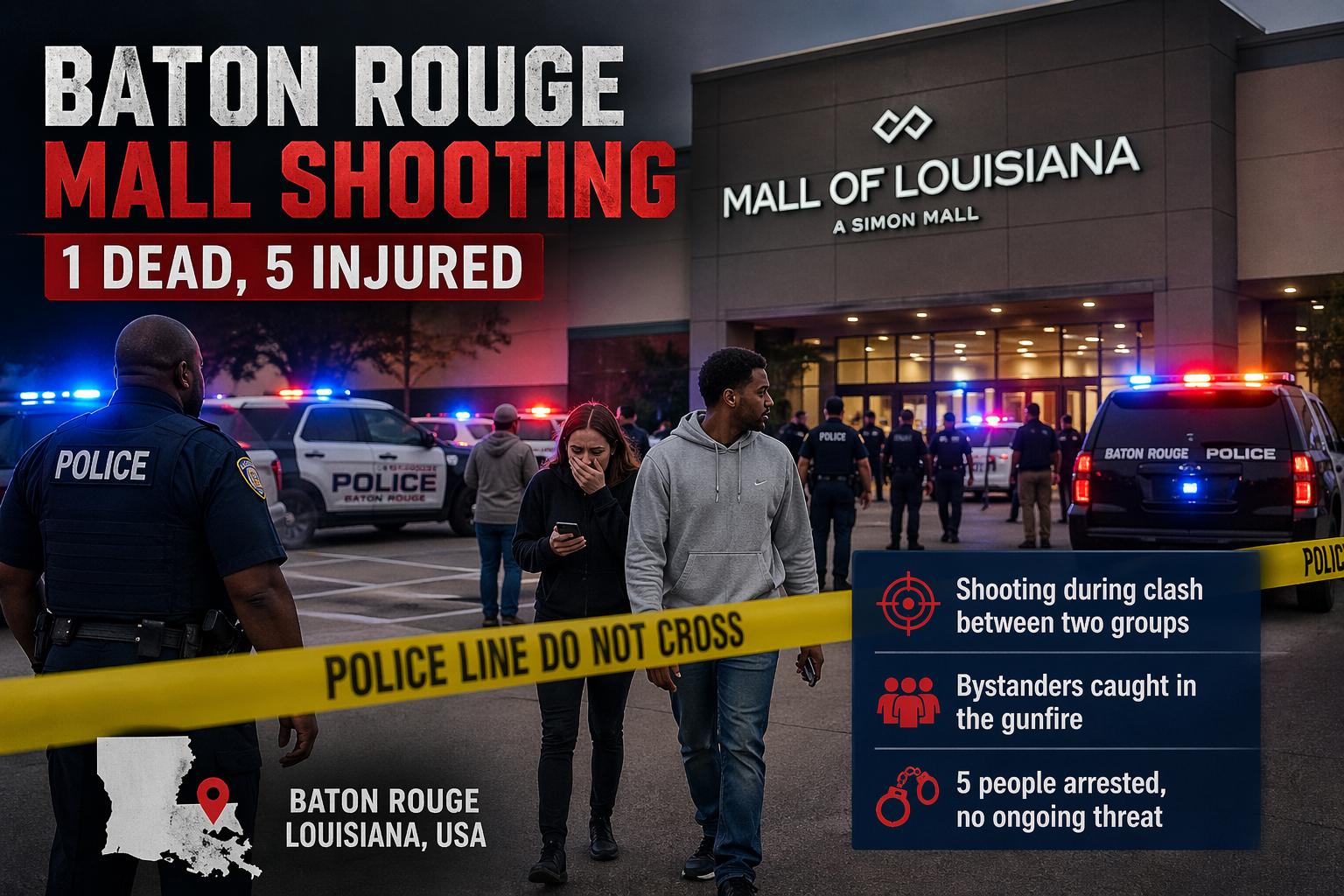
US Mall Shooting In Baton Rouge: 1 Dead, 5 Injured After Group Fight
A deadly shooting incident shook the Mall of Louisiana in Baton Rouge city, US, on Thursday, April 24, 2026, around early hours as per official updates at 06:53 IST. At least one person was killed and five others sustained injuries when gunfire broke out inside a busy food court area. The sudden violence created panic among shoppers and staff, forcing authorities to immediately evacuate the premises and initiate emergency response protocols. According to officials, the shooting was
US Mall Shooting In Baton Rouge: 1 Dead, 5 Injured After Group Fight
A deadly shooting incident shook the Mall of Louisiana in Baton Rouge city, US, on Thursday, April 24, 2026, around early hours as per official updates at 06:53 IST. At least one person was killed and five others sustained injuries when gunfire broke out inside a busy food court area. The sudden violence created panic among shoppers and staff, forcing authorities to immediately evacuate the premises and initiate emergency response protocols. According to officials, the shooting was
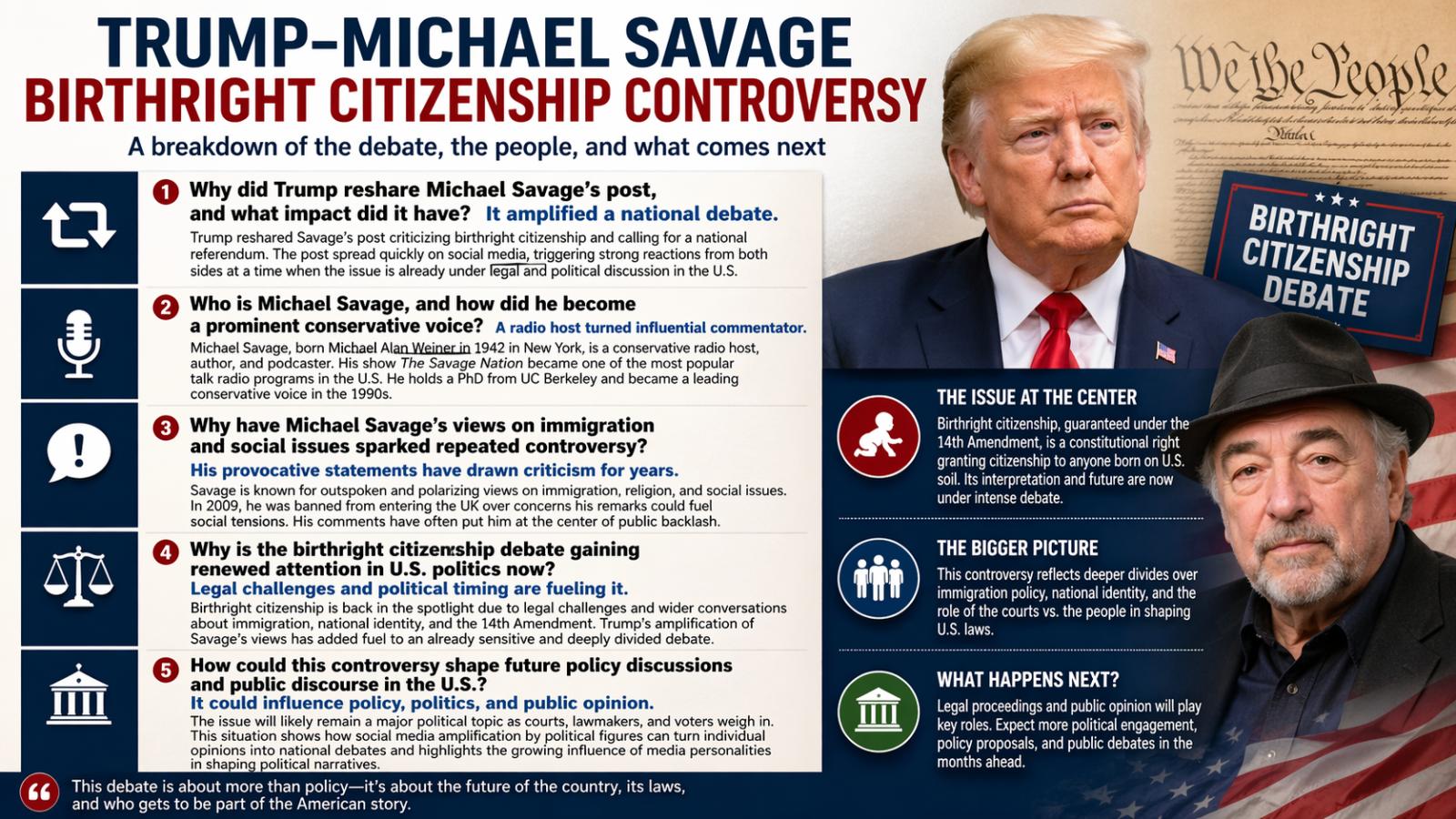
Trump shares Michael Savage post on birthright citizenship: Who he is and why it’s controversial
Why did Donald Trump reshare Michael Savage’s post, and what impact did it have? The controversy began when Donald Trump reshared a detailed po
Trump shares Michael Savage post on birthright citizenship: Who he is and why it’s controversial
Why did Donald Trump reshare Michael Savage’s post, and what impact did it have? The controversy began when Donald Trump reshared a detailed po

David Wilcock death reports: What we know so far about the YouTuber’s passing
DavidWilcock, BreakingNews, YouTuberNews, ColoradoNews, ParanormalAuthor, TrendingNow, WorldNews, InvestigationUpdate, SocialMediaNews, NewsUpdate Reports surrounding the David Wilcock death news have surfaced online, drawing widespread attention and concern. While initial claims have circulated rapidly, officials have provided limited but important details about the incident. What happened and why it matters
David Wilcock death reports: What we know so far about the YouTuber’s passing
DavidWilcock, BreakingNews, YouTuberNews, ColoradoNews, ParanormalAuthor, TrendingNow, WorldNews, InvestigationUpdate, SocialMediaNews, NewsUpdate Reports surrounding the David Wilcock death news have surfaced online, drawing widespread attention and concern. While initial claims have circulated rapidly, officials have provided limited but important details about the incident. What happened and why it matters

World Earth Day 2026: History, Significance and Why It Matters More Than Ever
World Earth Day 2026 is being observed on April 22, bringing global attention to the need to protect our planet. Over the years, this day has grown into one of the largest environmental movements, with millions of people across countries coming together to spread awareness and take action. It is not just about celebrating the Earth, but about understanding the responsibility we all share in protecting it. This year’s theme, “Our Power, Our Planet,” focuses on the idea that real change starts with individuals. Every small action—like reducing plastic use, saving energy, or planting trees—can contribute to a bigger impact. The theme encourages people to realize that protecting the environment is not just the job of governments, but something everyone can be part of. Earth Day began in 1970 in the United States when environmental concerns were starting to gain attention. Inspired by the effects of a major oil spill, leaders and activists organized a nationwide movement to demand better protection for the environment. Around 20 million people participated, making it one of the first large-scale environmental protests. This effort eventually led to important environmental laws and policies . Today, Earth Day highlights serious global challenges such as climate change, pollution, deforestation, and loss of biodiversity. These issues are growing rapidly, affecting not just nature but also human life. However, the day also carries a message of hope, showing that collective action can bring positive change. People across the world take part in activities like tree planting, clean-up drives, awareness campaigns, and educational programs. Many also support eco-friendly habits in their daily lives. These efforts may seem small individually, but together they create a strong movement toward a healthier planet. Earth Day reminds us that protecting the Earth is not a one-day task. It is a continuous effort that requires awareness, responsibility, and action. The choices we make today will directly impact the future, making it more important than ever to take care of our planet.
World Earth Day 2026: History, Significance and Why It Matters More Than Ever
World Earth Day 2026 is being observed on April 22, bringing global attention to the need to protect our planet. Over the years, this day has grown into one of the largest environmental movements, with millions of people across countries coming together to spread awareness and take action. It is not just about celebrating the Earth, but about understanding the responsibility we all share in protecting it. This year’s theme, “Our Power, Our Planet,” focuses on the idea that real change starts with individuals. Every small action—like reducing plastic use, saving energy, or planting trees—can contribute to a bigger impact. The theme encourages people to realize that protecting the environment is not just the job of governments, but something everyone can be part of. Earth Day began in 1970 in the United States when environmental concerns were starting to gain attention. Inspired by the effects of a major oil spill, leaders and activists organized a nationwide movement to demand better protection for the environment. Around 20 million people participated, making it one of the first large-scale environmental protests. This effort eventually led to important environmental laws and policies . Today, Earth Day highlights serious global challenges such as climate change, pollution, deforestation, and loss of biodiversity. These issues are growing rapidly, affecting not just nature but also human life. However, the day also carries a message of hope, showing that collective action can bring positive change. People across the world take part in activities like tree planting, clean-up drives, awareness campaigns, and educational programs. Many also support eco-friendly habits in their daily lives. These efforts may seem small individually, but together they create a strong movement toward a healthier planet. Earth Day reminds us that protecting the Earth is not a one-day task. It is a continuous effort that requires awareness, responsibility, and action. The choices we make today will directly impact the future, making it more important than ever to take care of our planet.
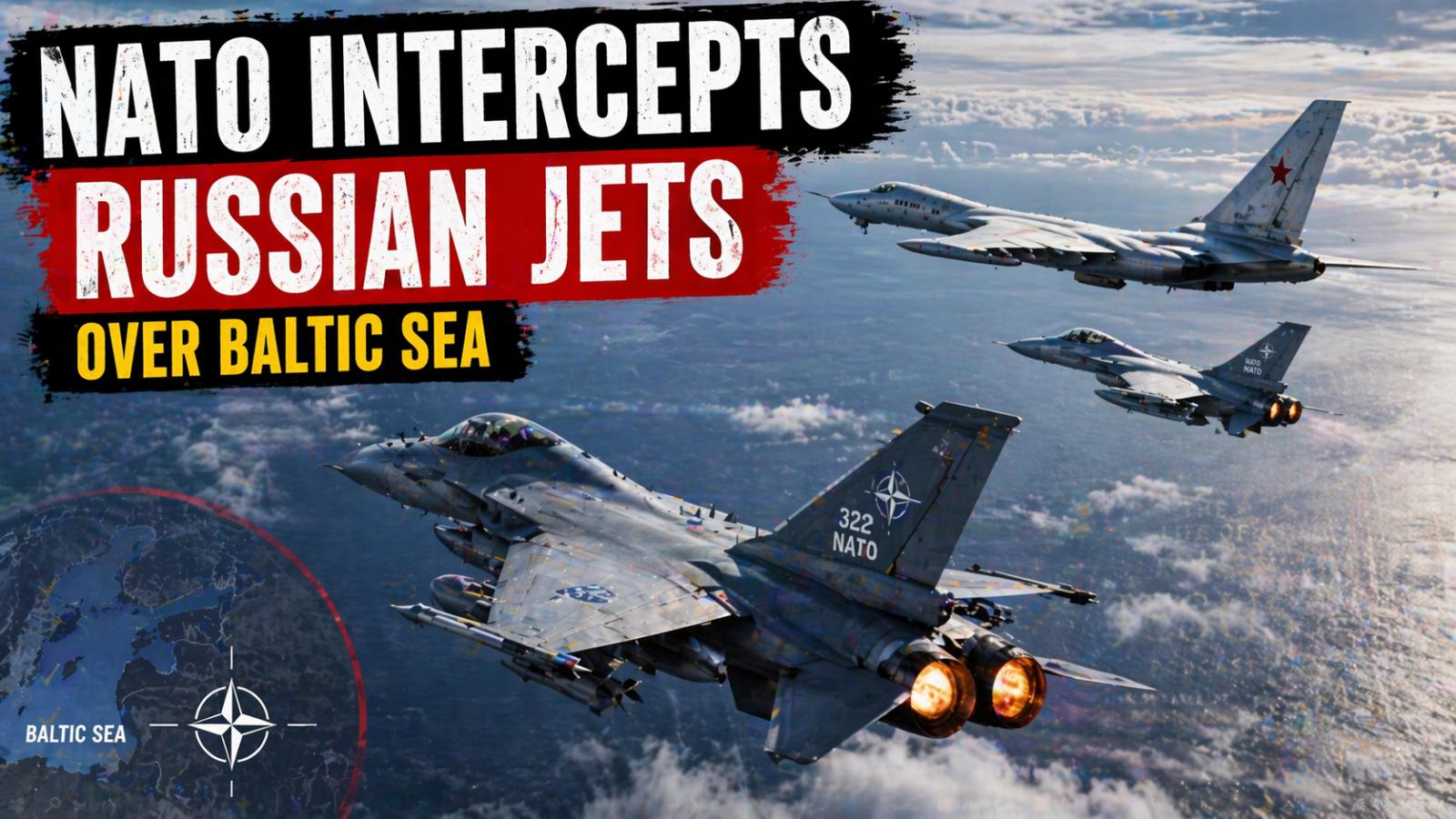
NATO intercepts Russian jets over Baltic Sea: What it means for rising tensions
The NATO intercept Russian jets Baltic Sea incident has once again highlighted rising military tensions in Europe. Fighter jets from multiple NATO nations were scrambled to monitor Russian aircraft, signaling a strong show of force along the alliance’s eastern flank. What happened and why it matters On April 22, 2026, NATO forces launched a coordinated
NATO intercepts Russian jets over Baltic Sea: What it means for rising tensions
The NATO intercept Russian jets Baltic Sea incident has once again highlighted rising military tensions in Europe. Fighter jets from multiple NATO nations were scrambled to monitor Russian aircraft, signaling a strong show of force along the alliance’s eastern flank. What happened and why it matters On April 22, 2026, NATO forces launched a coordinated
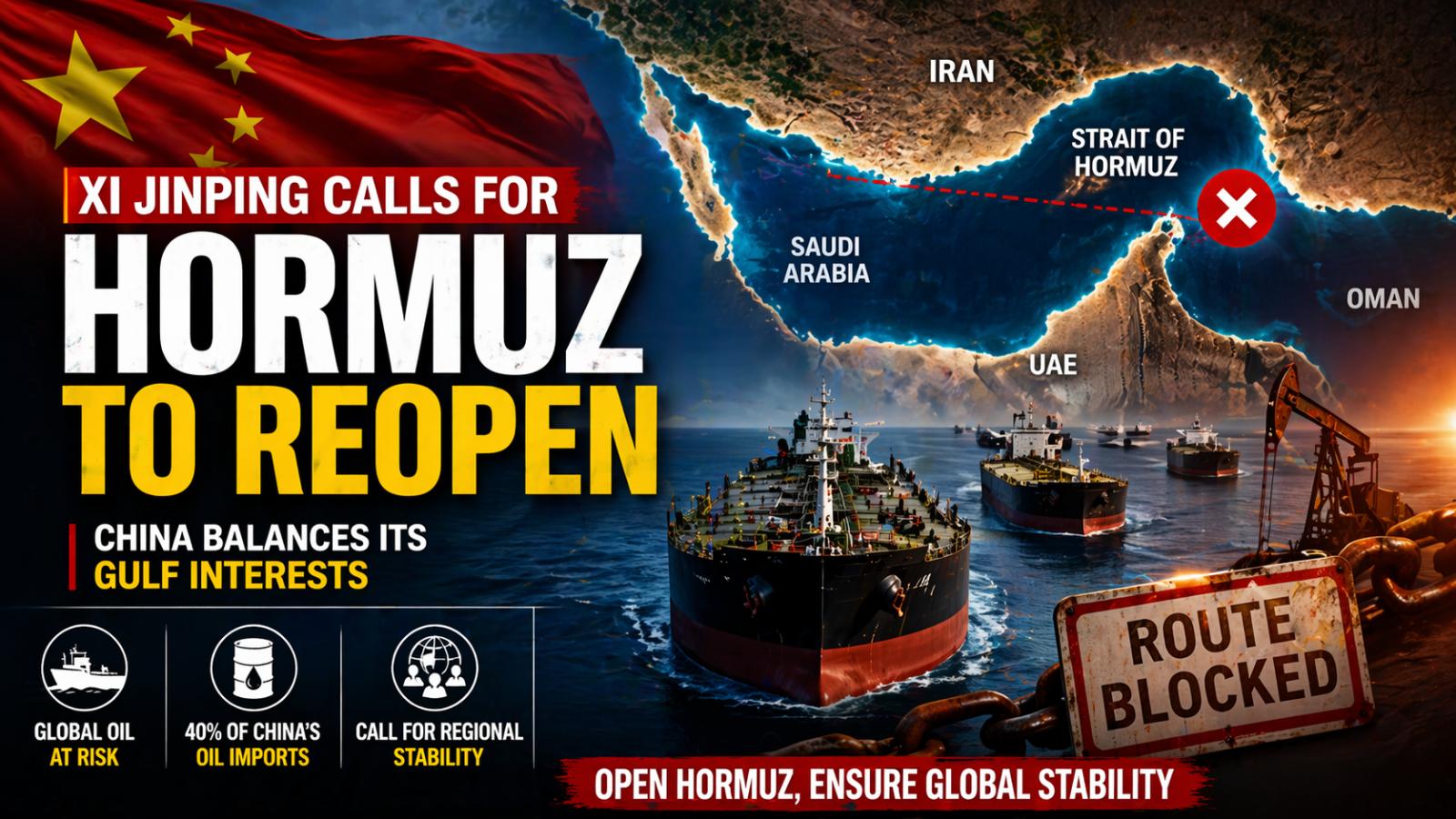
Xi Jinping urges Hormuz reopening: What it means for global oil and China’s strategy
The Xi Jinping Hormuz statement has drawn global attention as China’s leader called for the reopening of the critical Strait of Hormuz. The move comes amid rising tensions in the Middle East and highlights China’s delicate balancing act between strategic alliances and economic interests. What happened and why it matters On Monday, April 20, 2026, Chin
Xi Jinping urges Hormuz reopening: What it means for global oil and China’s strategy
The Xi Jinping Hormuz statement has drawn global attention as China’s leader called for the reopening of the critical Strait of Hormuz. The move comes amid rising tensions in the Middle East and highlights China’s delicate balancing act between strategic alliances and economic interests. What happened and why it matters On Monday, April 20, 2026, Chin
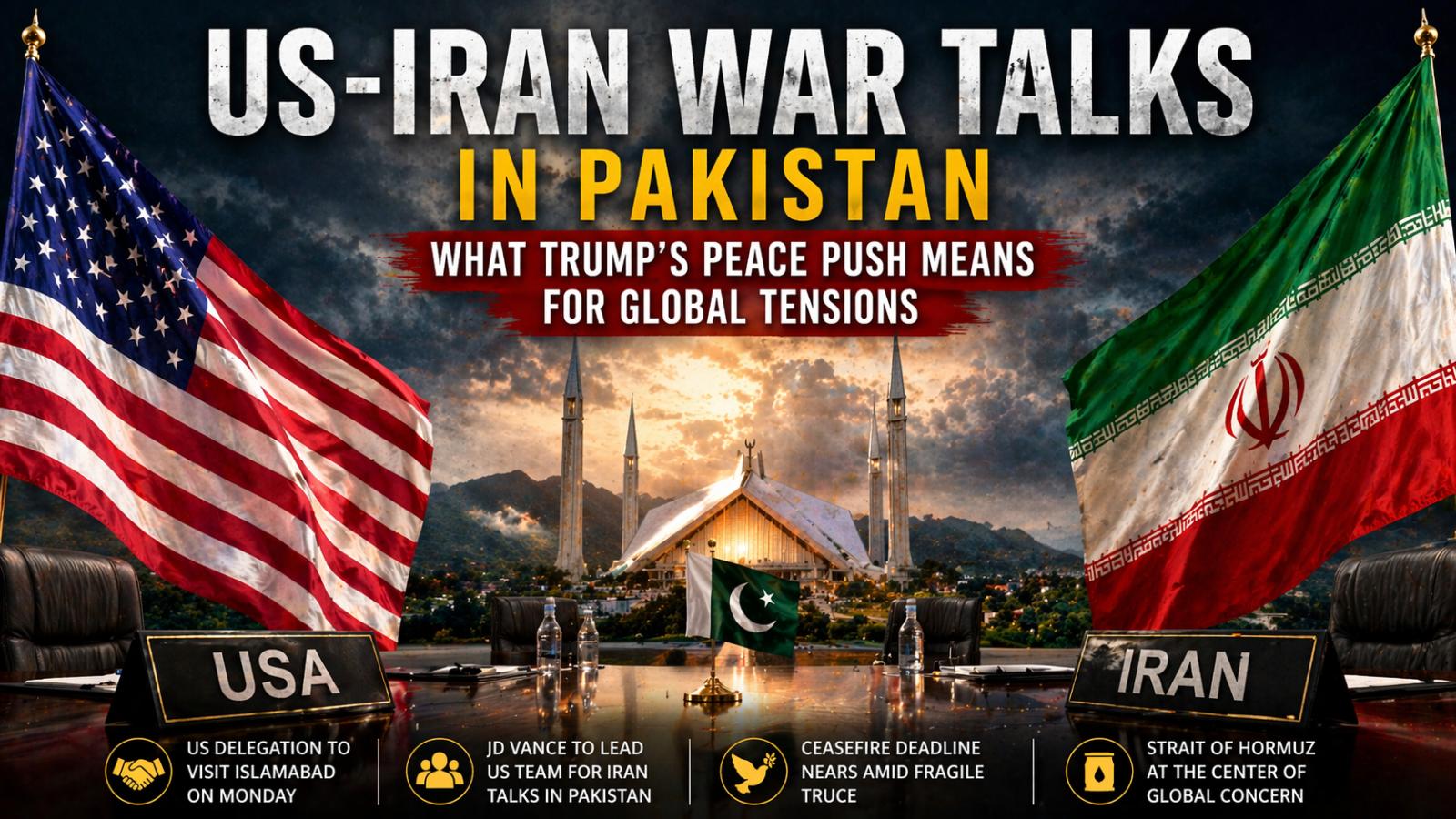
US-Iran war talks in Pakistan: What Trump’s peace push means for global tensions
US-Iran war talks in Pakistan signal crucial diplomatic moment The US-Iran war talks in Pakistan are emerging as a critical step toward easing tensions as the fragile ceasefire deadline approaches. With the conflict entering its eighth week, both sides are showing cautious optimism, even as major differences remain unresolved. The latest US-Iran peace talks come at a time when global markets are closely wa
US-Iran war talks in Pakistan: What Trump’s peace push means for global tensions
US-Iran war talks in Pakistan signal crucial diplomatic moment The US-Iran war talks in Pakistan are emerging as a critical step toward easing tensions as the fragile ceasefire deadline approaches. With the conflict entering its eighth week, both sides are showing cautious optimism, even as major differences remain unresolved. The latest US-Iran peace talks come at a time when global markets are closely wa
Pakistan Power Crisis: Surgeon Questions Lights in VIP Rooms While OTs Face Outages
A deepening power crisis in Pakistan has come under scrutiny after a surgeon highlighted disparities in electricity supply at a major hospital, raising concerns about the prioritisation of essential services. According to the surgeon, operation theatres at Services Hospital reportedly experienced a power outage during ongoing surgeries due to a shortage of gene
Pakistan Power Crisis: Surgeon Questions Lights in VIP Rooms While OTs Face Outages
A deepening power crisis in Pakistan has come under scrutiny after a surgeon highlighted disparities in electricity supply at a major hospital, raising concerns about the prioritisation of essential services. According to the surgeon, operation theatres at Services Hospital reportedly experienced a power outage during ongoing surgeries due to a shortage of gene
Iran Responds to Donald Trump With Turn Off Phone, Block Bibi Remark
Iran has dismissed recent claims made by former US President Donald Trump, responding with sarcasm to his remarks on ongoing geopolitical developments. In an unusually sharp diplomatic exchange, Iran’s embassy in Zimbabwe mocke
Iran Responds to Donald Trump With Turn Off Phone, Block Bibi Remark
Iran has dismissed recent claims made by former US President Donald Trump, responding with sarcasm to his remarks on ongoing geopolitical developments. In an unusually sharp diplomatic exchange, Iran’s embassy in Zimbabwe mocke
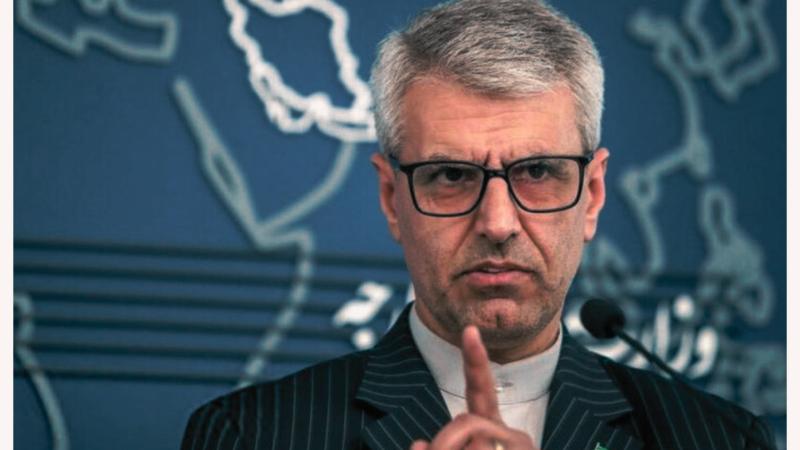
Iran Rejects Trump’s Claim on Enriched Uranium Transfer, Confirms No Such Plan
Iran has denied reports suggesting any plans to transfer its enriched uranium, rejecting recent claims attributed to former US President Donald Trump regarding a possible agreement on the issue. Foreign Ministry spokesperson Ismael B
Iran Rejects Trump’s Claim on Enriched Uranium Transfer, Confirms No Such Plan
Iran has denied reports suggesting any plans to transfer its enriched uranium, rejecting recent claims attributed to former US President Donald Trump regarding a possible agreement on the issue. Foreign Ministry spokesperson Ismael B
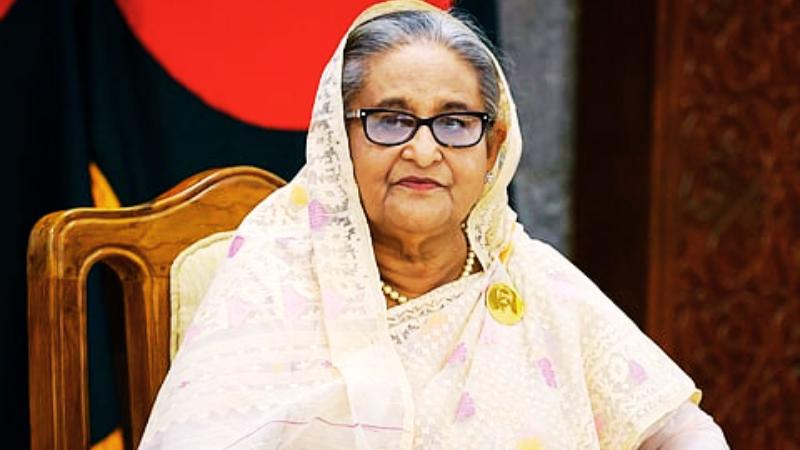
Bangladesh Initiates Judicial Process to Extradite Sheikh Hasina
India has confirmed that Bangladesh’s request to extradite former Prime Minister Sheikh Hasina is currently under examination through established judicial and legal processes. The matter was discussed during recent talks betwee
Bangladesh Initiates Judicial Process to Extradite Sheikh Hasina
India has confirmed that Bangladesh’s request to extradite former Prime Minister Sheikh Hasina is currently under examination through established judicial and legal processes. The matter was discussed during recent talks betwee
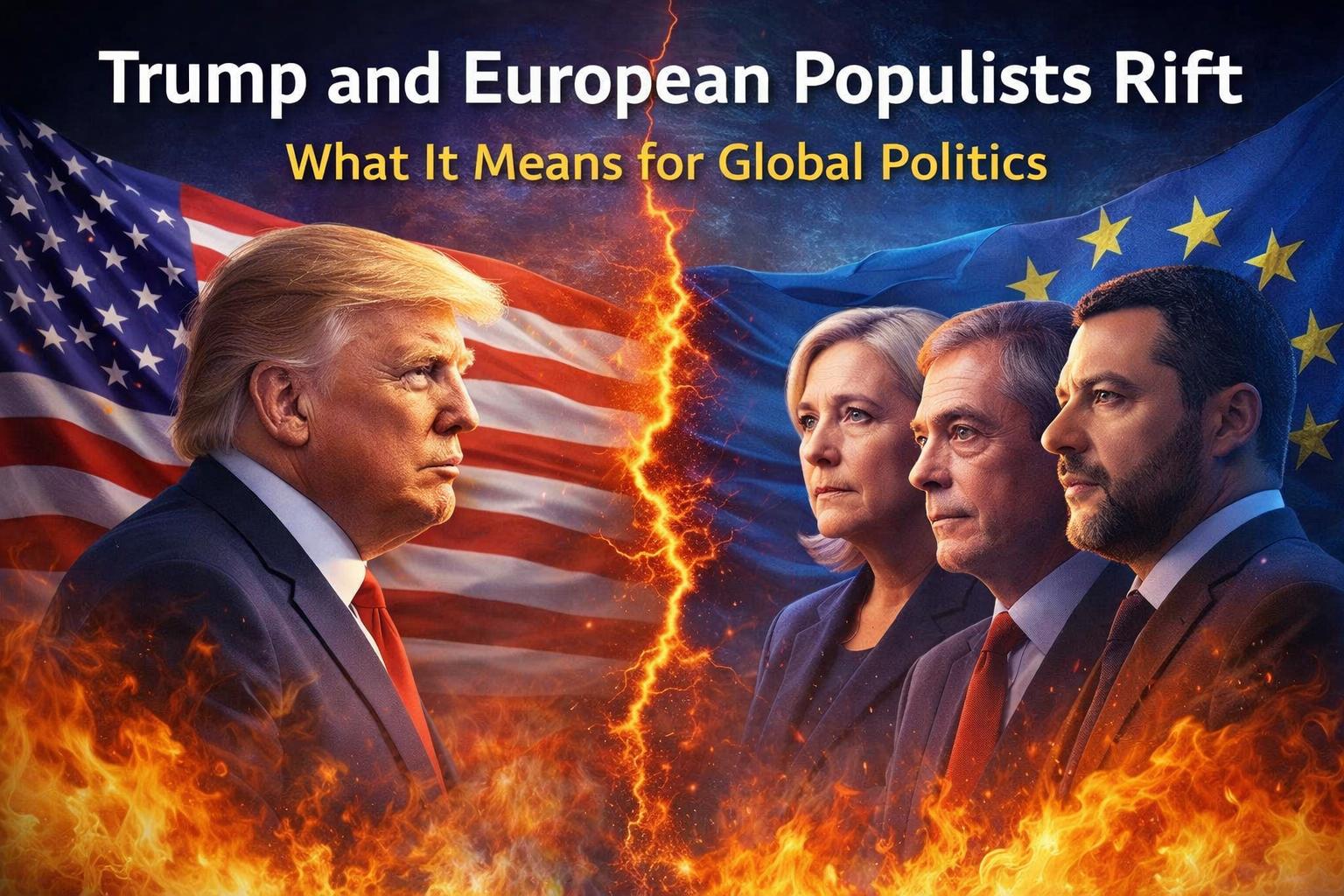
Trump and European populists divide: What the growing rift means for global politics
Trump European populist rift deepens over war and policy tensions The relationship between former U.S. President Donald Trump and Europe’s nationalist leaders is showing signs of strain, raising questions about the future of global political alliances. Once seen as natural allies, the growing divide reflects disagreements over foreign policy, particularly the Iran conflict, and shifting public opinion across Europe. European leaders step back from Trump alliances In recent months, several prominent European populist figures who once openly supported Trump have begun to distance themselves. Leaders across the United Kingdom, France, Germany, and Italy are reconsidering their alignment as criticism of U.S. actions abroad intensifies. Policies linked to military interventions and controversial rhetoric have sparked backlash among European voters. This has put pressure on nationalist leaders who had previously embraced Trump’s political style and agenda. In some cases, declining poll numbers suggest that close ties to Trump are becoming a political liability. Why this political shift matters globally The evolving rift highlights a broader shift in global politics. For years, Trump’s “America First” approach aligned with European nationalist movements advocating for stricter borders and reduced international cooperation. Now, disagreements over foreign interventions and economic consequences—such as rising fuel prices—are changing that dynamic. European leaders must balance domestic public opinion with their political alliances, especially as voters express concerns about economic stability and international conflicts. This shift could weaken transatlantic cooperation among right-leaning political movements and reshape political strategies across the continent. From strong alignment to growing tensions Initially, Trump’s leadership energized nationalist parties across Europe. His stance on immigration, trade, and sovereignty resonated with leaders seeking similar policies in their own countries. However, recent developments—including military actions and disputes with global institutions—have exposed differences. Some European leaders have criticized these moves as inconsistent with their own national interests, while others worry about long-term geopolitical consequences. Public opinion has also played a major role. Surveys across Europe indicate high levels of skepticism toward Trump’s policies, forcing politicians to adjust their positions ahead of elections. What happens next for US-Europe political ties Looking ahead, the relationship between Trump-aligned politics and European populism may continue to evolve. Analysts suggest that nationalist leaders will increasingly focus on domestic priorities rather than relying on alignment with U.S. leadership. Future elections across Europe will likely test whether distancing from Trump helps these leaders regain public support. At the same time, ongoing global conflicts and economic pressures could further influence political strategies. A turning point in global populist politics The growing divide between Trump and European populists marks a significant moment in international politics. What was once a strong ideological partnership is now facing real challenges. As political landscapes shift, leaders on both sides of the Atlantic will need to adapt. The outcome of this rift could redefine alliances, influence elections, and shape the future direction of populist movements worldwide.
Trump and European populists divide: What the growing rift means for global politics
Trump European populist rift deepens over war and policy tensions The relationship between former U.S. President Donald Trump and Europe’s nationalist leaders is showing signs of strain, raising questions about the future of global political alliances. Once seen as natural allies, the growing divide reflects disagreements over foreign policy, particularly the Iran conflict, and shifting public opinion across Europe. European leaders step back from Trump alliances In recent months, several prominent European populist figures who once openly supported Trump have begun to distance themselves. Leaders across the United Kingdom, France, Germany, and Italy are reconsidering their alignment as criticism of U.S. actions abroad intensifies. Policies linked to military interventions and controversial rhetoric have sparked backlash among European voters. This has put pressure on nationalist leaders who had previously embraced Trump’s political style and agenda. In some cases, declining poll numbers suggest that close ties to Trump are becoming a political liability. Why this political shift matters globally The evolving rift highlights a broader shift in global politics. For years, Trump’s “America First” approach aligned with European nationalist movements advocating for stricter borders and reduced international cooperation. Now, disagreements over foreign interventions and economic consequences—such as rising fuel prices—are changing that dynamic. European leaders must balance domestic public opinion with their political alliances, especially as voters express concerns about economic stability and international conflicts. This shift could weaken transatlantic cooperation among right-leaning political movements and reshape political strategies across the continent. From strong alignment to growing tensions Initially, Trump’s leadership energized nationalist parties across Europe. His stance on immigration, trade, and sovereignty resonated with leaders seeking similar policies in their own countries. However, recent developments—including military actions and disputes with global institutions—have exposed differences. Some European leaders have criticized these moves as inconsistent with their own national interests, while others worry about long-term geopolitical consequences. Public opinion has also played a major role. Surveys across Europe indicate high levels of skepticism toward Trump’s policies, forcing politicians to adjust their positions ahead of elections. What happens next for US-Europe political ties Looking ahead, the relationship between Trump-aligned politics and European populism may continue to evolve. Analysts suggest that nationalist leaders will increasingly focus on domestic priorities rather than relying on alignment with U.S. leadership. Future elections across Europe will likely test whether distancing from Trump helps these leaders regain public support. At the same time, ongoing global conflicts and economic pressures could further influence political strategies. A turning point in global populist politics The growing divide between Trump and European populists marks a significant moment in international politics. What was once a strong ideological partnership is now facing real challenges. As political landscapes shift, leaders on both sides of the Atlantic will need to adapt. The outcome of this rift could redefine alliances, influence elections, and shape the future direction of populist movements worldwide.