Sanctions pressure drives India’s planned exit from Chabahar port
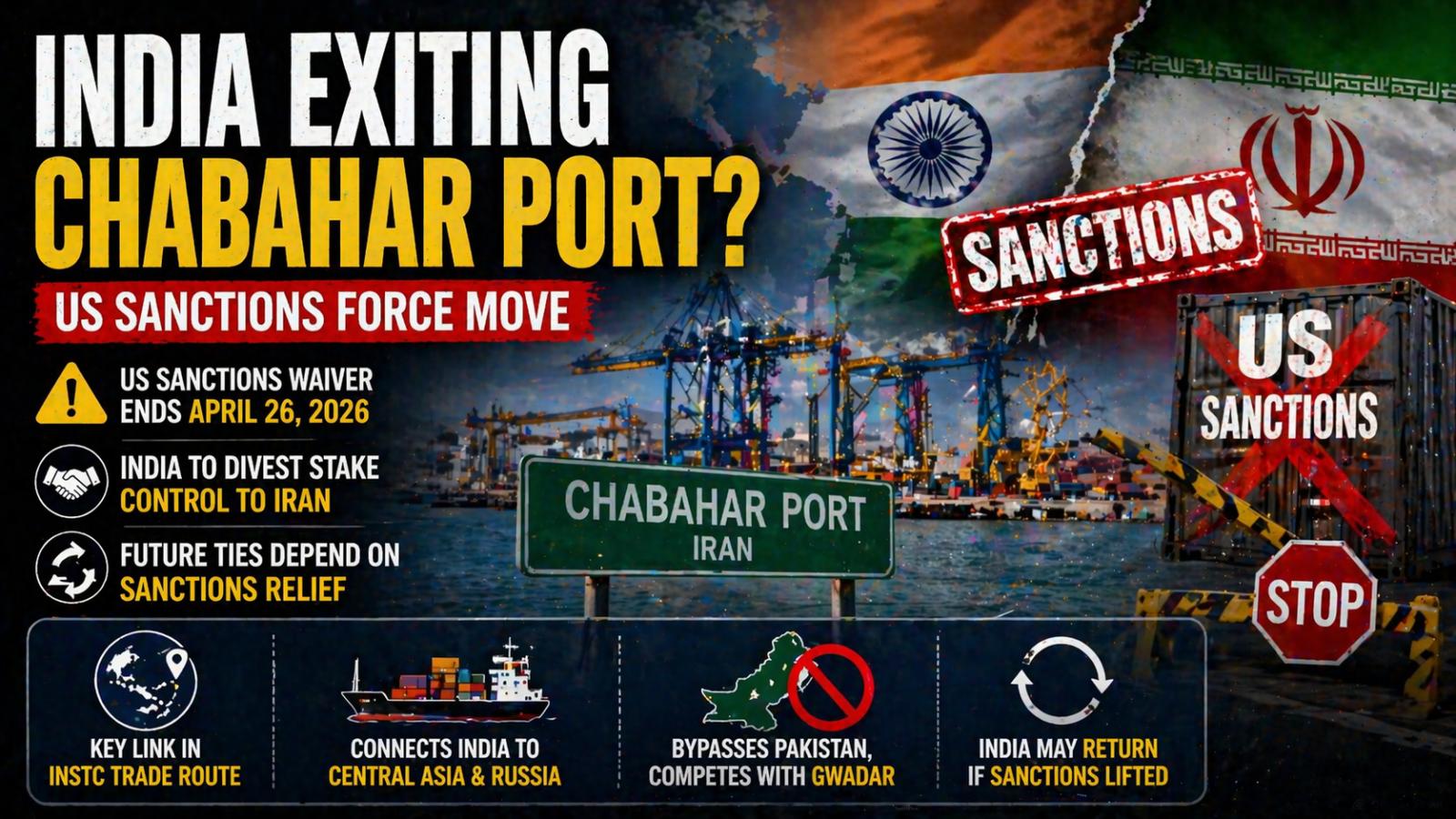
Why is India exiting Chabahar port? Government plans divestment amid US sanctions as New Delhi prepares to step back from the strategic Iranian port ahead of the expiration of a US sanctions waiver on Sunday, April 26, 2026. The move is expected to transfer operational control to a local Iranian entity while preserving the possibility of India’s return if sanctions are lifted or a new waiver is granted.
Sanctions timeline shapes India’s decision on port operations
According to reports, India Ports Global Ltd plans to sell its holding in India Ports Global Chabahar Free Zone to an Iranian operator. India had received exemptions from US sanctions since 2018 and invested about $120 million in port infrastructure. However, policy shifts under Secretary of State Marco Rubio led to a waiver review in February 2025, followed by its withdrawal on September 29, 2025. A temporary extension later protected operations until Sunday, April 26, 2026.
Legal exposure and global ambitions influence decision
Indian officials had explored the option of continuing operations despite sanctions, but legal experts warned of potential penalties for companies involved. Sagarmala Development Corporation Ltd, which operates the terminal through its subsidiary, also manages overseas assets such as Sittwe Port. Any sanctions spillover could impact India’s broader ambitions to operate ports globally through consortium-led initiatives.
Chabahar port’s role in India’s regional connectivity strategy
India’s involvement in Chabahar Port is rooted in a 10-year agreement signed in 2024 to operate the Shahid Beheshti terminal. The port provides access to Central and West Asian markets while bypassing Pakistan, and serves as a key link in the International North-South Transport Corridor, enabling trade routes to Russia and Afghanistan.
Strategic competition and uncertain future engagement
Chabahar has also been viewed as India’s strategic counter to China’s development of Gwadar Port. Its location supports maritime monitoring across the Arabian Sea and the Gulf of Oman. While the planned divestment reflects immediate geopolitical constraints, officials suggest India could re-engage with the port if future US policy changes allow operations without sanctions risk.