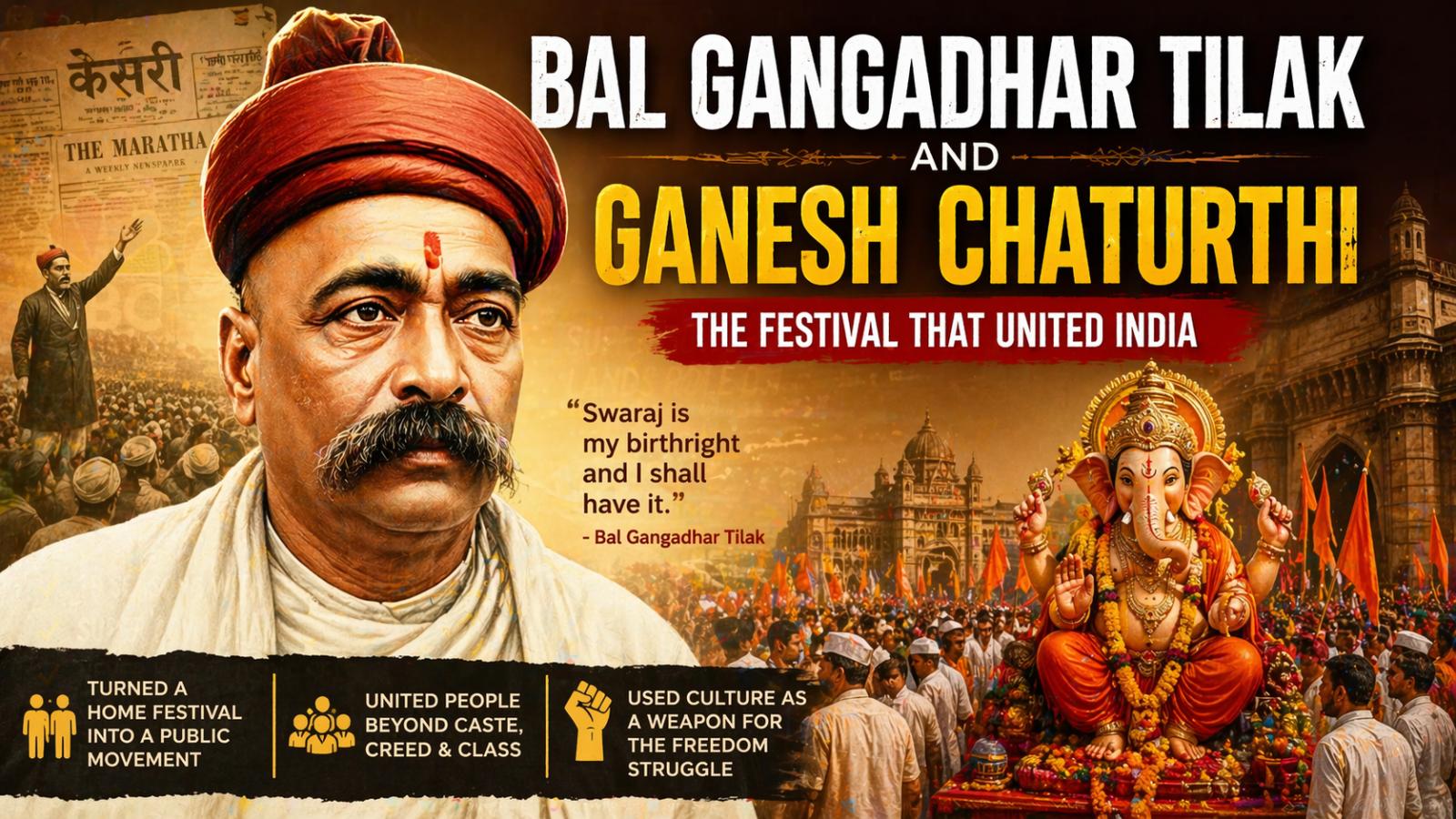
The Bal Gangadhar Tilak Ganesh Chaturthi history is one of the most powerful examples of how culture and politics came together during India’s freedom struggle. What was once a private religious celebration became a massive public movement that united people against British rule.
How Tilak transformed Ganesh Chaturthi
In 1893, Bal Gangadhar Tilak, one of India’s greatest freedom fighters, took a bold step. He transformed Ganesh Chaturthi from a household festival into a large public event. At that time, the British government had imposed restrictions on public gatherings, making it difficult for Indians to organize and unite politically. Tilak used the festival as a tool to bring people together under the guise of religious celebration. By organizing public Ganpati pandals, processions, and cultural programs, Tilak created a platform where people from all backgrounds could gather, interact, and build a sense of unity.
Why this move was revolutionary
Tilak’s decision was not just about religion—it was a strategic move for the freedom movement. The festival became a medium to spread nationalist ideas and inspire resistance against colonial rule. People attended these gatherings not only to celebrate Lord Ganesha but also to listen to speeches, discuss political issues, and strengthen their collective identity as Indians. This approach helped bridge social divisions such as caste and class, making the movement more inclusive and powerful.
Role of Ganesh Chaturthi in India’s freedom struggle
The public celebration of Ganesh Chaturthi soon spread across Maharashtra and other parts of India. It became a symbol of unity and resistance. Cultural performances, plays, and songs during the festival often carried patriotic messages. Leaders used this platform to educate people about their rights and the importance of independence. Over time, the festival played a crucial role in awakening political consciousness among the masses.
Tilak’s vision and leadership
Bal Gangadhar Tilak, also known as Lokmanya Tilak, believed that true change could only come when people stood together. His famous slogan, “Swaraj is my birthright and I shall have it,” reflected his strong commitment to India’s independence. By linking culture with nationalism, Tilak created a movement that was both emotional and powerful. His efforts made Ganesh Chaturthi not just a festival, but a symbol of unity and patriotism.
Ganesh Chaturthi today
Today, Ganesh Chaturthi is celebrated with great enthusiasm across India and even globally. Massive pandals, artistic idols, and grand processions are now a common sight. While the festival remains a religious celebration, its historical significance as a tool for unity and freedom continues to inspire millions.
Unique perspective: Culture as a tool for change
Tilak’s approach shows how cultural traditions can be used as powerful tools for social and political change. Instead of direct confrontation, he chose a path that connected with people’s emotions and beliefs. This strategy not only strengthened the freedom movement but also left a lasting legacy that continues to shape Indian society.The Bal Gangadhar Tilak Ganesh Chaturthi history is a reminder of how one visionary leader transformed a simple festival into a powerful movement for freedom. Tilak’s initiative not only united people during a critical time in history but also gave India a cultural tradition that continues to thrive today. Ganesh Chaturthi is no longer just a festival—it is a symbol of unity, strength, and the spirit of independence.