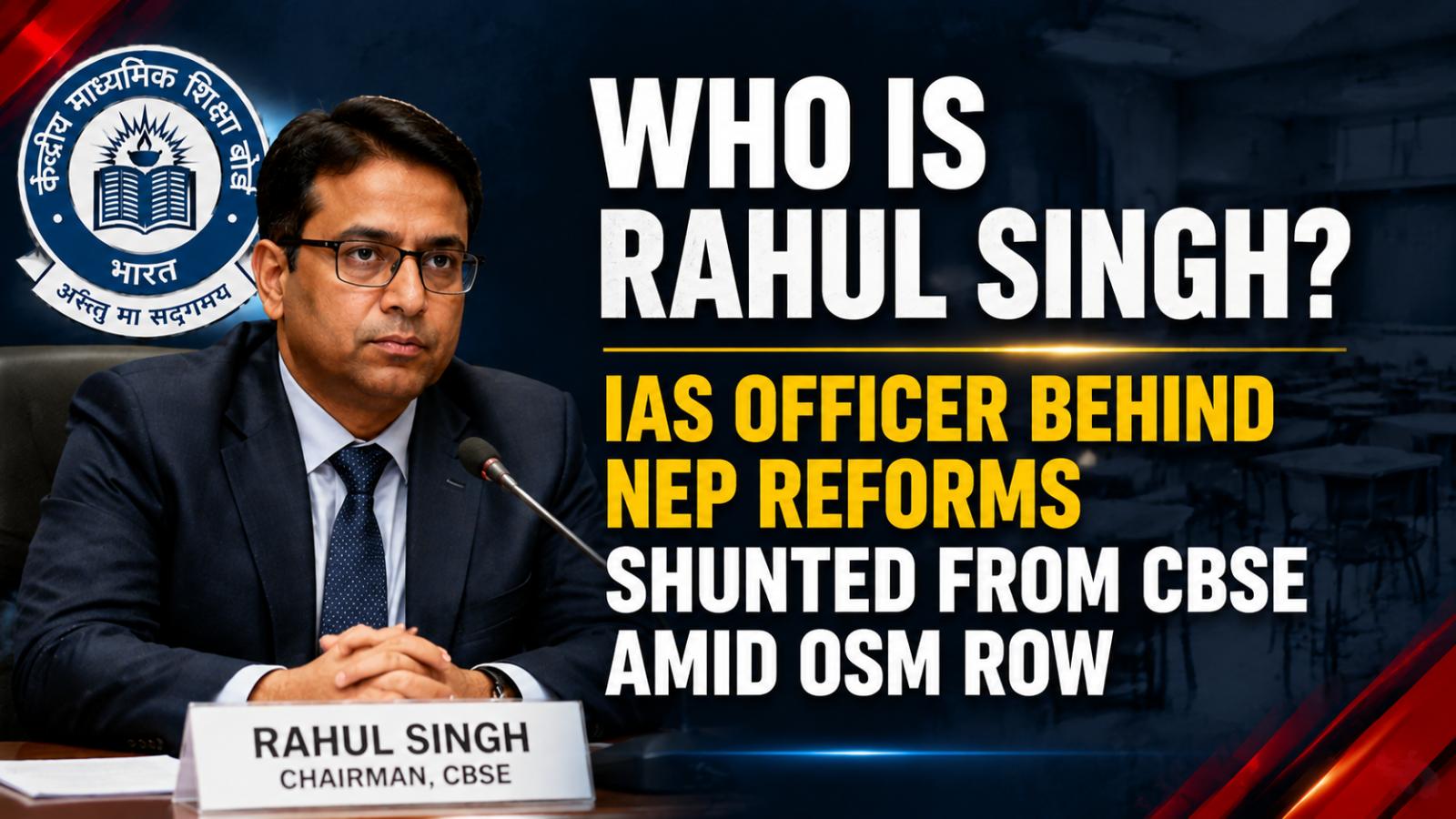
Rahul Singh, a 1996-batch IAS officer of the Bihar cadre, was removed as CBSE Chairman on June 2, 2026, following controversies around the Class 12 board exams. Singh, who assumed office in 2024, oversaw the implementation of several reforms under the National Education Policy (NEP) 2020 and the National Curriculum Framework for School Education (NCFSE).
During his tenure, Singh introduced mother tongue instruction for pre-primary to Class 5 students, in line with NEP guidance that children learn concepts more effectively in their home language. He also implemented the three-language policy across Classes 6 to 10, making two of the three languages native to India. Initially for Class 6 students, the policy was later extended to Class 9, with Class 10 students being assessed internally rather than through the board exam.
Singh also introduced the option of two Class 10 board exams to reduce high-stakes pressure and align with NEP recommendations. Despite these progressive steps, Singh faced significant criticism over the On-Screen Marking (OSM) system rolled out for Class 12 exams without a pilot. Errors in digital evaluation, blurred answer sheets, and a crash of the re-evaluation portal created widespread student complaints. Issues with the vendor implementing OSM, compounded by the NEET paper leak, made his position increasingly untenable.
Under Singh, CBSE became the first national board to implement several NEP-driven reforms, including curriculum updates, language policy enforcement, and modernized exam systems. His removal marks the end of a controversial but transformative two-year tenure during which CBSE navigated the challenging rollout of new policies affecting millions of students across India’s 33,000 affiliated schools.