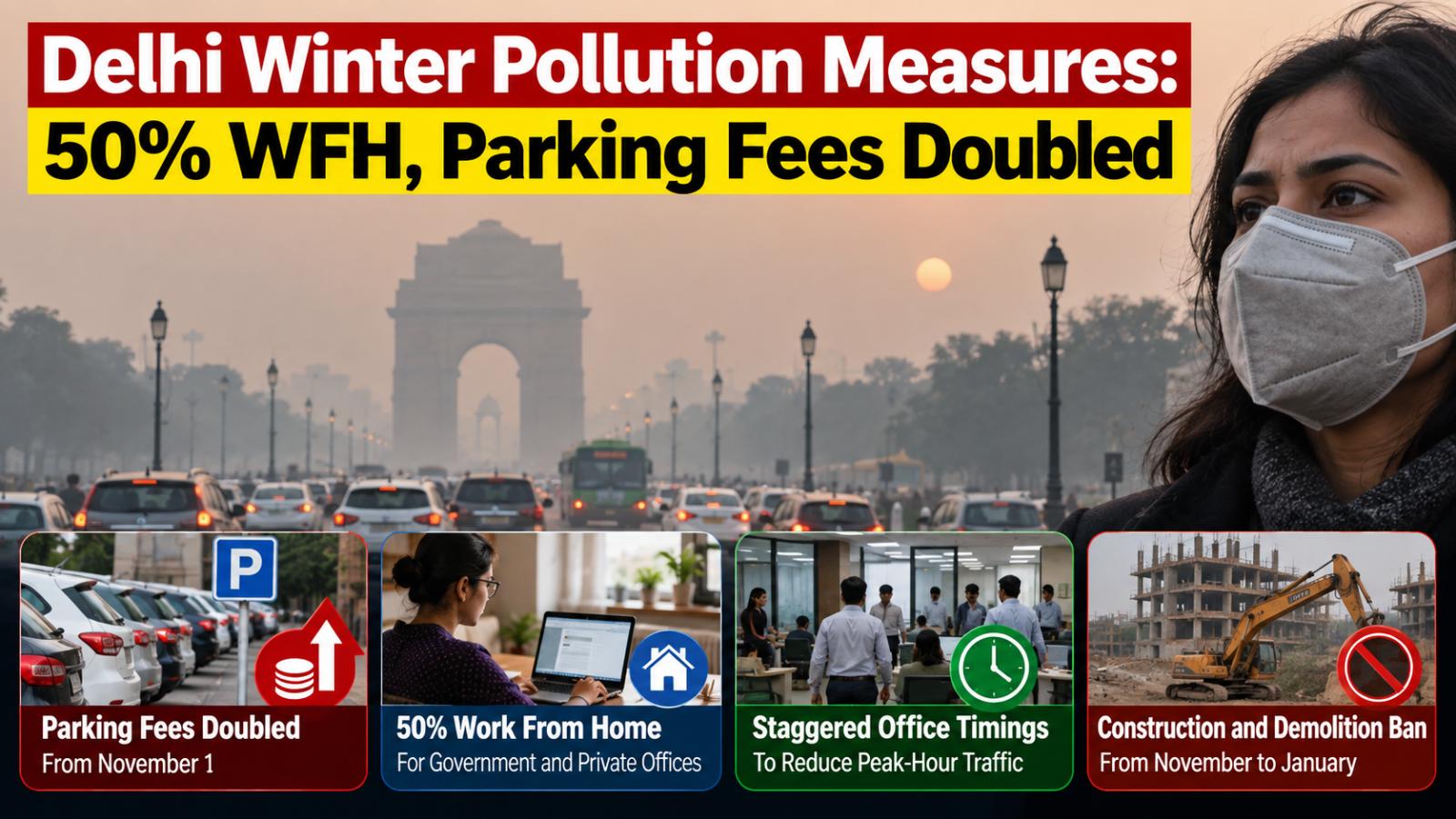
Delhi winter pollution control measures will begin from November, including Delhi 50% work from home, Delhi parking fee increase, staggered office timings and construction restrictions to reduce winter air pollution.
The Delhi government has announced a series of winter pollution-control measures that will come into effect from November 1 as the national capital prepares for the annual deterioration in air quality.
The Delhi winter pollution control measures include higher parking charges, reduced office attendance, staggered working hours and restrictions on construction and demolition activities. Authorities hope the measures will help cut traffic emissions and dust pollution during the months when Delhi usually experiences severe smog.
Delhi 50% work from home and parking fee increase
Government and private offices have been directed to reduce their physical workforce by 50% between November 1 and February 28, 2027. Half of the employees will work from home, while the remaining staff will continue attending offices.
The Delhi 50% work from home plan is intended to reduce the number of daily commuters and ease traffic congestion, which contributes to vehicle emissions across the city.
Delhi parking fee increase measures will also take effect from November 1. Charges at authorised parking facilities will be doubled until February 28 in an effort to discourage residents from relying on private vehicles.
Parking facilities managed by the Delhi Metro Rail Corporation will remain exempt from the higher charges, encouraging commuters to use public transport.
Office timings will also be changed. Municipal Corporation of Delhi offices will function from 8:30 am to 5 pm, while Delhi government offices will operate from 10 am to 6:30 pm. The Delhi staggered office timings are aimed at reducing peak-hour traffic.
Delhi construction ban strengthens air pollution plan
Construction and demolition activities will face additional restrictions as part of the Delhi air pollution plan.
Dust-generating demolition work and outdoor civil construction activities will be restricted from November 1, 2026, until January 31, 2027. A complete Delhi construction ban is also planned from December 10, 2026, to January 20, 2027.
Construction dust has long been considered one of the contributors to poor urban air quality, particularly when weather conditions prevent pollutants from dispersing.
Delhi Chief Minister Rekha Gupta discussed the winter strategy during a meeting attended by Union Environment Minister Bhupender Yadav and other senior officials.
The government said pollution control would involve stricter enforcement, continuous monitoring and coordination between departments.
With Delhi air quality typically worsening during winter, authorities are attempting to tackle several pollution sources at the same time. The effectiveness of the measures, however, will depend heavily on implementation, public compliance and enforcement throughout the winter season.