Pilot representation in AI-171 review
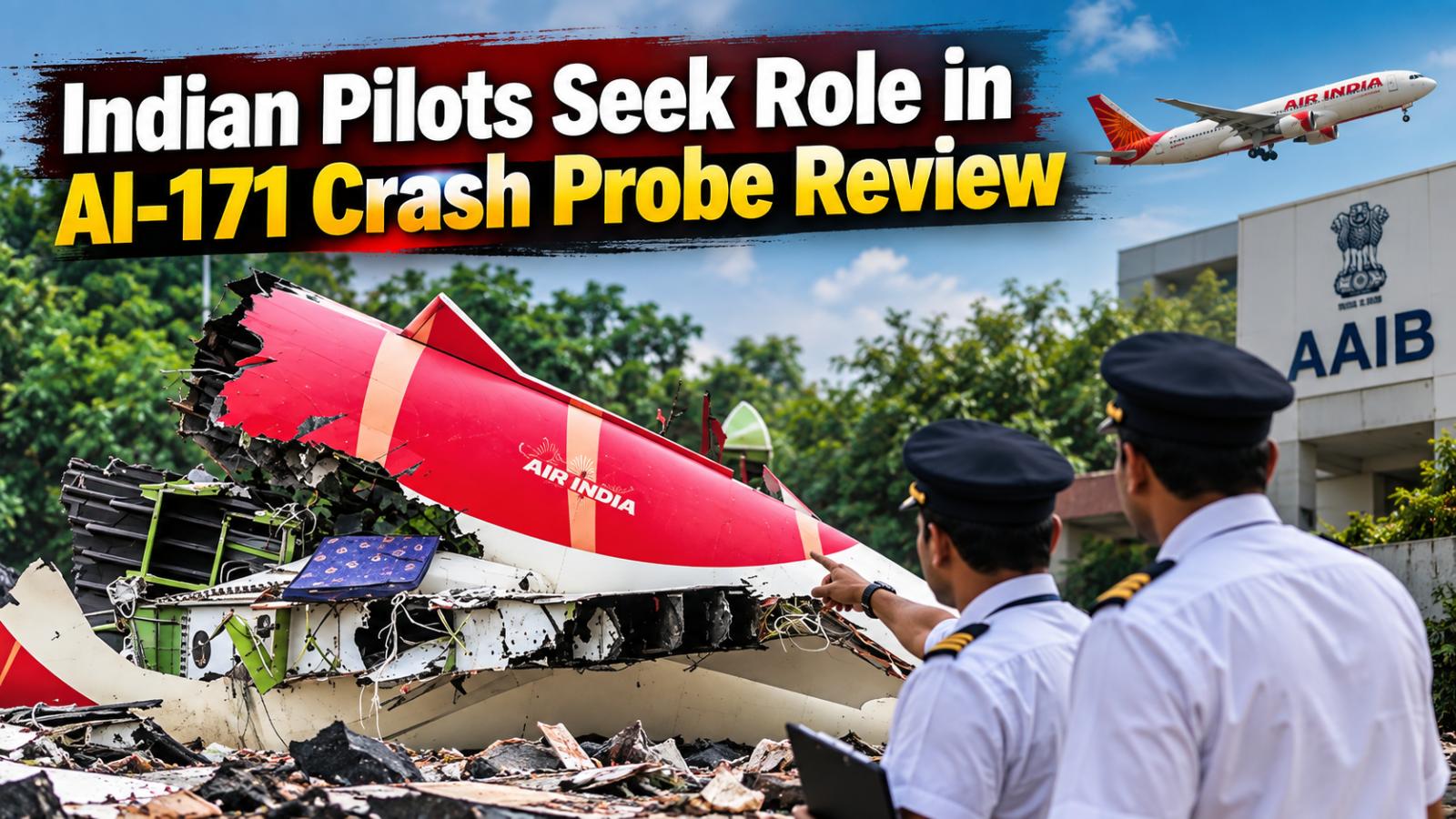
The Federation of Indian Pilots has asked the civil aviation ministry to clarify whether an independent committee will examine the draft final report into the Air India AI-171 crash before it is finalised. The pilots’ body has also sought representation in any such review, arguing that experienced pilots can provide an important operational perspective on technical findings.
The Aircraft Accident Investigation Bureau is understood to be at an advanced stage of preparing its draft final report into the June 12, 2025 crash of the Air India Boeing 787-8 in Ahmedabad, which killed 260 people. In its September 25 letter, the federation said it had learned that an independent review may be under consideration. However, the report cited by Hindustan Times said this had not been independently confirmed.
The federation has asked the ministry to clarify whether a review committee has been formed or proposed, who would serve on it and what its terms of reference would be. It also wants to know whether independent aviation professionals and representatives from the pilot community would be included before the report moves toward acceptance and publication.
RAT timing concerns raised in AAIB draft report debate
The Federation of Indian Pilots has also raised technical questions linked to the AAIB’s preliminary findings, particularly around the deployment of the Ram Air Turbine, or RAT. The RAT is an emergency system that can provide essential hydraulic or electrical power when normal aircraft power is lost.
According to the preliminary timeline cited by the federation, a fuel-system interruption occurred at about 08:08:42 UTC and RAT-generated hydraulic power became available roughly four seconds later. The federation said simulator evaluations suggested a longer interval of around 18 seconds before such power could become available.
The pilots’ body has also questioned differences between take-off performance timings mentioned in the preliminary report and those seen during simulator testing. These remain technical concerns raised by the federation and should not be treated as final conclusions about the cause of the crash.
The AAIB’s final report is expected to provide a fuller account of the aircraft’s systems, flight data, crew actions and other possible contributing factors. The federation has asked that its earlier technical observations be considered and formally addressed before publication.
For now, the central issue is not whether the pilots’ concerns have been proven, but whether those concerns will be examined transparently as part of the final investigation process. A clear response from the ministry and the AAIB would help establish how independent review and professional pilot input will be handled before the report is released.