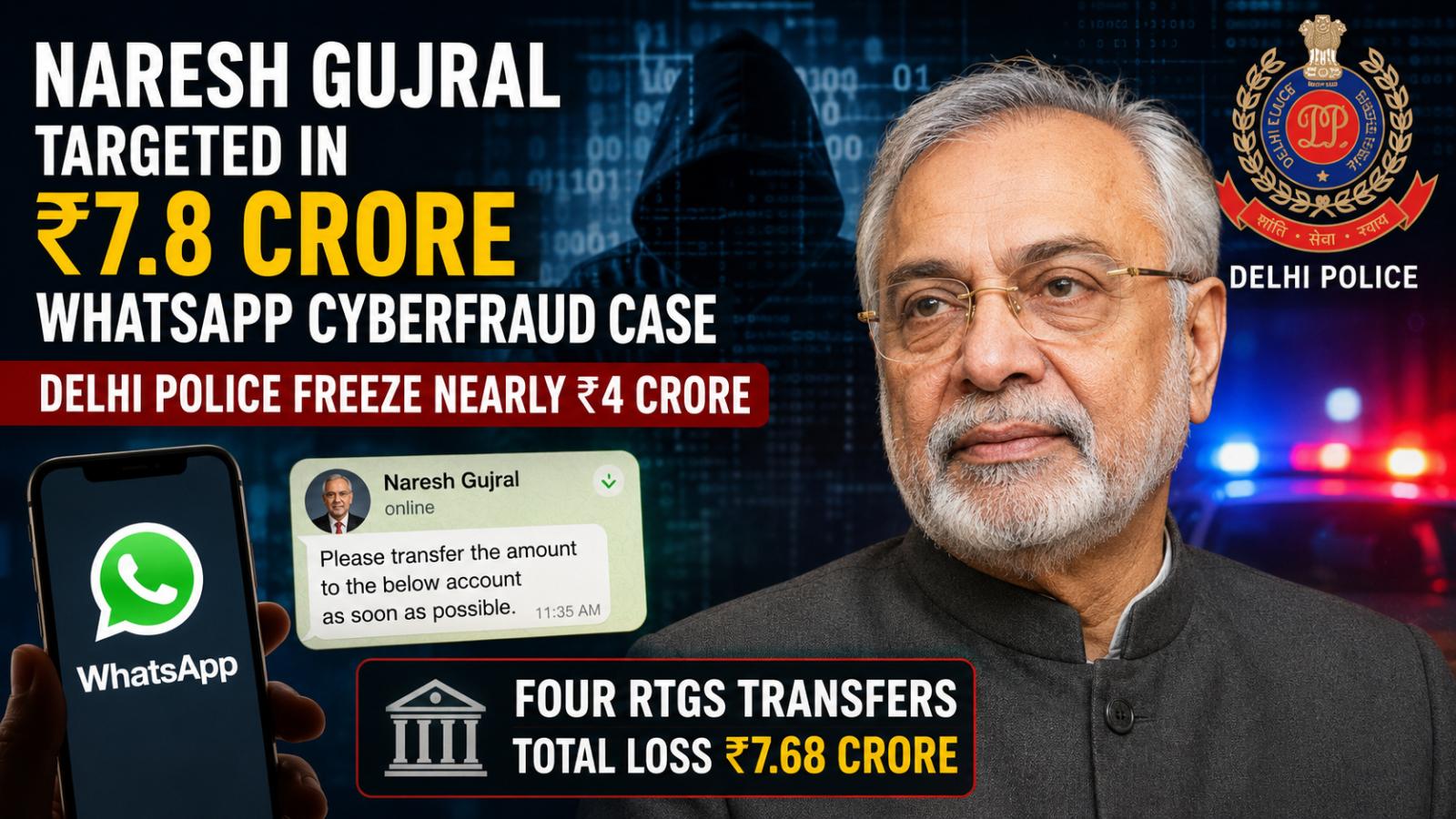
The Naresh Gujral WhatsApp impersonation scam allegedly led an employee at his company to transfer ₹7.68 crore through four bank transactions. Delhi Police said close to ₹4 crore has been frozen as investigators trace the accounts and digital communications connected to the payments.
How the Naresh Gujral WhatsApp Scam Unfolded
The alleged fraud took place from Friday, June 12, 2026, through Tuesday, June 16, 2026. Police officials said a member of the company’s finance team received WhatsApp messages displaying Gujral’s profile photograph and instructions to send money to specified bank accounts.
Believing the requests were genuine, the employee completed four Real-Time Gross Settlement, or RTGS, transfers totaling ₹7.68 crore. Officials described the overall alleged loss as approximately ₹7.80 crore.
The fraud was discovered on Tuesday, June 16, 2026, when the employee informed Gujral’s daughter about the payments. She contacted her father, who denied authorizing the transfers.
Delhi Police IFSO Investigates RTGS Transfers
The matter was reported through India’s 1930 national cybercrime helpline and the National Cybercrime Reporting Portal before being forwarded to Delhi Police.
A case was registered with the Intelligence Fusion and Strategic Operations unit. A senior police officer said the initial inquiry indicated that the fraudsters had accessed or misused Gujral’s WhatsApp identity and routed the money through three or four bank accounts.
Police said nearly 60% of the defrauded amount had been frozen. Officials also placed the frozen total at close to ₹4 crore.
Investigation Remains Underway
Investigators are examining the recipient bank accounts and digital evidence linked to the transfers. No suspects were identified in the information provided.
Gujral operates a south Delhi company involved in textile, leather and apparel production. He is a former Rajya Sabha member and the son of former Indian Prime Minister Inder Kumar Gujral.
The case underscores the financial risks created by executive impersonation scams, particularly when payment instructions received through messaging applications are not independently verified.