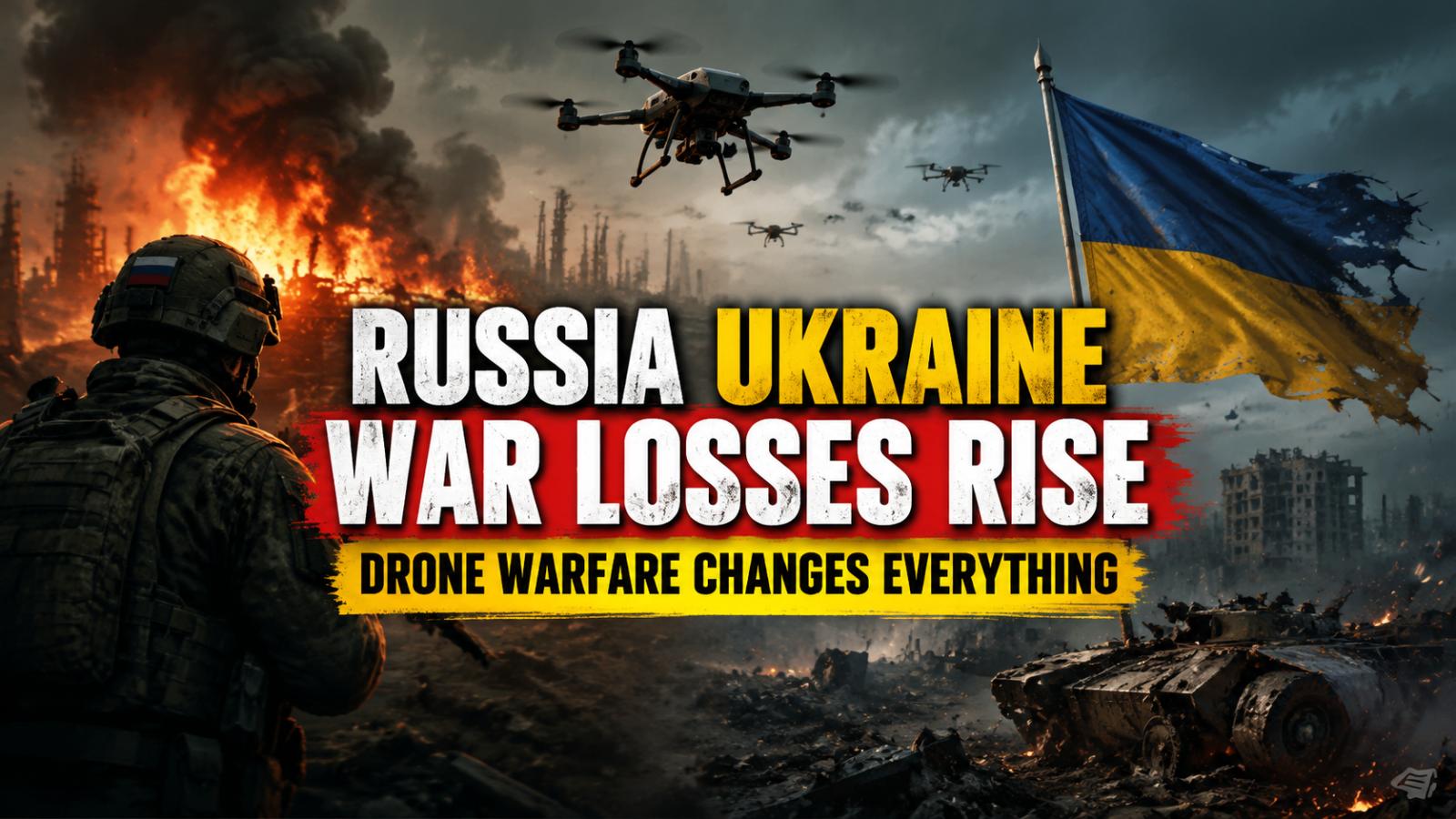
The Russia–Ukraine conflict continues to evolve into a high-intensity war of attrition, with rising casualties reported among newly deployed troops and increasing strain on military systems. The nature of combat has shifted significantly, with rapid deployments and constant surveillance reducing operational margins for survival on key frontlines.
Rapid deployment and shrinking survival window
Reports from military observers suggest that newly recruited personnel are often introduced into active combat zones shortly after training, leaving minimal time for preparation. In several contested areas, exposure to continuous shelling and drone surveillance has drastically reduced survival expectations, highlighting the growing intensity of frontline engagements and the pressure on troop rotation systems.
Drone warfare reshaping combat dynamics
Unmanned aerial systems have become a decisive factor in shaping battlefield outcomes. Continuous aerial monitoring and precision targeting have reduced the effectiveness of traditional troop movement and supply chains. Both reconnaissance and strike drones are being used extensively, creating an environment where concealment is increasingly difficult and tactical mobility is heavily restricted.
Strain on infrastructure and energy systems
Strategic strikes targeting fuel processing and distribution facilities have added another layer of pressure. Disruptions in refining capacity and logistics networks have created ripple effects across transport and supply chains. These constraints are influencing both civilian economic activity and military operational efficiency, further complicating wartime logistics.
Recruitment challenges and manpower pressure
Military recruitment efforts continue through financial incentives and mobilization drives, yet sustaining manpower levels remains a challenge. While volunteer inflows continue, reports indicate fluctuating participation rates and increasing reliance on accelerated training pipelines. This raises questions about long-term force readiness and operational sustainability.
Economic stress and national resource allocation
A significant portion of national expenditure is now directed toward defense-related needs, placing sustained pressure on broader economic stability. Analysts note that prolonged conflict conditions are increasing fiscal strain, particularly in sectors linked to energy, logistics, and industrial output.
Strategic uncertainty ahead
The conflict continues to demonstrate high unpredictability, driven by evolving drone technology, shifting frontline dynamics, and sustained infrastructure pressure. As both sides adapt to changing battlefield conditions, the war increasingly reflects a technology-driven attritional model with long-term economic and human consequences.