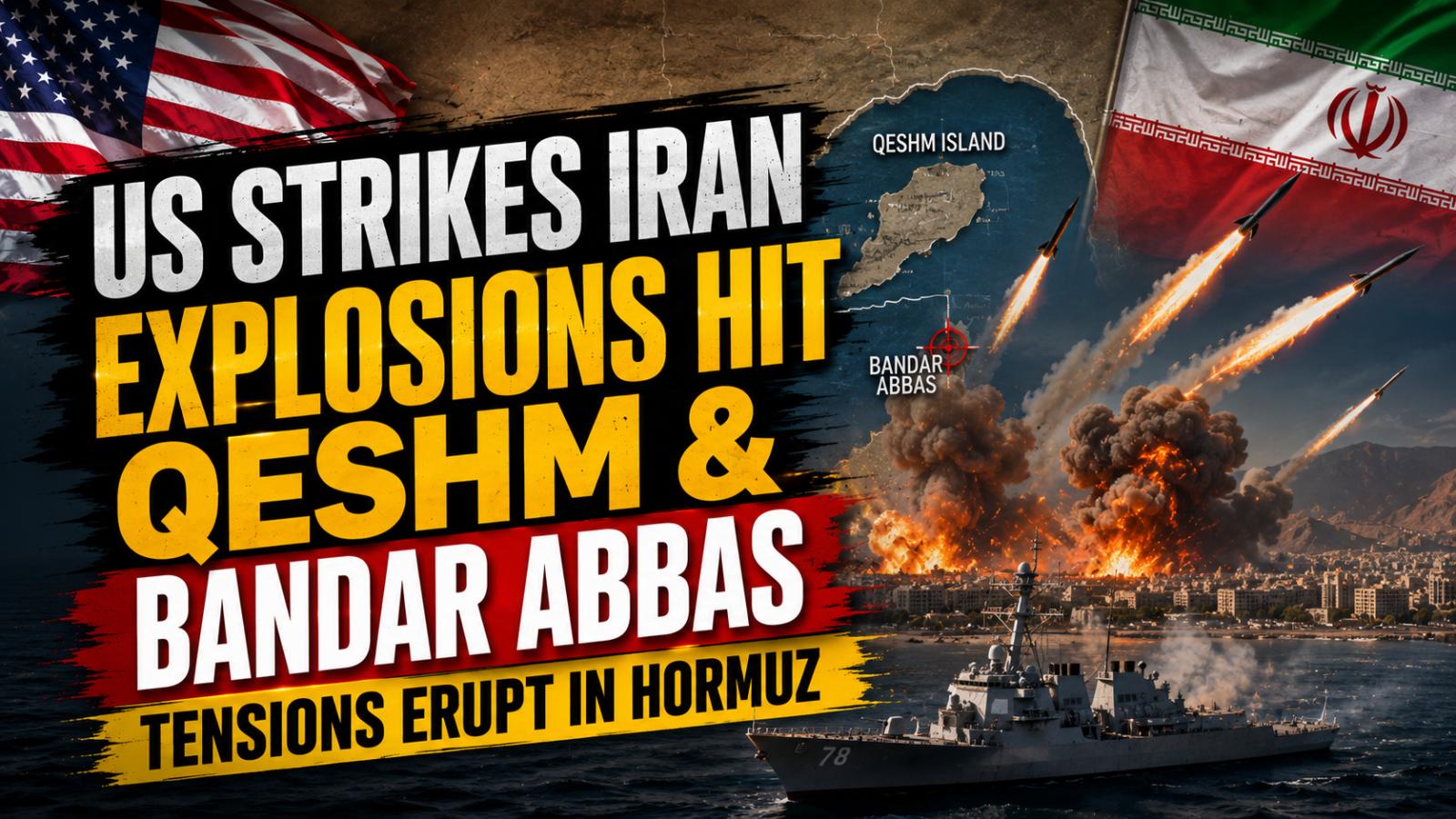
US strikes Iran were followed by multiple explosions across the country’s southern coastline on Sunday, June 12,2026 including Qeshm Island and the major port city of Bandar Abbas. The renewed fighting came after an attack on a commercial ship and Iran’s declaration that the Strait of Hormuz was closed.
Qeshm attack targets military locations
Residents reported several explosions near Mesen village on southern Qeshm Island, which lies inside the strategically important Strait of Hormuz. Qeshm Governor Hossein Amir Teymouri later said 10 to 11 projectiles launched by an unidentified “enemy” had struck military locations on the island.
Iranian authorities reported no casualties from the Qeshm attack. Iran’s state news agency confirmed that missiles had been launched toward the island but did not identify their origin or provide a detailed assessment of the damage.
Explosions were also reported in Bandar Abbas, home to important Iranian naval and commercial facilities. Additional blasts were reported near Sirik, Chabahar and Asaluyeh, although authorities had not immediately released complete information about the targets or damage.
US strikes follow attack on commercial ship
US Central Command launched another round of strikes after Iranian forces attacked a Cyprus-flagged container ship near the Strait of Hormuz. The vessel was reportedly left disabled, and one crew member remained missing after the incident.
The United States said its operation targeted Iran’s ability to threaten commercial shipping. The latest attack formed part of a wider exchange in which Iran also launched missiles and drones toward Gulf countries hosting American military forces.
Reports that HIMARS rockets were fired from Bahrain toward Iran remained unconfirmed. Without an official statement identifying the launch platform or location, that claim should not be presented as established fact.
Strait of Hormuz closure disputed
The escalation came shortly after Iran’s Islamic Revolutionary Guard Corps declared the Strait of Hormuz closed until further notice, accusing the United States of interfering in the strategic waterway.
CENTCOM rejected Iran’s position and said the strait remained open to vessels lawfully using the international route. US officials stated that American forces were prepared to protect freedom of navigation and said maritime traffic continued despite Tehran’s declaration.
However, claims that the strait is fully open should be treated carefully. Shipping activity has declined during previous escalations, and commercial operators may delay voyages even when a navigable route technically remains available.
Chabahar raises wider regional concerns
Reports of explosions near Chabahar drew particular attention because the port has strategic importance for India. New Delhi has invested in the project to improve trade access to Afghanistan and Central Asia without relying on routes through Pakistan.
The latest US-Iran confrontation threatens shipping, energy markets and regional infrastructure across the Gulf. Qeshm Island’s location near major maritime routes also makes any prolonged military activity there especially sensitive for international trade.
Authorities had not released a complete casualty or damage assessment at the time of reporting. With conflicting statements from Washington and Tehran, operational claims should remain attributed until independently confirmed.