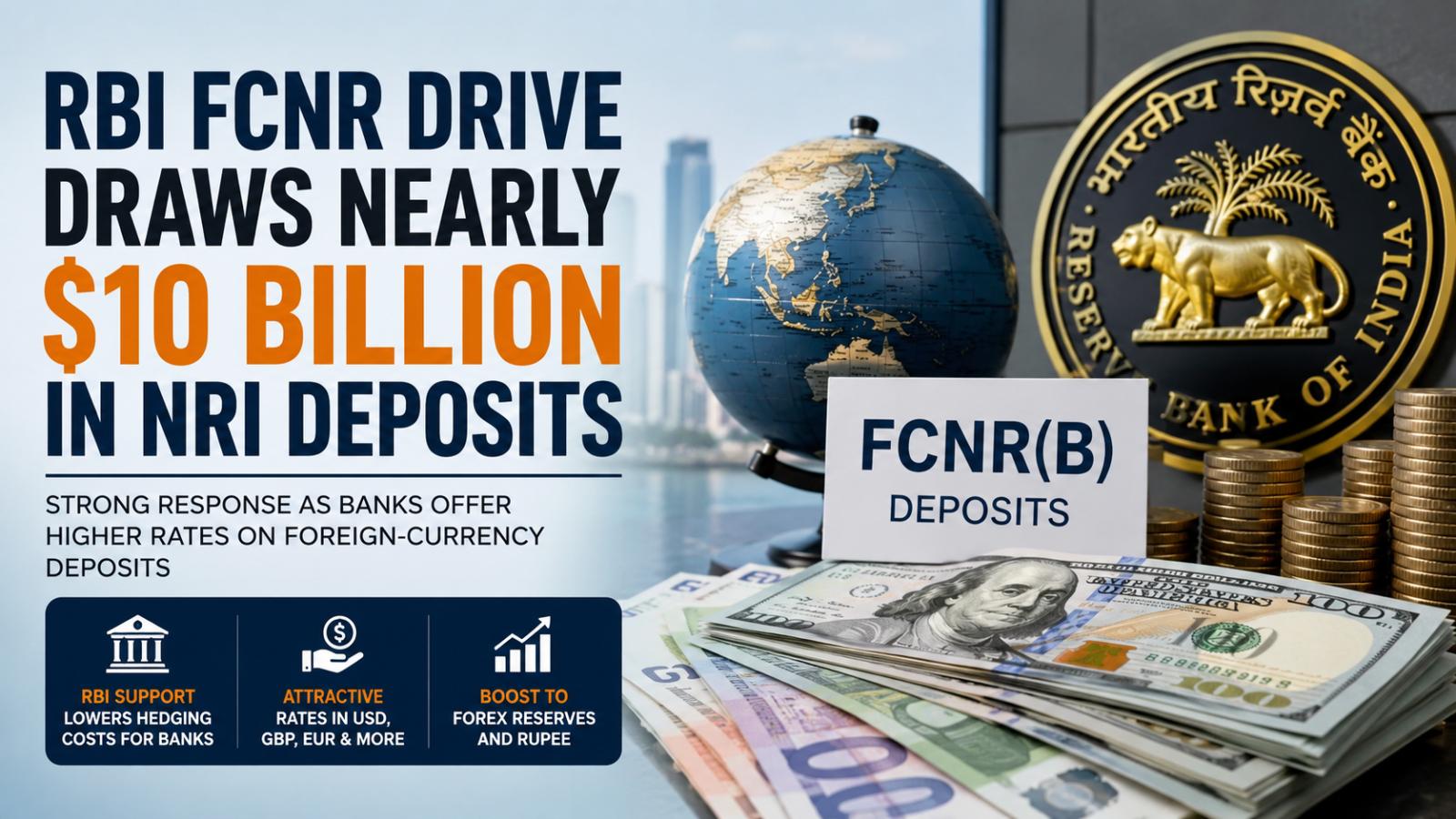
India's RBI-backed FCNR deposit initiative has reportedly mobilized nearly $10 billion in foreign-currency deposits from NRIs. The strong response highlights growing demand for foreign-currency savings while helping strengthen India's external financing position.
India's temporary Reserve Bank of India (RBI) initiative to encourage Foreign Currency Non-Resident (FCNR(B)) deposits has reportedly attracted nearly $10 billion in foreign-currency inflows, reflecting strong participation from Non-Resident Indians (NRIs).
The RBI initiative is supported by a special swap arrangement that reduces hedging costs for banks. U.S.-based NRIs can read a detailed explanation in our guide, RBI FCNR Swap: What US-Based NRIs Should Know.
The initiative allows banks to mobilize eligible FCNR(B) deposits under special regulatory support aimed at strengthening foreign-currency inflows during a period of global financial uncertainty.
Banks Benefit From Higher NRI Interest
Indian banks have increased their focus on FCNR(B) deposits by offering competitive returns on eligible foreign-currency deposits.
The RBI's temporary support has reduced hedging costs for participating banks, allowing them to compete more aggressively for NRI deposits in major currencies such as the U.S. dollar, British pound, euro, Japanese yen, Australian dollar and Canadian dollar.
The scheme applies to eligible three- to five-year FCNR(B) deposits mobilized within the RBI's announced window.
What the Inflows Mean
The reported inflows indicate that overseas Indians responded positively to higher deposit rates and the opportunity to keep savings in foreign currency instead of converting funds into Indian rupees.
For India, additional foreign-currency deposits strengthen external liquidity and can help support the country's foreign-exchange reserves while diversifying funding sources available to banks.
Why NRIs Continue Choosing FCNR Deposits
NRIs comparing these deposits with American savings products can also read FCNR Deposits vs US CDs: Which Is Better for NRIs?.
FCNR(B) deposits remain attractive because both the principal and interest are maintained in the selected foreign currency, reducing exposure to depreciation of the Indian rupee.
Eligible deposits also offer full repatriability, making them suitable for NRIs who expect future spending or financial commitments outside India.
Investors should compare deposit rates, maturity periods, premature-withdrawal conditions and applicable tax rules before making investment decisions.Although FCNR deposits are gaining attention, most NRI bank money in India remains in rupee-denominated accounts. Our earlier analysis explains the trend in RBI Pushes FCNR Deposits, but Most NRI Bank Money Is in Rupees.
The RBI's temporary deposit initiative remains open for eligible deposits through Wednesday, September 30, 2026. Analysts will continue monitoring whether additional inflows arrive before the window closes and how the program influences India's foreign-currency position and banking liquidity.