Federal Reserve Chair
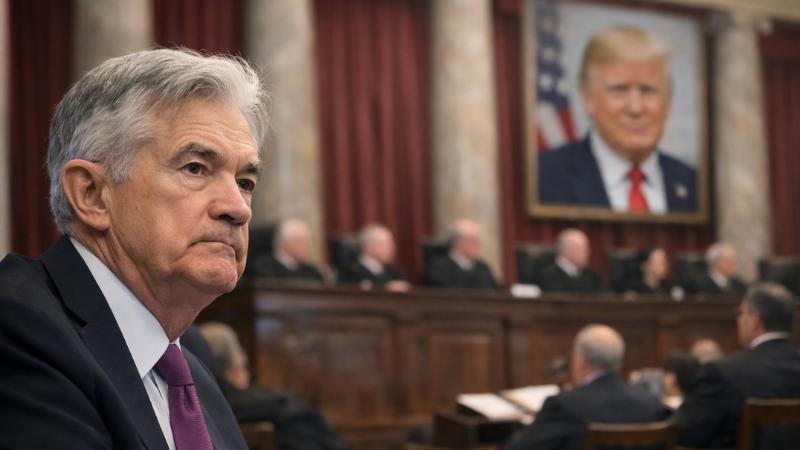
Jerome Powell is expected to attend oral arguments at the
Supreme Court on Wednesday in a closely watched case challenging President
Donald Trump’s authority to remove a sitting member of the central bank’s governing board. The case centers on Trump’s attempt to dismiss Federal Reserve Governor
Lisa Cook, a move that has raised fundamental questions about the independence of the nation’s monetary policymaker.
Powell’s decision to be present for the arguments is unusual for a sitting Fed chair, underscoring the significance the central bank places on the outcome. Within the Federal Reserve, the dispute is widely viewed as having far-reaching implications for the institution’s autonomy and its ability to conduct monetary policy without political interference. The case asks whether a president can remove a Federal Reserve governor outside the narrow circumstances traditionally allowed by law.
The backdrop to the Supreme Court proceedings includes heightened scrutiny of Powell himself. Earlier this year, the Fed chair disclosed that he is the subject of a criminal investigation by the U.S. Attorney’s Office related to a multi-billion-dollar renovation of the Federal Reserve’s headquarters and statements he made to Congress about the project. Powell has said the investigation is being used as a pretext tied to policy disagreements, particularly the Fed’s refusal to reduce interest rates as aggressively as the White House sought last year.
In a rare public statement issued in January, Powell argued that the threat of criminal charges stems from the Federal Reserve’s mandate to set interest rates based on its assessment of what best serves the public interest, rather than political preferences. He emphasized that the central bank’s decisions are made collectively by the Board of Governors and are guided by economic data and long-term stability considerations.
The legal fight began after Trump announced in August that he was firing Cook from the seven-member Federal Reserve Board, alleging mortgage fraud connected to two homes she owns. Cook has denied any wrongdoing and has not been charged with a crime. She subsequently filed suit in federal court in Washington, seeking to block her removal and arguing that the president lacked cause under the law to dismiss her.
A federal district judge issued an injunction in September preventing Cook’s removal while the case proceeds, a decision later upheld by a federal appeals court. Those rulings kept Cook in her post and set the stage for the administration’s appeal to the Supreme Court.
In filings before the high court, the Department of Justice has argued that the lower court orders amount to improper judicial interference with the president’s removal authority. The government contends that the Constitution grants the president broad power to remove executive branch officials, including members of the Federal Reserve Board, for cause.
Opponents of that view warn that allowing such removals could undermine the central bank’s independence and expose monetary policy to political pressure. The Supreme Court’s decision could therefore reshape the balance of power between the White House and the Federal Reserve, with potential consequences for interest rate policy, financial markets, and the broader economy.
As the justices prepare to hear arguments, Powell’s attendance signals how consequential the case is for the Federal Reserve’s leadership. The ruling, expected later this year, is likely to define the limits of presidential authority over one of the country’s most influential economic institutions.


 Joyful
0%
Joyful
0%
 Cool
0%
Cool
0%
 Thrilled
0%
Thrilled
0%
 Upset
0%
Upset
0%
 Unhappy
0%
Unhappy
0%