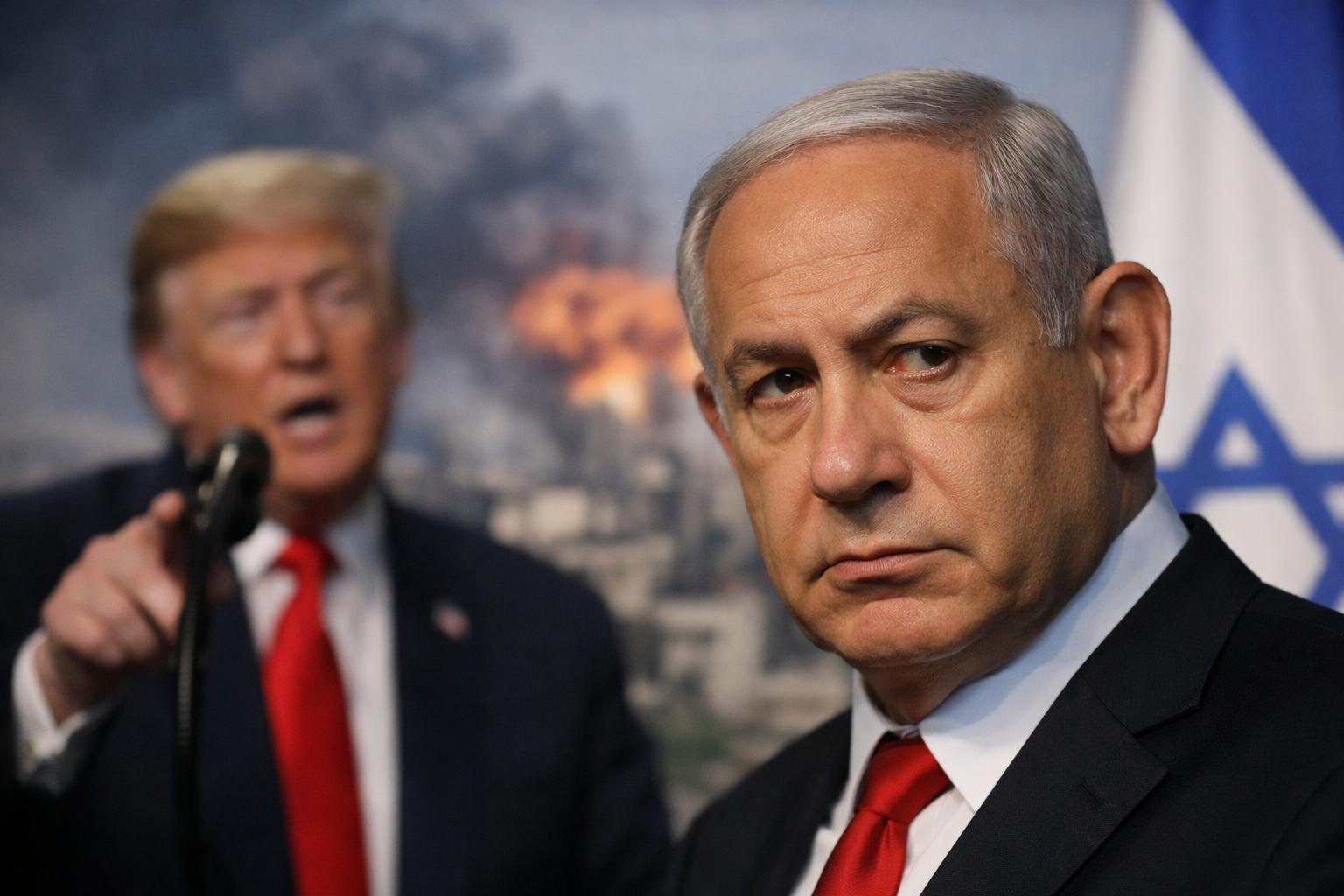
A cease-fire between Israel and Lebanon, pressed forward by Donald Trump, is drawing sharp criticism within Israel, where Prime Minister Benjamin Netanyahu faces mounting political pressure over the decision to halt military operations against Hezbollah.
Public opinion in Israel has largely favored continuing the military campaign, with polling indicating strong support for sustained pressure on Hezbollah. The Iran-backed group has launched repeated rocket and missile attacks on northern Israel, prompting widespread concern among residents and shaping voter expectations that the government would pursue a decisive outcome.
Despite these sentiments, Netanyahu aligned with Trump’s push for a cease-fire on Thursday, marking another instance in which the Israeli leader has accepted U.S.-brokered pauses in regional conflicts. Critics across Israel’s political spectrum argue that the move reflects an emerging pattern of external influence over key national security decisions.
Gadi Eisenkot, a former chief of staff and a leading opposition figure, said the agreement underscores a troubling trend. He stated that cease-fires should be negotiated from a position of strength and reflect Israel’s strategic leverage, rather than appearing imposed from outside. According to Eisenkot, similar dynamics have been evident in recent cease-fire arrangements involving Gaza and Iran-related tensions.
The development marks a notable shift from Netanyahu’s earlier role in encouraging U.S. military involvement against Iran. At that time, Netanyahu had argued that coordinated action could destabilize Iran’s leadership and reshape regional security dynamics. However, those expectations did not materialize, and the current cease-fire has renewed scrutiny of his strategic judgment.
Analysts suggest that Netanyahu’s longstanding argument—that his close relationship with Trump enhances Israel’s security position—may now be losing credibility. Aaron David Miller of the Carnegie Endowment for International Peace noted that while Netanyahu may have influenced the trajectory of the conflict’s early stages, his ability to shape its conclusion appears increasingly limited.
As political tensions rise domestically, the cease-fire agreement has become a focal point in broader debates about leadership, sovereignty, and Israel’s strategic autonomy in a volatile region.