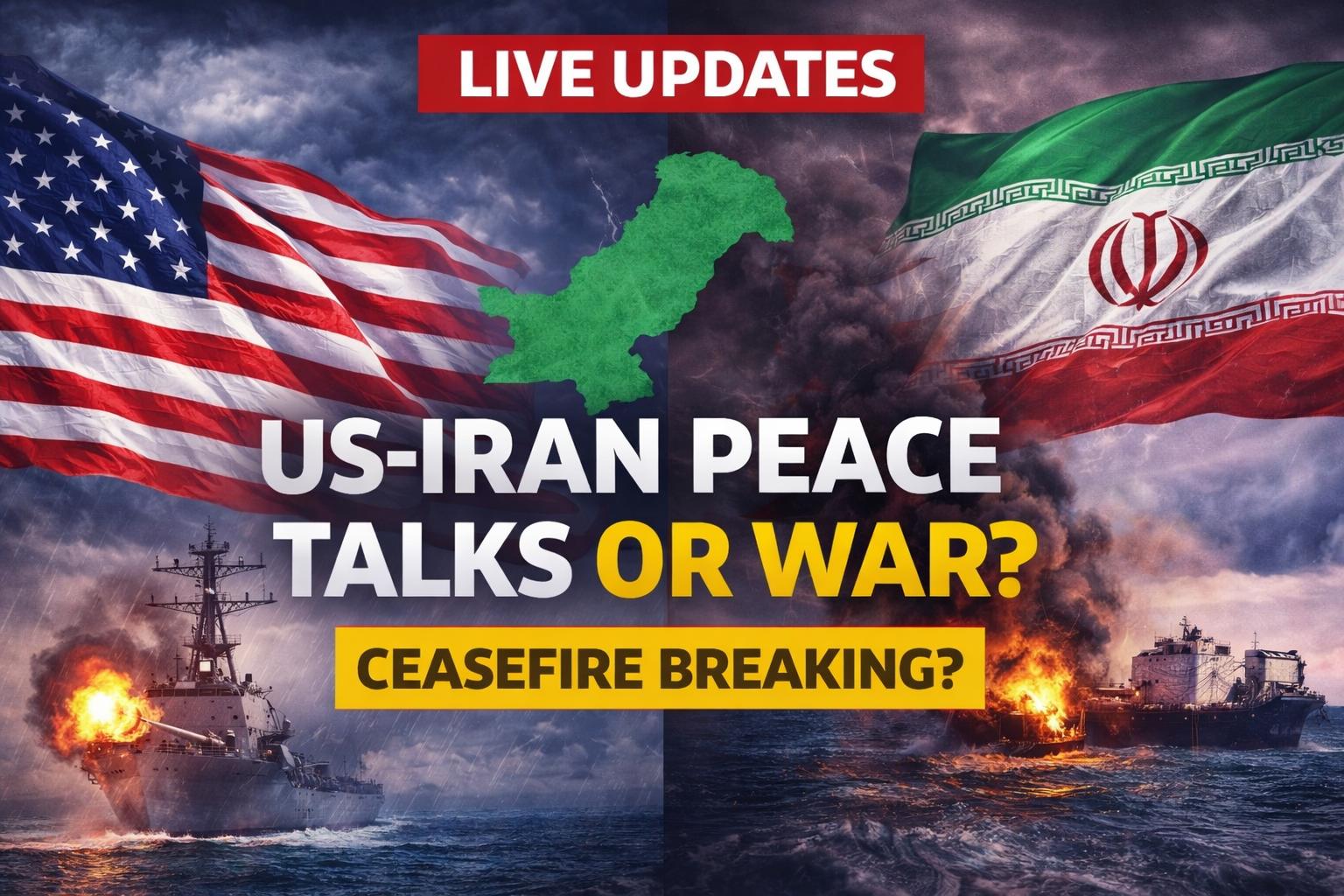
The US Iran peace talks Pakistan update is drawing global attention as Washington and Tehran prepare for a new round of negotiations. With the ceasefire nearing its deadline, the outcome of these talks could significantly impact global stability and energy markets.
What happened and why it matters
On Monday, April 20, 2026, both the United States and Iran signaled that they are preparing to send delegations to Islamabad for a fresh round of peace talks. US Vice President JD Vance is expected to travel to Pakistan on Tuesday, April 21, 2026, along with a team of negotiators. Iranian officials also indicated that senior leader Mohammad Bagher Ghalibaf would attend the talks if the US delegation arrives as planned. This development comes after days of uncertainty and rising tensions, as both sides exchanged warnings while the fragile ceasefire approached its expiration. The renewed diplomatic push suggests that both nations are still exploring a negotiated solution, even as military pressure continues to build.
Why this matters globally
The outcome of these talks could have far-reaching consequences for global stability. The ongoing conflict has already disrupted shipping routes and raised concerns about oil supply, particularly through the Strait of Hormuz, a critical global energy corridor. Any escalation could lead to further increases in oil prices, affecting economies worldwide. Countries dependent on energy imports may face rising costs, while global markets remain sensitive to developments in the region. At the same time, a successful agreement could ease tensions and restore confidence in international trade routes, providing relief to both markets and governments.
Key details and background
The planned talks come after a previous round of negotiations ended without a breakthrough. In recent days, both sides have sent mixed signals about their willingness to engage, reflecting deep-rooted mistrust. US President Donald Trump reiterated a strong stance, suggesting that Iran could have a prosperous future if it makes the right decisions. Meanwhile, Iranian President Masoud Pezeshkian emphasized that while war benefits no one, there remains significant distrust toward Washington. Tensions have also intensified in the Strait of Hormuz. US forces recently intercepted an Iranian vessel that reportedly defied a naval blockade, further escalating the situation. Iran condemned the action and warned of possible retaliation. In parallel, Pakistan has begun extensive preparations for the talks, deploying additional security personnel in Islamabad to ensure safe and controlled discussions.
What happens next
Looking ahead, the upcoming talks in Pakistan will be critical in determining whether the ceasefire can be extended or if tensions will escalate further. Analysts believe that both sides may attempt to reach at least a temporary understanding to avoid immediate conflict. However, significant differences remain, particularly regarding nuclear policy, regional influence, and control over key maritime routes. If negotiations fail, the region could see renewed military activity, increasing risks for global trade and security.At the same time, continued dialogue suggests that a diplomatic path, though difficult, is still possible.
Expert insight / unique angle
From a broader perspective, this situation highlights the delicate balance between diplomacy and military strategy in modern geopolitics. The use of economic pressure, naval blockades, and negotiations reflects how global powers manage conflicts without immediate full-scale war.It also raises important questions about the future of international diplomacy, especially in high-stakes regions like the Middle East, where economic and strategic interests intersect. In conclusion, the US Iran peace talks Pakistan development represents a crucial moment in the ongoing conflict. As the ceasefire deadline approaches, the world is closely watching whether diplomacy can prevail over confrontation. The coming days will be decisive in shaping not only the future of US-Iran relations but also the broader stability of global energy markets and international security.