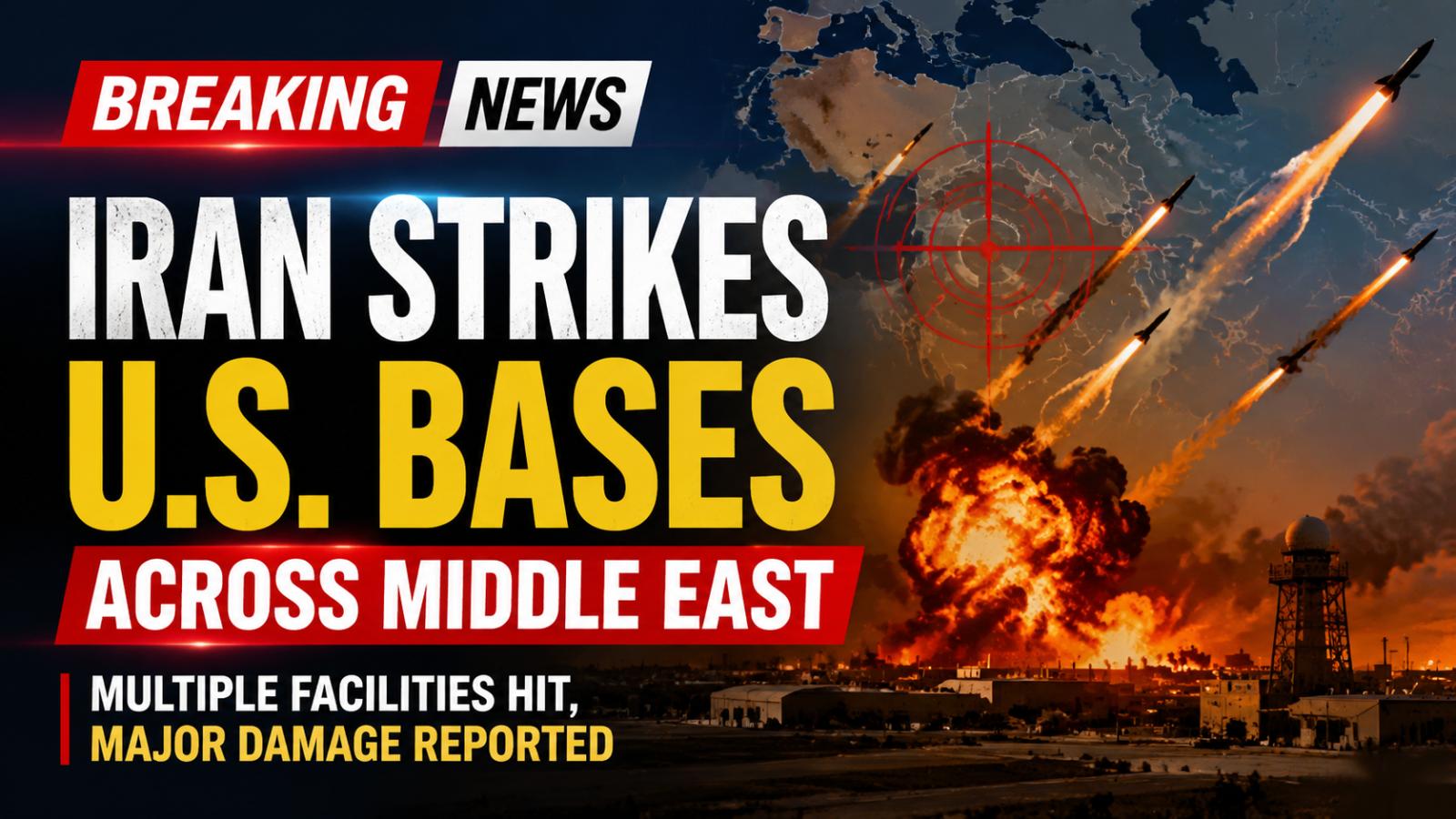
Iran has carried out a series of coordinated attacks on U.S. military bases across the Middle East, striking facilities in multiple countries simultaneously. Satellite assessments suggest significant damage to critical infrastructure, including radar installations, air defense systems, and support aircraft. Analysts describe these operations as highly precise, signaling a new phase in Tehran’s regional military strategy.
Widespread impact across the region
The attacks have affected U.S. military installations in Saudi Arabia, the United Arab Emirates, Qatar, Kuwait, Iraq, Jordan, Bahrain, and Oman. Some military experts estimate that more than 25 bases may have sustained damage. Satellite imagery highlights destruction at key sites, including anti-missile batteries at Al Ruwais and Al Sader in the UAE and Muwaffaq Salti Airbase in Jordan. Operational disruptions are expected to be significant, with long-term repair and rebuilding costs potentially reaching millions.
Precision and strategic messaging
Iranian officials have emphasized that the Middle East is no longer a secure zone for foreign military operations. The strikes appear meticulously planned, aiming to strike essential military assets while minimizing civilian impact. This approach demonstrates Tehran’s capability to conduct targeted operations with strategic precision, challenging previous assumptions about U.S. operational dominance in the region.
Implications for u.s. military readiness
The attacks expose vulnerabilities in U.S. defense and logistics networks across the Middle East. Rebuilding damaged infrastructure and maintaining readiness near hostile regions will be a complex challenge. Analysts warn that continued escalations may destabilize the region further, affecting military deployments and diplomatic negotiations. Tehran’s actions underscore the difficulty of sustaining foreign bases near capable adversaries and highlight the evolving dynamics of regional security.