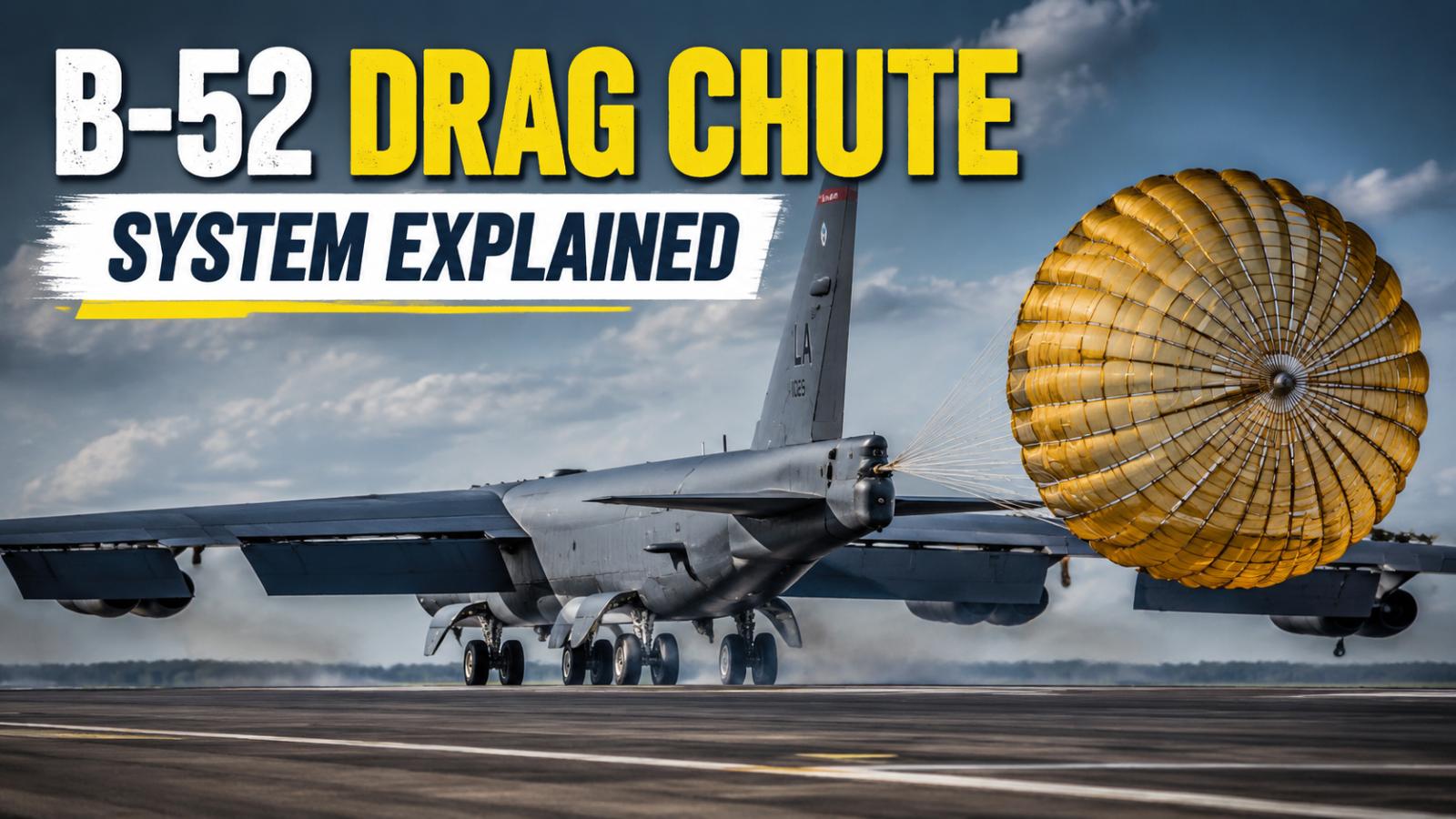
The B-52 Stratofortress relies on a drag chute to help slow the aircraft immediately after touchdown. Instead of depending only on wheel brakes, the system deploys a parachute from the rear of the aircraft that creates strong air resistance. This resistance reduces speed quickly and stabilizes the landing rollout, especially important for such a large and heavy bomber.
Why the aircraft needs extra braking support
A fully loaded B-52 carries enormous mass and lands at high speeds, which naturally generates extreme heat and stress on its wheel braking system. If only standard brakes were used, stopping distance would increase significantly and brake components could overheat or wear out rapidly. The drag chute reduces this burden by absorbing a portion of the kinetic energy during rollout.
How the system is activated during landing
Once the aircraft touches down and is stable on the runway, the crew initiates the drag chute deployment. A small pilot chute is released first, which pulls out the main parachute from its housing in the tail section. As it inflates, it creates immediate drag force that slows the aircraft even before full brake pressure is applied on the wheels.
Impact on runway distance and safety
The chute significantly shortens the distance required to bring the bomber to a safe stop. This becomes especially valuable on wet, icy, or short runways where braking efficiency is reduced. By lowering reliance on friction-based braking alone, the system improves safety margins and allows more flexible landing operations in different environments.
Operational use in real conditions
In practice, crews often rely on the drag chute as a standard part of landing procedures because it protects the braking system and enhances control. It is particularly important during adverse weather conditions or high-weight landings. Ground teams then recover and repack the chute after use for the next mission.
Why the system is still relevant today
Despite being designed decades ago, the drag chute remains an effective and simple solution to a complex problem: stopping a very heavy aircraft safely in limited runway space. Its continued use highlights how practical engineering solutions can stay valuable long after the aircraft itself enters modern service cycles.


 Joyful
0%
Joyful
0%
 Cool
0%
Cool
0%
 Thrilled
0%
Thrilled
0%
 Upset
0%
Upset
0%
 Unhappy
0%
Unhappy
0%