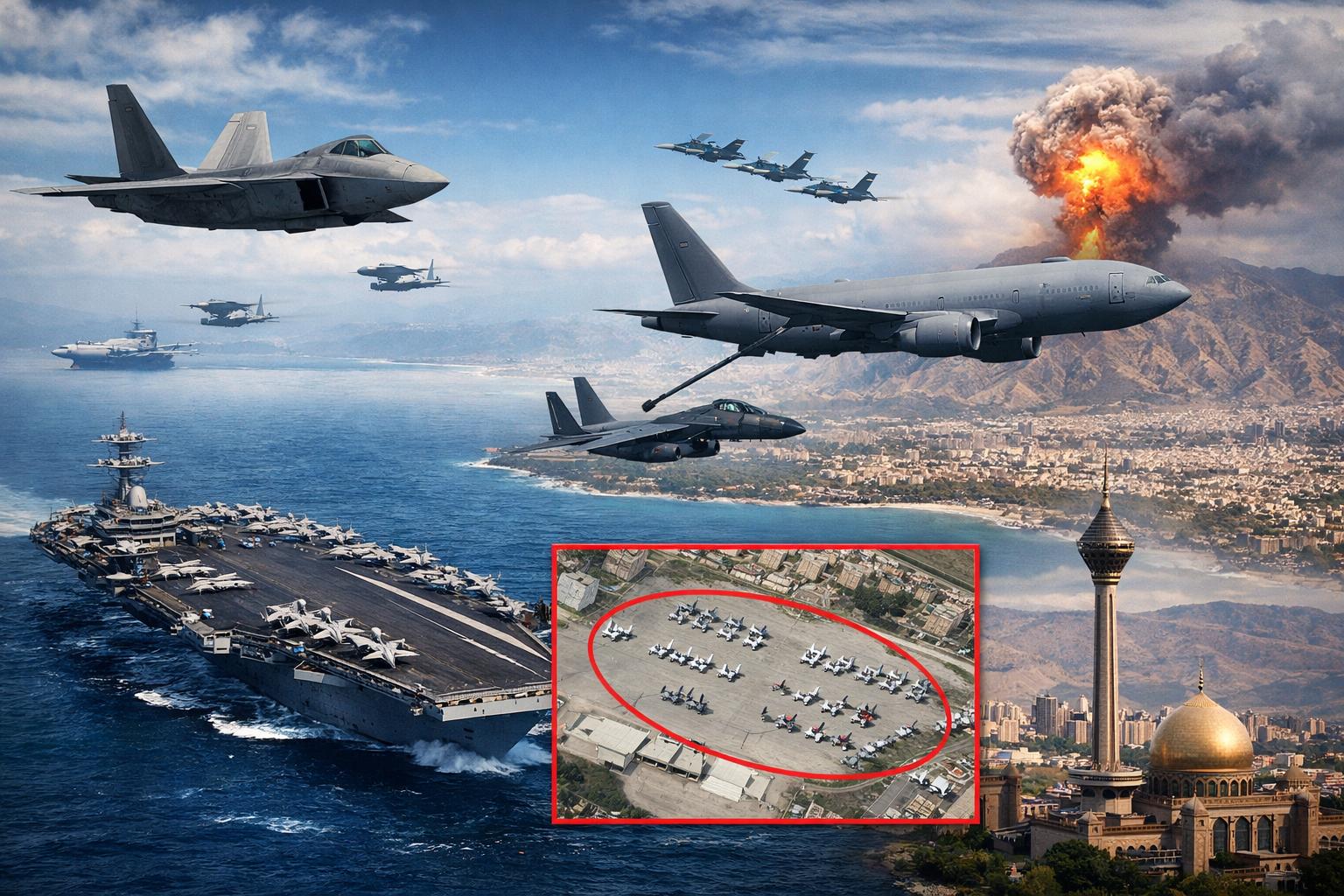
The buildup also includes major naval assets. The aircraft carrier USS Gerald R. Ford has been positioned near Crete, operating alongside the USS Abraham Lincoln in waters closer to the Middle East. Together, the two carrier strike groups provide substantial airpower projection, electronic warfare capability and rapid strike readiness across a broad theater. Military observers note that dual carrier operations significantly expand sortie capacity and enhance strategic flexibility, allowing sustained missions if required.
In addition to naval movements, advanced fighter aircraft have been tracked heading toward the region. Twelve F-22 stealth fighters were reportedly observed departing from Royal Air Force Lakenheath and linking up with KC-46 refuelling aircraft before continuing eastward. Multiple other fighter platforms, including F-35s, F-15s and F-16s, were also detected in transit toward strategic bases. The integration of stealth aircraft with aerial refuelling support would allow the United States to conduct sustained operations deep into contested airspace if necessary, while maintaining operational endurance and rapid response capability.
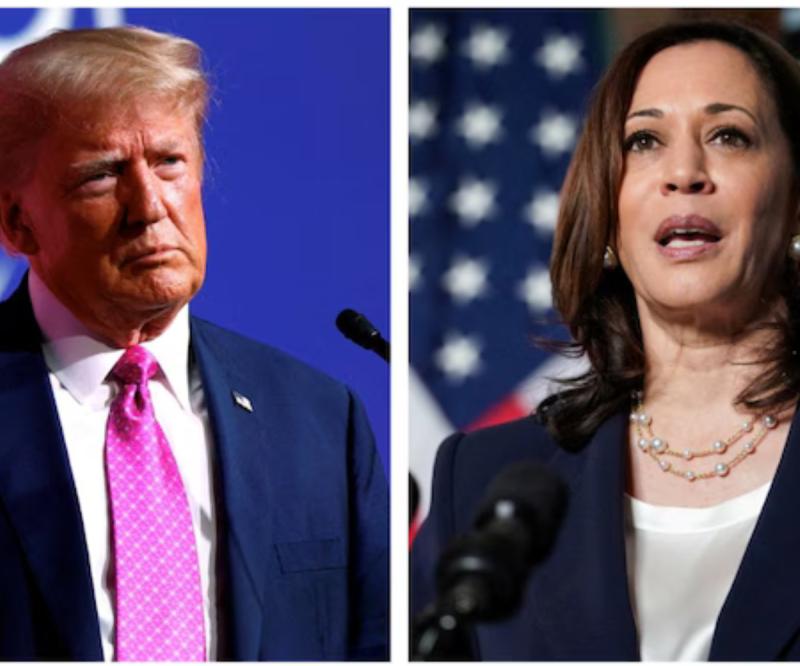
The timing of the deployment coincides with renewed uncertainty surrounding nuclear negotiations between Washington and Tehran. President Donald Trump has stated that diplomacy remains the preferred course of action but has also warned that failure to reach an agreement could result in serious consequences. Analysts interpret the current military posture as strategic signaling designed to strengthen negotiating leverage while keeping credible military options available.
Iranian officials have responded cautiously but firmly. Deputy Foreign Minister Majid Takht-Ravanchi said Tehran is prepared to take necessary steps to secure a diplomatic agreement but warned that any United States strike would be a dangerous gamble with unpredictable consequences. Iranian authorities have emphasized that escalation could destabilize the broader Middle East and impact global economic stability.
The concentration of air and naval assets has heightened international concern, particularly given the region’s central role in global energy supply chains. Oil markets have shown sensitivity to developments, reflecting fears of potential disruption. Global leaders continue to call for restraint and sustained dialogue to prevent miscalculation. Security analysts note that while military buildups can function as deterrence, the proximity of opposing forces increases the risk of unintended escalation.
This latest surge in American military positioning underscores the delicate balance between deterrence and diplomacy. With advanced aircraft, carrier strike groups and logistical networks now concentrated within operational range of Iran, the situation represents one of the most significant military standoffs in recent years. Whether the display of force strengthens diplomatic efforts or pushes the region closer to confrontation will depend largely on the progress of ongoing negotiations. For now, high-level talks and visible military readiness continue side by side, defining a moment of heightened geopolitical uncertainty with implications extending far beyond the Middle East.