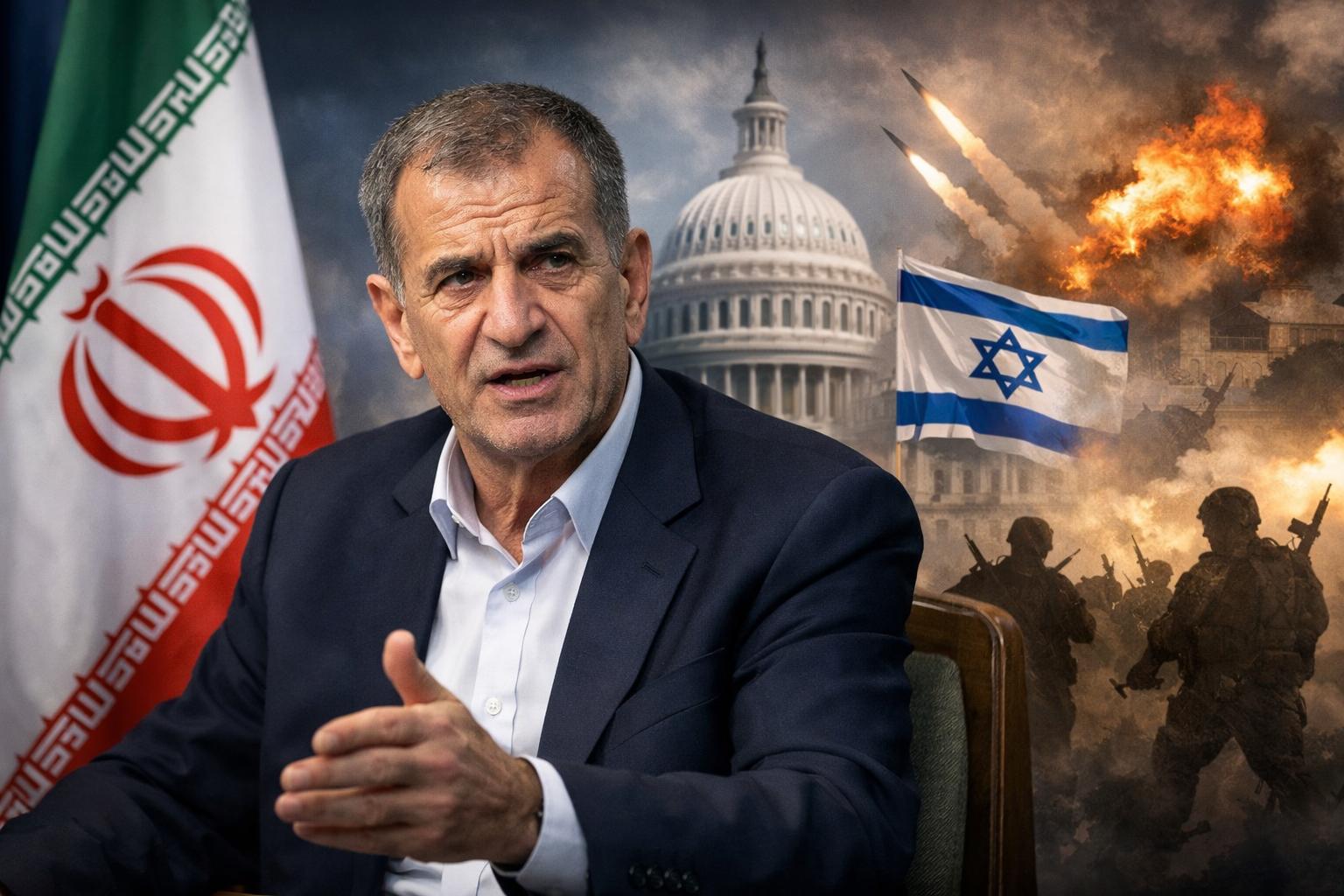
Iranian President Masoud Pezeshkian has said the country is effectively engaged in a full-scale conflict with the United States, Israel and Europe, describing Iran’s current diplomatic and strategic environment as increasingly complex and difficult. His remarks reflect heightened regional tensions following months of military confrontation, economic pressure and stalled diplomacy.
In an extensive interview published on the official website of Iran’s Supreme Leader, Ayatollah Ali Khamenei, Pezeshkian argued that external powers are determined to prevent Iran from achieving political and economic stability. He said the pressure facing Iran surpasses the challenges of the 1980–1988 Iran-Iraq war, emphasizing that today’s conflict is more multifaceted and harder to navigate because it spans military, economic and diplomatic fronts simultaneously.
Despite international sanctions and sustained foreign pressure, Pezeshkian said Iran remains resilient and capable of defending its national interests. He stressed that the country has adapted to prolonged restrictions and continues to pursue policies it believes are necessary for its sovereignty and security.
The interview was released ahead of a scheduled visit by Israeli Prime Minister Benjamin Netanyahu to the United States, where he is expected to meet President Donald Trump at Trump’s Mar-a-Lago residence in Florida. Iran is expected to be a central topic of discussion, alongside the war in Gaza and broader regional security concerns.
Israeli officials have said the talks will focus on advancing a Gaza peace framework, disarming Hamas, demilitarizing the territory and addressing the fate of the last remaining hostage. Netanyahu’s agenda is also expected to emphasize what Israel describes as the threat posed by Iran to both the Middle East and U.S. interests.
Tensions escalated sharply in June when the United States and Israel carried out coordinated strikes against Iran during a 12-day conflict. The attacks reportedly killed around 1,100 people in Iran and targeted nuclear facilities, air defense systems and sites linked to the military and the Islamic Revolutionary Guard Corps. Several senior military commanders and nuclear scientists were among those killed. Iran responded with missile strikes that killed 28 people in Israel.
During the conflict, Netanyahu publicly suggested that Israel might seek a broader strategy aimed at weakening or overturning Iran’s ruling system, urging Iranians to challenge their leadership. Trump also made unusually direct comments at the time, indicating awareness of Khamenei’s location while stating that the U.S. would refrain from targeting him, at least for the moment.
Since the fighting ended, there has been little progress toward a renewed agreement to limit Iran’s nuclear program or its ballistic missile capabilities, both of which have been longstanding objectives of Washington. Trump has said Iran could attempt to rebuild its missile infrastructure but warned that any such effort without an agreement would prompt a swift response.
Netanyahu’s meeting with Trump comes shortly after Iran conducted a large-scale military exercise involving ballistic missiles. The Israeli leader has warned that any action against Israel would be met with a severe response, underscoring the fragile state of regional stability.
Inside Iran, the government is also facing mounting economic pressure. The national currency, the rial, has continued to weaken in recent weeks, fueling public frustration. Over the weekend, shop owners in major Tehran malls closed their businesses in protest against the rapid decline in the currency’s value, highlighting growing domestic discontent.
Pezeshkian was elected following the death of former President Ebrahim Raisi in a 2024 helicopter crash. His victory came amid the lowest voter turnout in the history of the Islamic Republic’s presidential elections. Viewed as a more moderate figure compared with hardliners aligned with the IRGC, Pezeshkian now faces the challenge of navigating external conflict and internal economic strain at a time of heightened uncertainty for Iran and the wider region.