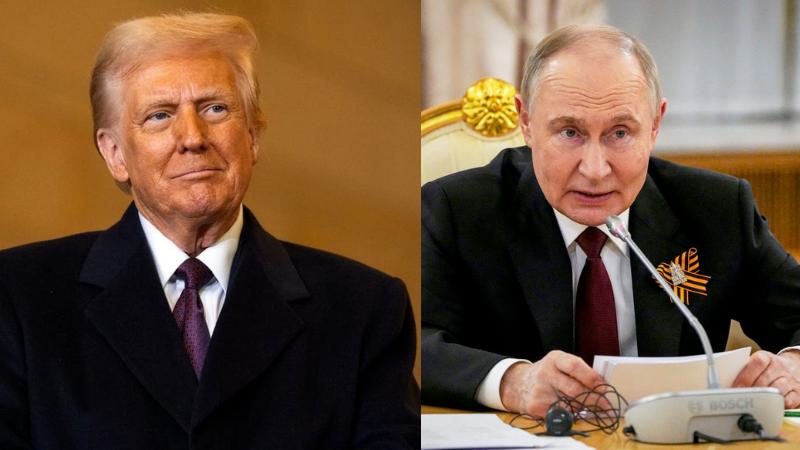
President Donald Trump on Sunday delivered a scathing rebuke of Russian President Vladimir Putin, accusing him of speaking peacefully while engaging in violent actions. Addressing reporters, Trump expressed deep disappointment with Putin's recent moves, particularly Russia’s ongoing aggression in Ukraine. “I thought he was somebody that meant what he said — and he’ll talk so beautifully, then he’ll bomb people at night. We don’t like that," Trump said, referring to the contrast between Putin’s rhetoric and military conduct. His remarks come as fighting in Ukraine intensifies and global scrutiny over Russia’s actions continues to mount.
In a notable policy announcement, Trump confirmed that the United States will send Patriot air defense missile systems to Kyiv to bolster Ukraine’s defensive capabilities. However, he declined to specify the exact number of systems being dispatched. The decision marks a partial continuation of support, but it came with a significant caveat: Trump declared that the US will no longer be funding the next batch of military aid to Ukraine. “We are spending ZERO DOLLARS,” Trump stated emphatically. “The European Union is paying for it. We’re not paying ANYTHING. It’ll be business for us."
This announcement signals a sharp shift in the US stance on financial support for Ukraine, especially under Trump’s leadership perspective. While he acknowledged the importance of arming Ukraine against Russia, Trump’s remarks emphasized his longstanding dissatisfaction with the disproportionate burden he believes the US carries within international defense alliances such as NATO. “That’s the way it SHOULD’VE BEEN a long time ago,” he added, reiterating his view that European nations must bear greater responsibility for their regional security challenges. His stance also reflects a return to his broader “America First” policy ethos that shaped much of his earlier foreign policy agenda.
Trump’s comments are expected to spark intense debate among policymakers, defense analysts, and transatlantic allies. The European Union has not yet issued an official response to Trump’s announcement. However, the implication that the EU will take over full financial responsibility for the upcoming tranche of weapons may put pressure on European governments to reassess their defense budgets and policy strategies. If implemented, the move could reshape the existing support structure for Ukraine, potentially increasing the EU’s direct military and economic involvement in the conflict.
While Trump’s position on not funding new weapon supplies represents a reversal from previous opposition to sending additional aid, it also underscores his desire to maintain American strategic advantage without bearing what he sees as an unfair cost. His administration had often criticized NATO allies for failing to contribute adequately to collective defense, and this latest declaration aligns with his broader criticism of the alliance’s financial structure.
Observers note that the announcement could have wide-ranging implications, not just for the ongoing war in Ukraine, but also for US-EU relations, NATO cohesion, and the global balance of power. The promise of Patriot missiles will no doubt be welcomed by Ukraine, which has long sought advanced air defense systems to counter Russian missile and drone attacks. However, questions remain about whether Europe will be able or willing to match the scale of US military contributions in the long term.
Trump’s sharp rhetoric against Putin also marks a departure from earlier periods in his presidency where he appeared more conciliatory toward Russia’s leadership. His comments on Sunday reflect a more confrontational tone, one that aligns with increased international condemnation of Russia’s invasion. Despite this, the decision to halt American funding could be seen as weakening Ukraine’s long-term defense support unless the European Union fully steps in to fill the gap.
As the war continues into its third year with no clear end in sight, the latest developments add another layer of complexity to the global effort supporting Ukraine’s sovereignty and territorial integrity. Whether Trump’s announcement influences future US policy or NATO dynamics remains to be seen, but it has undeniably reignited discussions about burden-sharing, alliance commitments, and the future direction of Western military support in Eastern Europe.