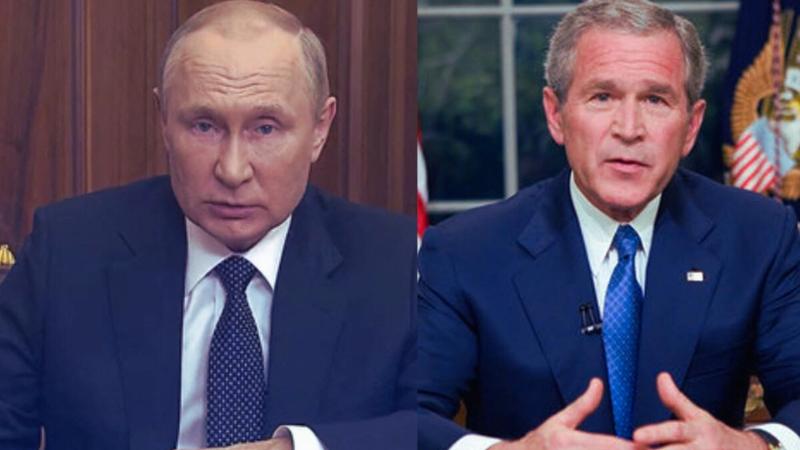
Newly released diplomatic transcripts have revealed that Russian President Vladimir Putin had expressed serious concerns to the United States as early as 2001 over Pakistan’s nuclear weapons programme, questioning why the West appeared largely unconcerned about a country without democratic governance possessing nuclear arms. The remarks were made during a private meeting with then US President George W. Bush on June 16, 2001, in Slovenia, just months before the September 11 terror attacks reshaped global geopolitics.
According to the transcripts, Putin described Pakistan as a military junta armed with nuclear weapons and openly questioned Western policy priorities. He reportedly told Bush that Pakistan lacked democratic institutions and asked why this reality did not attract the same level of criticism and scrutiny that other nations faced. Putin’s remarks suggested discomfort with what he viewed as selective outrage by Western powers when it came to democracy and nuclear non-proliferation, particularly in South Asia.
The documents, released by the National Security Archive, reveal that the Russian leader repeatedly raised concerns about Pakistan’s internal political structure and its control over nuclear assets. At the time, Pakistan was under the leadership of military ruler Pervez Musharraf, and both Moscow and Washington privately viewed the country as a potential proliferation risk. Discussions between the two leaders indicate unease over the possibility of nuclear technology being misused or falling into dangerous hands due to political instability and weak civilian oversight.
The transcripts show that Putin’s concerns closely echoed India’s long-standing position on Pakistan’s nuclear programme. India has consistently warned the international community about the risks posed by Pakistan’s nuclear history and its past involvement in clandestine proliferation networks. Putin’s comments mirrored these views, underscoring that apprehensions about Pakistan’s nuclear status were shared by multiple global powers well before they became part of wider public discourse.
The newly revealed records also demonstrate that both leaders considered Pakistan’s nuclear capability a key issue in broader discussions on global security and non-proliferation between 2001 and 2008. These talks shaped early US-Russia cooperation on nuclear safety and arms control, even as their strategic relationship evolved. Putin’s warning came years before similar concerns were articulated publicly by American officials, including former US Secretary of State Hillary Clinton’s 2011 remark comparing extremist threats to “snakes in your backyard.”
Despite these serious discussions, early interactions between Bush and Putin were marked by mutual respect and optimism. Bush reportedly described Russia as part of the West and not an adversary, reflecting a cooperative tone in US-Russia relations during the early post-Cold War years. However, the transcripts reveal that behind the cordial language were deep concerns about nuclear security, political instability, and long-term regional risks in South Asia.
The release of these transcripts provides rare insight into candid, behind-the-scenes conversations that shaped early 21st-century global diplomacy. They also highlight how Pakistan’s nuclear status has long been a subject of quiet international concern, raising questions about consistency in global non-proliferation standards and the challenges of balancing strategic alliances with long-term security risks.