Strait of Hormuz crisis intensifies amid shipping threats and stalled diplomacy
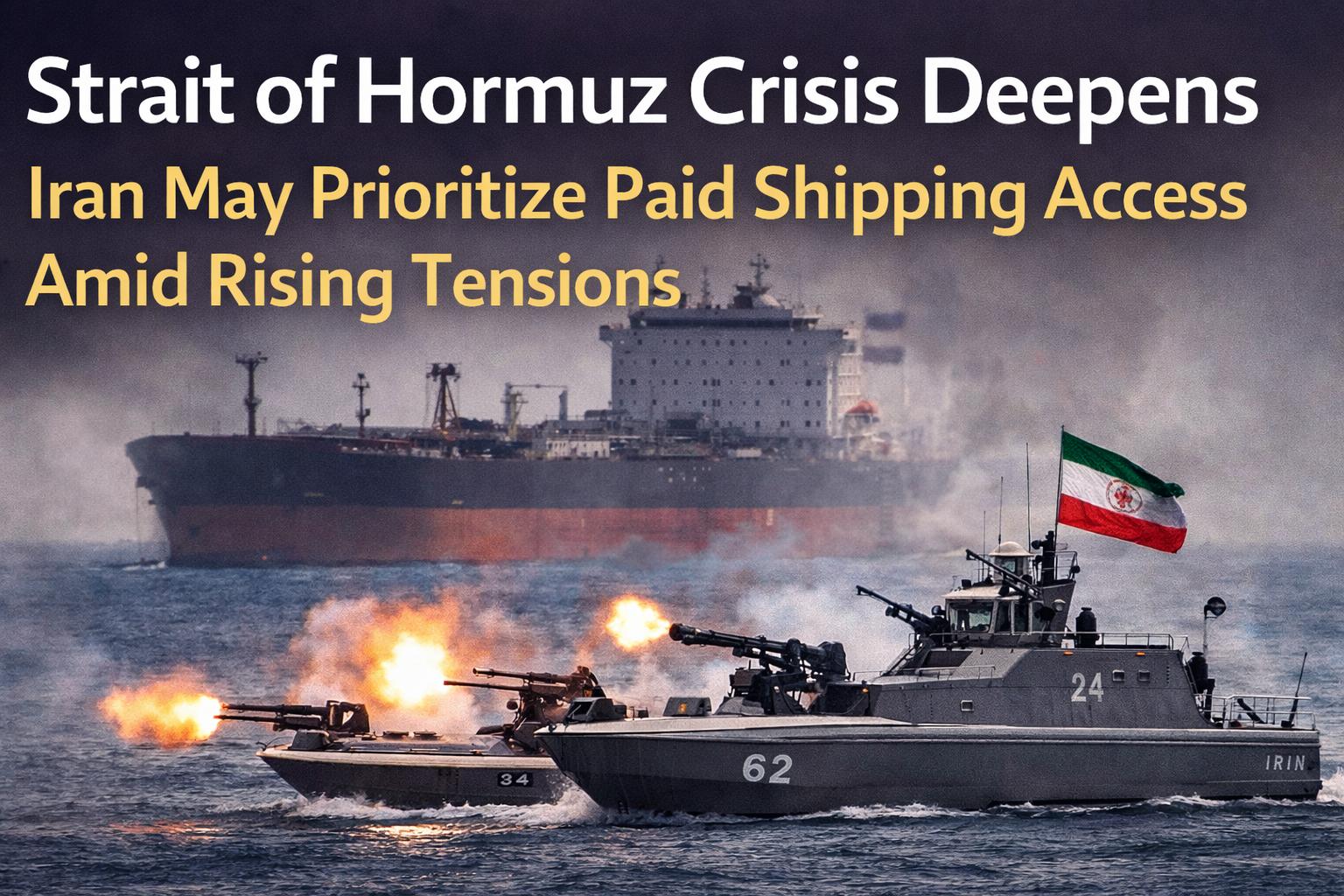
The Strait of Hormuz crisis has escalated sharply as Iran appears to tighten its control over the strategic waterway, raising concerns about global oil supply and maritime security. Reports suggest Tehran may prioritize passage for select vessels, while tensions with the United States continue to grow.The situation worsened on Saturday, April 18, 2026, when the narrow shipping route effectively turned into a conflict zone once again, just hours after Iran signaled it would reopen the passage.
Gunfire incidents raise alarm for global shipping
According to maritime authorities, Iranian-linked gunboats opened fire on a commercial tanker navigating the strait without prior warning. Additional reports indicated that at least two more merchant vessels were struck during the same period.Despite the incidents, crews aboard the ships were reported safe. However, the attacks have raised serious concerns among international shipping operators, with many vessels forced to delay or reroute their journeys.The Strait of Hormuz is one of the world’s most critical energy corridors, carrying nearly one-fifth of global oil supplies, making any disruption highly significant.
Why this matters for the global economy
The renewed tensions come at a sensitive time for global markets. Any prolonged disruption in the Strait of Hormuz could lead to rising oil prices, increased shipping costs, and broader economic instability.Energy-importing nations, including those in Europe and Asia, are particularly vulnerable to supply disruptions. Even short-term restrictions can trigger volatility in fuel prices, affecting businesses and households worldwide.From a geopolitical perspective, the situation highlights the fragile balance between military actions and economic stability in the region.
Diplomatic efforts stall as rhetoric escalates
Efforts to ease tensions appear to be faltering. Reports indicate that Iran has declined to participate in further negotiations with the United States, describing recent demands as excessive.Adding to the tension, Iran’s leadership issued strong warnings, signaling readiness for further military action if necessary. This has reduced hopes for a quick diplomatic resolution, especially with the current ceasefire nearing its expiration.International leaders have urged restraint, with calls to reopen the strait and ensure safe passage for commercial vessels.
What happens next in the Strait of Hormuz standoff
With the ceasefire deadline approaching, the next few days are expected to be critical. Analysts suggest that continued escalation could lead to stricter shipping controls or even wider regional conflict.There is also growing speculation that selective access to the strait could be used as leverage in negotiations, further complicating the situation for global trade.Markets and governments alike are closely monitoring developments, as any major disruption could have immediate and far-reaching consequences.
A fragile moment for global energy security
The Strait of Hormuz crisis underscores how quickly geopolitical tensions can impact global supply chains. While no casualties have been reported so far, the risks remain high as diplomatic efforts stall and military activity increases.The coming days will determine whether the situation stabilizes or escalates further. For now, the world watches closely as one of its most vital trade routes faces renewed uncertainty.