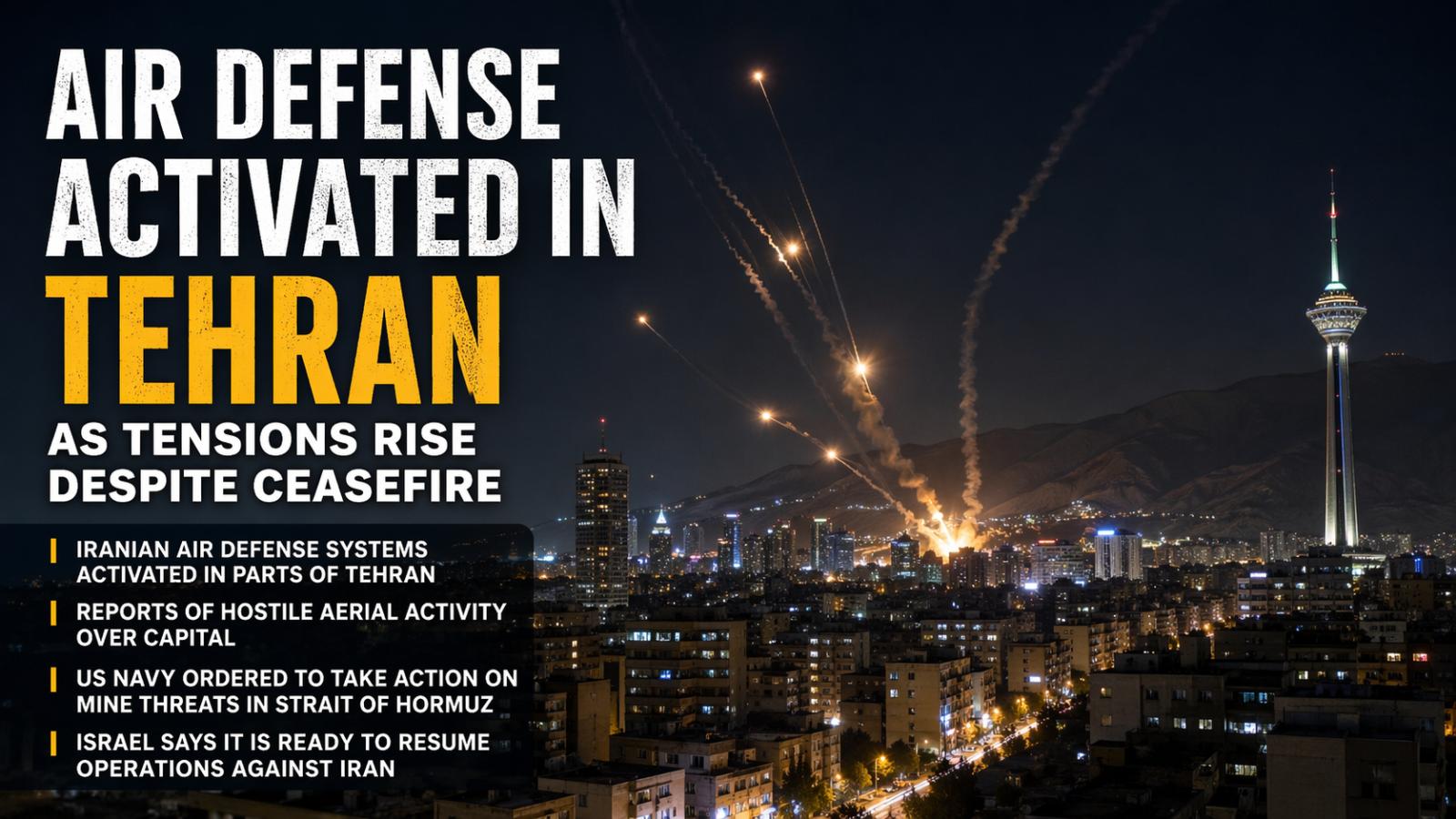
Air defense systems light up Tehran’s night sky as tensions escalate despite a ceasefire, with U.S. naval warnings and Israel signaling readiness for possible renewed conflict.
Air defense activated in Tehran as tensions rise despite ceasefire as Iran’s capital experienced renewed military alert activity on Thursday, April 23, 2026, according to state media reports, marking the first such incident since a ceasefire was announced in the region. The developments highlight ongoing instability across the Middle East, even as diplomatic efforts attempt to hold fragile ground.
Air defense systems were activated during the evening hours on Thursday, April 23, 2026, in Tehran, with Iranian state media reporting the sound of defensive fire in the western part of the city. Officials indicated that systems across multiple areas of the capital responded to what were described as hostile aerial targets, though no additional operational details were disclosed. The activation comes amid heightened regional tensions following the ceasefire, raising concerns about its durability.
The escalation coincided with a sharp shift in rhetoric from Donald Trump, who on Thursday, April 23, 2026, ordered the United States Navy to take direct action against vessels suspected of deploying mines in the Strait of Hormuz. Trump said there should be no hesitation in engaging such threats, emphasizing that maritime security operations in the critical oil transit route would be significantly expanded.
The directive followed his earlier decision to extend the ceasefire period, during which he suggested Iran’s leadership required time to present a potential framework for peace. His remarks underscored ongoing US concerns about security risks in the region, particularly in strategic waterways essential to global energy markets.
Meanwhile, Israel Katz stated that Israel remains prepared to resume military operations if necessary. He said Israeli forces are ready for both defensive and offensive actions and that potential targets have already been identified. Katz added that any future military campaign would be more extensive and severe than previous operations, signaling the possibility of further escalation if hostilities resume.
The developments illustrate the fragile nature of the ceasefire and the continued risk of broader conflict involving multiple regional and international actors.