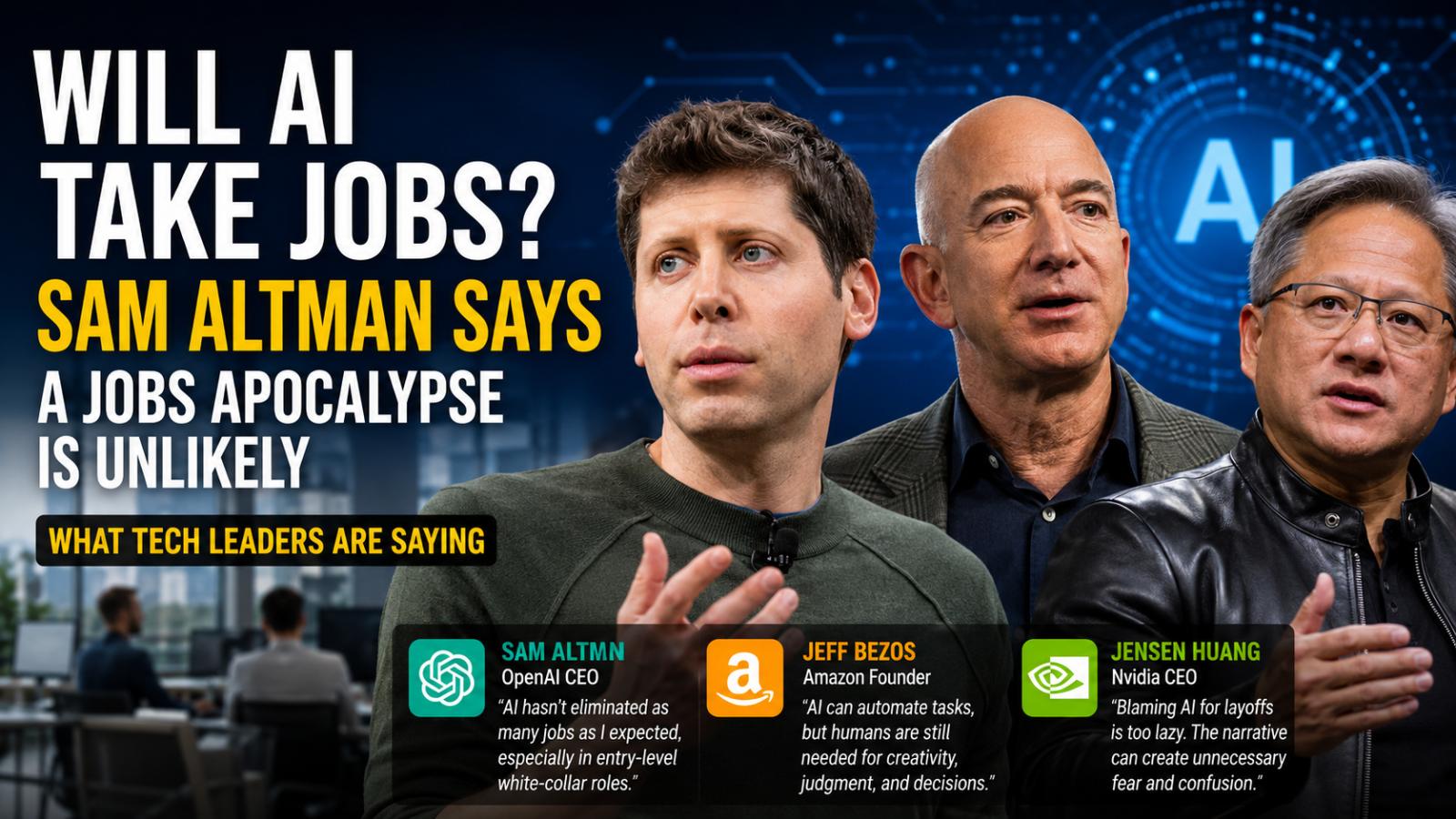
The AI jobs apocalypse many workers feared may not be unfolding as quickly as expected, according to OpenAI CEO Sam Altman.
Speaking virtually at a Commonwealth Bank of Australia conference in Sydney on Tuesday, May 26, 2026, Altman said artificial intelligence has not eliminated as many white-collar jobs as he once feared, especially in entry-level roles.
AI Jobs Apocalypse Fears May Be Overstated
Altman said OpenAI’s forecasts about AI technology were largely accurate, but the company misread how workplaces and society would respond to the tools.
“I’m delighted to be wrong about this,” Altman said, referring to earlier concerns that AI would quickly remove more entry-level white-collar jobs.
His comments mark a softer tone in the debate over whether AI will replace workers. Since ChatGPT launched in 2022, companies have rapidly adopted AI tools for writing, coding, customer support and office tasks. But Altman said the human side of work remains harder to automate than many expected.
Why Human Roles Still Matter
Altman said people continue to value direct human communication, trust, judgment and emotional understanding. He recalled experimenting with AI-generated replies to Slack and email messages labeled as “this is Sam’s AI,” before returning to more personal responses.
“We really do care about people,” he said, suggesting that many jobs depend on more than task completion.
Bezos Says AI Can Upgrade Work
Amazon founder Jeff Bezos has also argued that AI is more likely to change how people work than erase entire professions. In comments to CNBC, Bezos said AI can handle repetitive tasks, but workers are still needed to identify problems, think creatively and decide what should be built.
For software engineers, he said coding is only one part of the job. The bigger role is understanding problems and designing useful systems.
Huang Pushes Back on AI Layoff Claims
Nvidia CEO Jensen Huang has criticized executives who blame job cuts on AI. He called the AI layoff narrative “too lazy,” arguing that some layoffs may be linked more to cost-cutting or restructuring than automation alone.
The debate has grown as major technology companies continue investing heavily in AI while also cutting jobs, including Meta layoffs amid rising AI spending, raising questions about whether automation or restructuring is driving the shift.
The debate is far from over. AI is still changing hiring, training and productivity across industries. But the latest comments from Altman, Bezos and Huang suggest the future of work may be less about humans being replaced and more about which workers learn to use AI effectively.