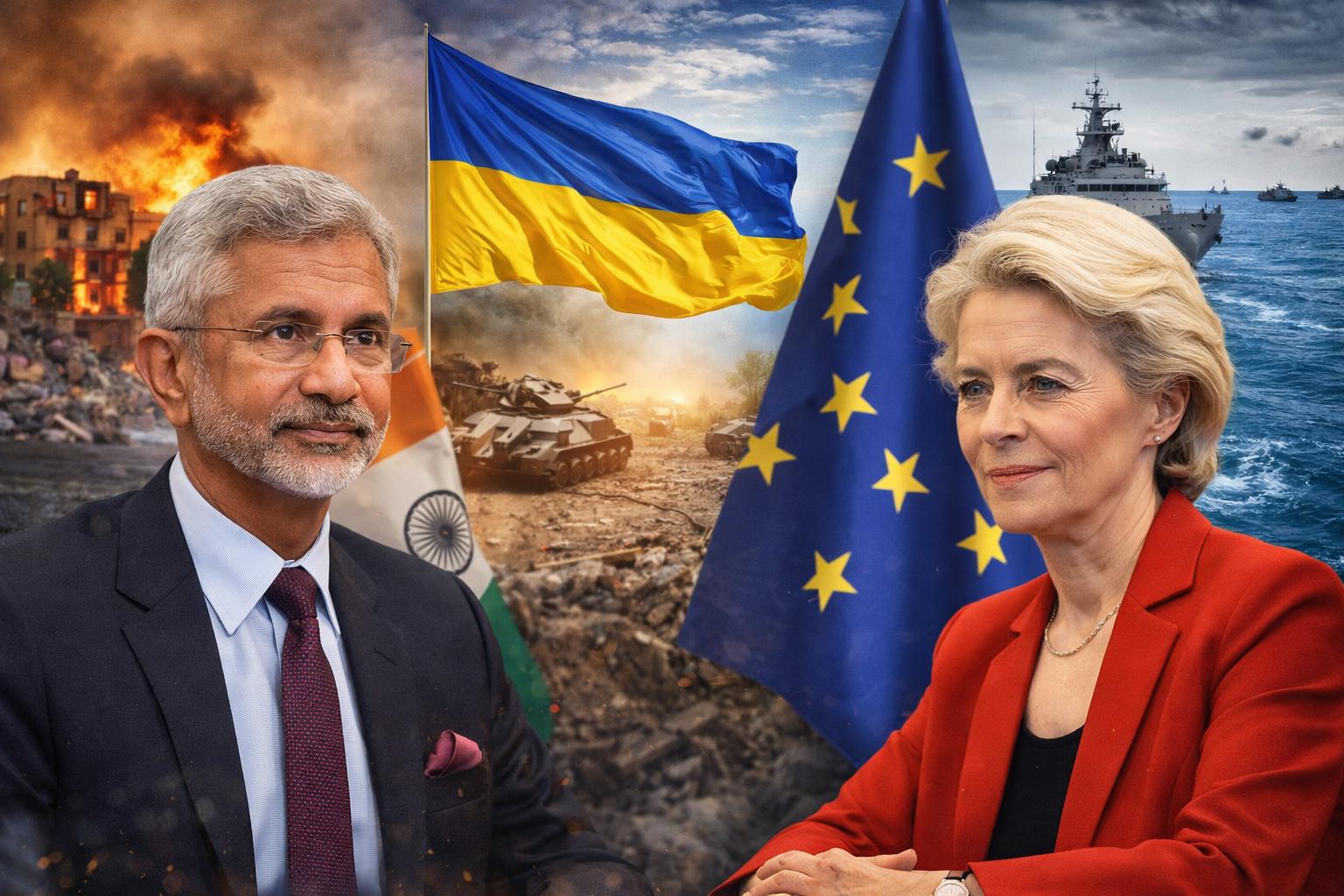
India’s External Affairs Minister S Jaishankar held extensive discussions with foreign ministers from the 27 member states of the European Union during a meeting of the Foreign Affairs Council in Brussels on Monday. The talks focused on key global developments, including the ongoing conflict in Ukraine, tensions in West Asia, evolving strategic dynamics in the Indo-Pacific region and the future trajectory of India-EU relations.
Jaishankar attended the meeting at the invitation of EU High Representative for Foreign Affairs and Security Policy Kaja Kallas. During the visit, he also held separate engagements with European Commission President Ursula von der Leyen and several European foreign ministers, including those from Germany and Belgium. The discussions highlighted the growing strategic convergence between India and the European Union as both sides seek to strengthen cooperation in an increasingly multipolar global order.
In a message shared on social media after the meeting, Jaishankar said the discussions addressed pressing international developments and emphasized deeper consultations between India and the EU. He noted that dialogue covered the situation in West Asia, the Ukraine conflict and security considerations in the Indo-Pacific, while also reflecting the expanding scope of India-EU engagement across multiple sectors.
The Brussels visit marked Jaishankar’s first trip to the EU headquarters since India and the European Union concluded a major free trade agreement and several strategic accords during the India-EU Summit held in New Delhi earlier this year. The agreements included a Security and Defence Partnership aimed at enhancing cooperation in areas such as counter-terrorism, maritime security and cybersecurity, alongside broader frameworks for mobility and economic collaboration.
During the Foreign Affairs Council discussions, ministers also examined ways to strengthen cooperation in trade, investment, technology, defence and connectivity. Kallas told reporters that the council reviewed measures to improve the protection of maritime shipping routes in the Strait of Hormuz, including potential contributions from the EU naval mission Aspides. She warned that disruptions in the critical waterway could pose risks to global energy supplies and the wider economy.
Kallas also underlined the importance of maintaining international focus on the war in Ukraine while addressing tensions in the Middle East. She cautioned that easing sanctions on Russian oil could set a problematic precedent in the global geopolitical landscape.
In his meeting with Ursula von der Leyen, Jaishankar reviewed the progress made in implementing agreements reached during the January summit. He described her recent visit to India as a turning point in bilateral relations and said both sides are now focused on translating the outcomes of the summit into tangible results.
Von der Leyen said the free trade agreement and the newly signed security partnership represent significant milestones in India-EU relations. She noted that both partners are now concentrating on efficient implementation of the agreements to deliver benefits for citizens and businesses in Europe and India. Their discussions also covered developments in the Middle East and Ukraine, with both sides emphasizing the shared goals of de-escalation, stability and energy security.
On the sidelines of the council meeting, Jaishankar held bilateral discussions with several European counterparts, including Germany’s Johann Wadephul, Slovakia’s Juraj Blanar, Greece’s Giorgos Gerapetritis and Belgium’s Maxime Prevot. The meetings explored ways to expand bilateral cooperation in areas such as manufacturing, semiconductors, healthcare, defence, space collaboration and trade.
Officials said the engagements in Brussels reflect the growing depth of India-EU strategic dialogue and underscore the importance both sides place on addressing global challenges through closer diplomatic coordination and economic partnership.