Strong market reaction to earnings and AI momentum
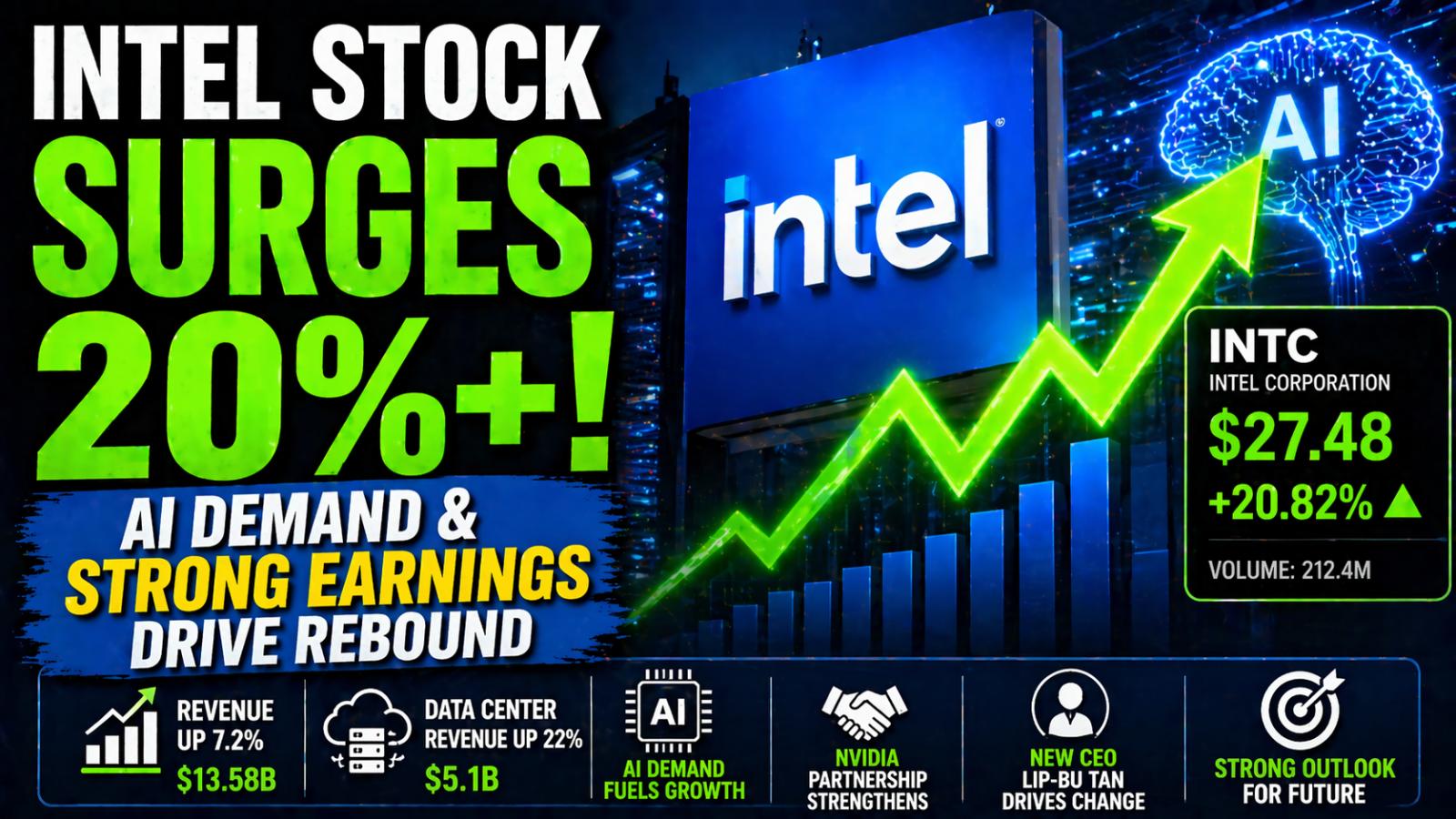
Shares of Intel surged more than 20% during trading hours on Friday, reflecting renewed investor confidence driven by rising artificial intelligence demand and stronger-than-expected financial results. By early afternoon, the stock had climbed approximately 22%, putting it on track for its best single-day performance in decades if gains held through market close.
The rally followed the company’s latest earnings report, which showed revenue increasing 7.2% year over year to $13.58 billion, exceeding analyst expectations. This marks a notable turnaround after multiple quarters of declining revenue, signaling that Intel may be regaining momentum in a highly competitive semiconductor market.
Leadership shift under Lip-Bu Tan reshapes strategy
The turnaround is closely tied to the leadership of CEO Lip-Bu Tan, who assumed the role in early 2025. Tan has worked to stabilize Intel’s financial position while repositioning the company within the fast-growing AI sector. His efforts include securing strategic investments and strengthening ties with key industry players such as Nvidia.
Analysts at Evercore ISI upgraded Intel’s stock following the earnings release, citing improvements to the company’s balance sheet and execution of a clearer competitive strategy. The firm noted that Intel appears to be regaining its footing after years of setbacks.
Data center growth and CPU demand drive revenue
A major contributor to Intel’s rebound is its data center business, where revenue rose 22% compared to the previous year, reaching $5.1 billion. The surge reflects increased demand for central processing units as AI workloads expand across industries. Tan emphasized during the earnings call that CPUs remain a foundational component of AI infrastructure, reinforcing Intel’s relevance in the evolving technology landscape.
Additional support came from Citi analysts, who upgraded the stock to a buy rating and projected sustained growth in CPU demand across the sector in the coming years.
Long-term manufacturing plans and competitive outlook
Intel is also advancing its next-generation manufacturing roadmap, including its 14A process technology, expected later in the decade. While earlier plans hinged on securing a major customer before scaling production, Tan indicated the company is accelerating development, with multiple customers already evaluating the technology.
This renewed strategic direction marks a sharp contrast to recent challenges that saw Intel lose roughly 60% of its market value in 2024, ultimately leading to the departure of former CEO Pat Gelsinger in December of that year.
A turning point in the AI-driven chip race
After years of lagging behind competitors in the AI space due to manufacturing delays and missed opportunities, Intel’s latest performance suggests it may be reentering the race with greater urgency. The combination of improved financial results, stronger demand in data centers, and a more aggressive AI strategy has reshaped investor sentiment.
While questions remain about long-term execution and technological milestones, Friday’s rally underscores growing confidence that Intel is positioning itself for a meaningful role in the next phase of the AI-driven semiconductor industry.