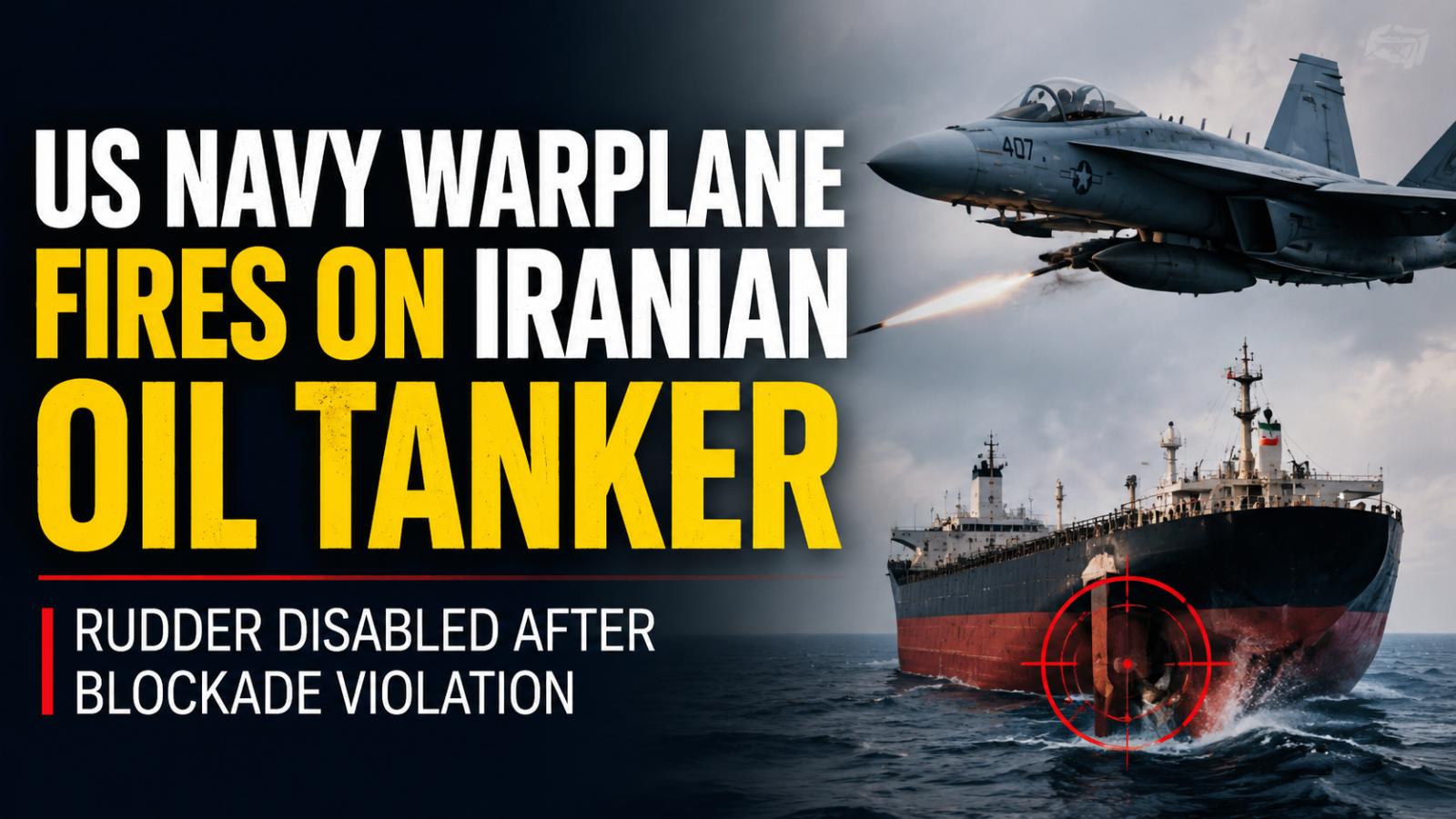
On May 6, the US military announced that a US Navy warplane disabled an Iranian oil tanker after it attempted to breach Washington’s blockade on Iranian ports. This marks the second time US forces have fired on a vessel accused of violating the blockade, which has been in place since April 13. The Iranian-flagged vessel, M/T Hasna, was reportedly not carrying any cargo when it was warned by US forces. When the crew failed to respond, a US F/A-18 Super Hornet opened fire, disabling the tanker’s rudder with several rounds from its 20mm cannon. According to Central Command (CENTCOM), the vessel is no longer heading toward Iran, confirming that the blockade remains fully enforced.
Second blockade violation in less than a month
This is not the first time a vessel has defied the blockade. On April 19, the Iranian-flagged M/V Touska also ignored repeated warnings from a US warship, prompting action by the military. After the ship continued to approach Iranian waters, the US Navy ordered the crew to evacuate the engine room before disabling the ship with multiple rounds from a five-inch gun. CENTCOM reported that the ship was disabled and rendered inoperable, further highlighting the US commitment to enforcing its blockade on Iranian ports.
Strait of Hormuz remains a critical choke point
Tensions in the region have been escalating, particularly after the United States, in collaboration with Israel, launched an air campaign against Iran on February 28. In retaliation, Iranian forces have effectively shut down the Strait of Hormuz, a vital global shipping route for oil and gas. The US blockade on Iranian ports was introduced after peace negotiations in Pakistan last month failed to bring about a breakthrough. In addition to the actions taken against the M/T Hasna and M/V Touska, CENTCOM has reported that more than 50 commercial vessels have been instructed to turn around or return to port to comply with the blockade.
As the situation develops, the US military has made it clear that its operations in the region will continue, and any ships violating the blockade will face consequences. The ongoing enforcement of this blockade is a significant step in Washington’s broader strategy to apply pressure on Iran, particularly in light of the failure of recent diplomatic efforts.
The Strait of Hormuz remains a focal point for both the US and Iran, with control over this critical passageway being a key factor in global energy markets and geopolitical stability.