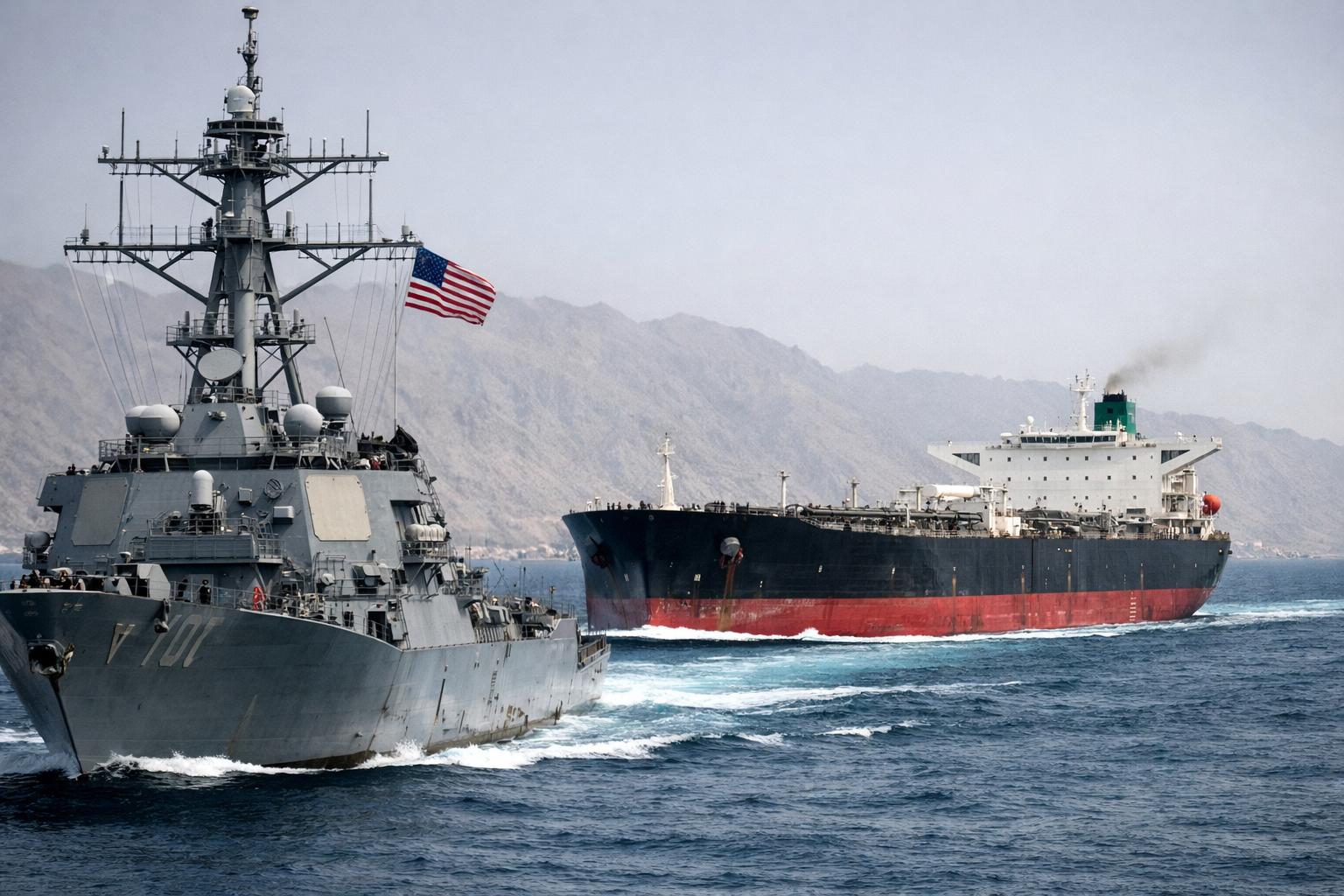
Global oil prices fell sharply on Tuesday after the United States confirmed that a naval escort ensured the safe passage of an oil tanker through the Strait of Hormuz, a critical shipping lane for the world’s energy markets. The announcement helped calm investors who had been reacting to escalating geopolitical tensions and fears of a major oil supply disruption linked to the ongoing Iran conflict.
U.S. crude oil dropped around 15 percent to $79.96 per barrel, while Brent crude, the global benchmark for oil prices, declined about 11 percent to $19.40 per barrel. The sharp pullback followed a surge in prices a day earlier when crude briefly climbed close to $120 per barrel as concerns over the security of oil shipping intensified across the region.
According to a statement shared by U.S. Energy Secretary Chris Wright, the U.S. Navy successfully escorted a tanker through the Strait of Hormuz to ensure that oil shipments continued moving toward global markets. The message suggested that energy security operations were underway to stabilize trade routes that connect major oil producers in the Gulf to international buyers.
The Strait of Hormuz, located between Iran and Oman, is one of the most strategically important oil transit routes in the world. Around 13 million barrels of oil passed through the narrow waterway in 2025, representing roughly 31 percent of global seaborne oil trade. The corridor links major producers such as Saudi Arabia, Iran, Iraq, and the United Arab Emirates with shipping routes leading to the Gulf of Oman and the Arabian Sea.
Market analysts say the Iran conflict has triggered one of the most significant oil supply disruptions in modern energy markets. Industry leaders have warned that continued instability could have severe consequences for the global oil trade. Saudi Aramco chief executive Amin Nasser said the scale of the crisis represents the most serious challenge the region’s oil and gas industry has faced.
Meanwhile, the International Energy Agency has scheduled an emergency meeting to discuss the potential release of strategic oil reserves. The organization’s more than 30 member states collectively hold approximately 1.2 billion barrels of emergency oil stockpiles that could be used to stabilize markets if disruptions intensify.
Despite the uncertainty, some analysts believe markets remain cautiously optimistic that shipping activity through the Strait of Hormuz will eventually normalize. However, experts note that traders are still evaluating the magnitude of the geopolitical risk and the possibility of further disruptions to oil infrastructure in the coming days.