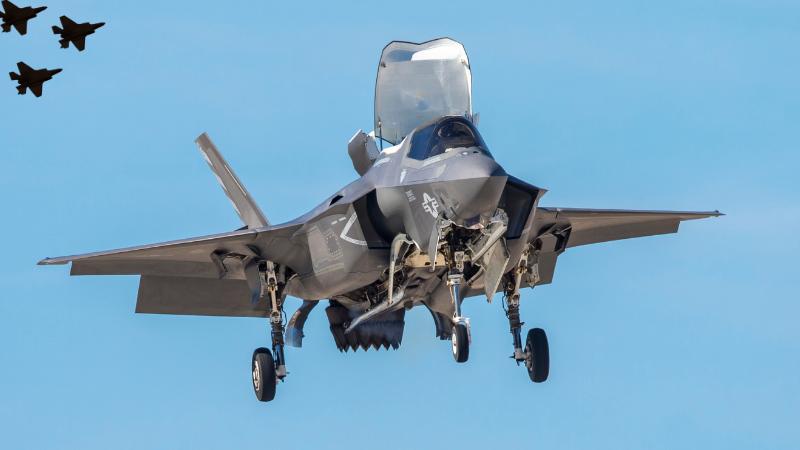
A group of senior retired United States Air Force generals has issued an urgent appeal to lawmakers, warning that proposed cuts to advanced fighter jets and airborne command systems would critically weaken national defense at a time of rising geopolitical tension. Specifically, the generals are calling for full funding to procure 75 F-35A fighter jets and to restore investment in the E-7 airborne early warning and control aircraft in the next fiscal year.
In a detailed letter sent to congressional leadership, the retired generals expressed serious concern over budget proposals that would slash the F-35A purchase down to 24 units and eliminate the E-7 program entirely. The group, which includes multiple former Air Force Chiefs of Staff and other top commanders, emphasized that these aircraft are vital to maintaining air superiority in any future conflict, especially in the Indo-Pacific region where tensions over Taiwan continue to mount.
The letter points to increasing evidence that China is intensifying military preparations aimed at Taiwan, including plans for a potential amphibious invasion capability by 2027. Given this timeline, the generals argue that the U.S. must act immediately to ensure its armed forces are equipped to deter aggression and, if necessary, win a high-intensity conflict.
They warned that control of the air domain would be a decisive factor in any such confrontation. The F-35A, with its stealth, sensor fusion, and multi-role versatility, is seen as a crucial element in securing that control. Likewise, the E-7 aircraft is considered a modern solution to replace aging airborne surveillance platforms, enabling faster and more integrated command-and-control functions across vast oceanic distances.
The retired leaders made clear that a reduction in funding would not just delay modernization but could result in a dangerous shortfall in capabilities during a critical window of global instability. The decision to cut back now, they cautioned, could leave the U.S. unable to effectively deter adversaries or protect key interests in the Indo-Pacific.
Their letter emphasized that such cuts would "severely and unnecessarily undermine our service members’ ability to deter, and if necessary, prevail in future conflicts." They underscored that delaying procurement of these advanced systems would hinder the Air Force’s ability to respond to rapidly developing challenges and embolden adversaries who closely watch U.S. defense signals and capabilities.
The call for action comes as global attention continues to focus on Taiwan, a democratic island that faces increasing pressure from its much larger neighbor. Military drills, surveillance flights, and statements from senior officials across the region have fueled concerns that tensions could escalate into open conflict in the coming years. The ability of the United States to project air power and coordinate allied operations would be central to any defensive response.
Cutting-edge platforms like the F-35A and E-7 are not just assets for conflict scenarios—they are also strategic tools that serve as deterrents by signaling capability and resolve. Failing to fund them, the retired generals argue, would send the wrong message to both allies and adversaries.
Their message also speaks to broader debates over defense strategy and budget priorities. While cost constraints and competing programs often shape the budget process, the former commanders are urging lawmakers to view this issue through the lens of long-term national security, not short-term savings.
As Congress prepares to finalize the defense budget in the weeks ahead, the future of the F-35A fleet expansion and the E-7 program will be key indicators of the nation’s strategic direction. The former generals' letter delivers a pointed reminder: readiness and deterrence are built over years, but they can be lost in moments if crucial decisions are delayed or reversed.
With the Indo-Pacific becoming the focal point of great power competition, and with Taiwan increasingly at the center of this contest, investment in air power capabilities like the F-35A and E-7 could be the determining factor in preserving stability and preventing war. The warning from those who once led the nation’s air forces serves as a stark and timely appeal for action before strategic opportunities slip away.
In a detailed letter sent to congressional leadership, the retired generals expressed serious concern over budget proposals that would slash the F-35A purchase down to 24 units and eliminate the E-7 program entirely. The group, which includes multiple former Air Force Chiefs of Staff and other top commanders, emphasized that these aircraft are vital to maintaining air superiority in any future conflict, especially in the Indo-Pacific region where tensions over Taiwan continue to mount.
The letter points to increasing evidence that China is intensifying military preparations aimed at Taiwan, including plans for a potential amphibious invasion capability by 2027. Given this timeline, the generals argue that the U.S. must act immediately to ensure its armed forces are equipped to deter aggression and, if necessary, win a high-intensity conflict.
They warned that control of the air domain would be a decisive factor in any such confrontation. The F-35A, with its stealth, sensor fusion, and multi-role versatility, is seen as a crucial element in securing that control. Likewise, the E-7 aircraft is considered a modern solution to replace aging airborne surveillance platforms, enabling faster and more integrated command-and-control functions across vast oceanic distances.
The retired leaders made clear that a reduction in funding would not just delay modernization but could result in a dangerous shortfall in capabilities during a critical window of global instability. The decision to cut back now, they cautioned, could leave the U.S. unable to effectively deter adversaries or protect key interests in the Indo-Pacific.
Their letter emphasized that such cuts would "severely and unnecessarily undermine our service members’ ability to deter, and if necessary, prevail in future conflicts." They underscored that delaying procurement of these advanced systems would hinder the Air Force’s ability to respond to rapidly developing challenges and embolden adversaries who closely watch U.S. defense signals and capabilities.
The call for action comes as global attention continues to focus on Taiwan, a democratic island that faces increasing pressure from its much larger neighbor. Military drills, surveillance flights, and statements from senior officials across the region have fueled concerns that tensions could escalate into open conflict in the coming years. The ability of the United States to project air power and coordinate allied operations would be central to any defensive response.
Cutting-edge platforms like the F-35A and E-7 are not just assets for conflict scenarios—they are also strategic tools that serve as deterrents by signaling capability and resolve. Failing to fund them, the retired generals argue, would send the wrong message to both allies and adversaries.
Their message also speaks to broader debates over defense strategy and budget priorities. While cost constraints and competing programs often shape the budget process, the former commanders are urging lawmakers to view this issue through the lens of long-term national security, not short-term savings.
As Congress prepares to finalize the defense budget in the weeks ahead, the future of the F-35A fleet expansion and the E-7 program will be key indicators of the nation’s strategic direction. The former generals' letter delivers a pointed reminder: readiness and deterrence are built over years, but they can be lost in moments if crucial decisions are delayed or reversed.
With the Indo-Pacific becoming the focal point of great power competition, and with Taiwan increasingly at the center of this contest, investment in air power capabilities like the F-35A and E-7 could be the determining factor in preserving stability and preventing war. The warning from those who once led the nation’s air forces serves as a stark and timely appeal for action before strategic opportunities slip away.