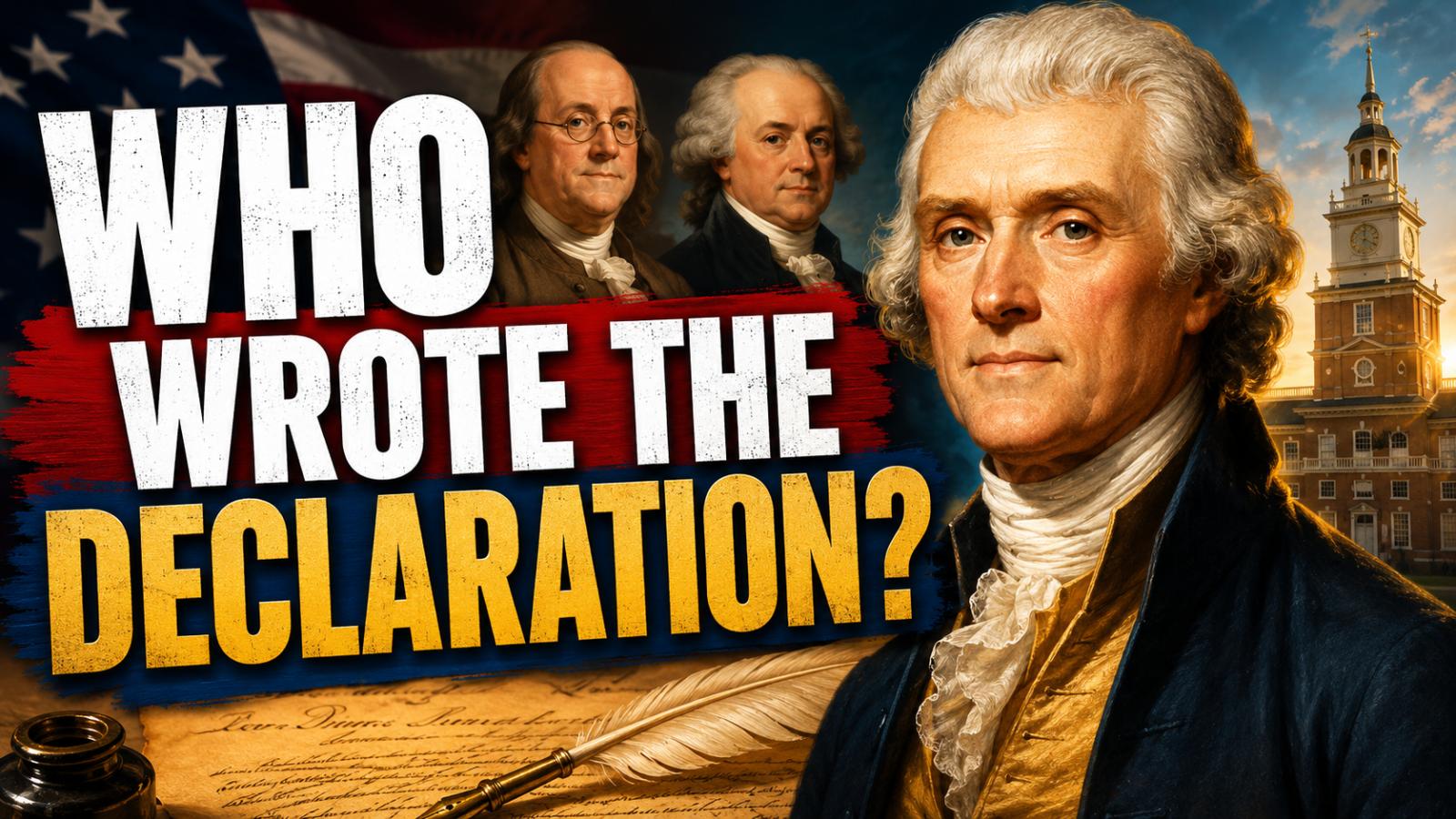
A founding document shaped by debate
The United States Declaration of Independence is one of the most important political documents in American history. While Thomas Jefferson is widely known as its primary author, the declaration was not the work of one person alone. It was shaped through committee review, congressional debate and approval by representatives of the thirteen colonies. In June 1776, the Second Continental Congress appointed a five-member committee to prepare a formal statement explaining why the colonies intended to separate from Great Britain.
The committee included Thomas Jefferson of Virginia, John Adams of Massachusetts, Benjamin Franklin of Pennsylvania, Roger Sherman of Connecticut and Robert R. Livingston of New York. Jefferson was chosen to write the first draft because of his writing ability and political standing. After he prepared the draft, Adams and Franklin reviewed the text and suggested changes before it was submitted to the full Congress for wider discussion.
Adoption on July 4, 1776
The Second Continental Congress debated and revised the document before formally adopting it in Philadelphia on July 4, 1776. That date later became Independence Day in the United States. The declaration announced that the thirteen colonies no longer considered themselves under British rule and explained the political reasons behind the break. It also presented a broader argument about government, liberty and the rights of people.
The central purpose of the declaration was to justify independence and establish the principles on which the new nation claimed legitimacy. It argued that governments derive their authority from the consent of the governed and that people have rights that should not be violated by rulers. These ideas became central to American political identity and influenced democratic movements in other parts of the world.
Lasting significance and legacy
The Declaration of Independence helped mark the birth of the United States as an independent nation. Its language on liberty, rights and self-government has remained influential for nearly 250 years. At the same time, its ideals were not fully applied to everyone when it was written, especially enslaved people, women and Indigenous peoples. That gap between principle and practice has shaped much of American history.
The original document is preserved at the National Archives Building in Washington, DC. Today, it remains a symbol of the country’s founding principles and a reminder that American democracy was built through both bold ideals and continuing struggle.