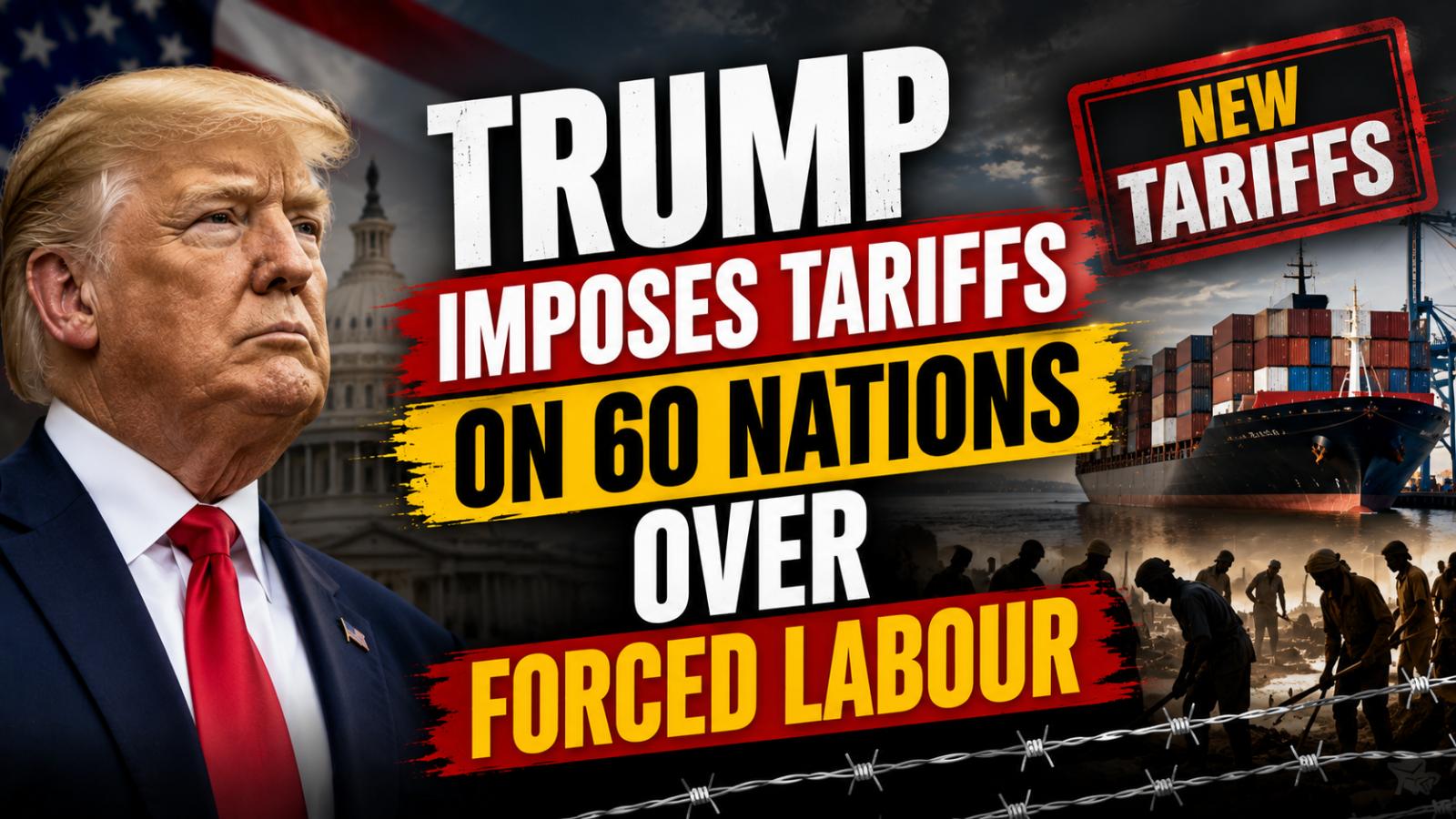
Trump imposes tariffs on 60 nations over forced labour as the administration launches a new trade initiative targeting countries accused of failing to block imports made with forced labour. The move follows investigations under Section 301 of the Trade Act and marks the latest shift in US trade policy after the Supreme Court struck down the previous tariff programme.
US forced labour tariff policy
The Trump administration announced a new round of tariffs on Friday, July 24, targeting 60 trading partners that it says have failed to prohibit or effectively enforce bans on imports produced with forced labour. The decision represents the latest effort by President Donald Trump to reshape US trade policy while placing greater emphasis on labour rights within global supply chains.
US Trade Representative Jamieson Greer said the measures followed investigations conducted under Section 301 of the Trade Act of 1974. According to the Office of the US Trade Representative, the action is intended to encourage trading partners to strengthen enforcement against goods produced through forced labour while supporting fair competition for American businesses and workers.
Greer said the United States has maintained a forced labour import ban for decades and argued that other countries should adopt similar enforcement standards. He described forced labour as both a human rights issue and a trade distortion that undermines workers worldwide.
Section 301 Trade Act tariffs
The new measures arrive after the US Supreme Court invalidated the administration's earlier "Liberation Day" tariff programme. That initiative had introduced tariffs ranging from 10% to 50% under emergency powers, but the court ruled that the legislation cited by the administration did not provide sufficient legal authority for such broad trade restrictions.
Following the ruling, the administration introduced a temporary 10% tariff for 150 days while evaluating alternative legal mechanisms. That temporary measure expires on Friday, making the Section 301 action the administration's primary replacement strategy.
Section 301 allows the US government to investigate and respond to trade practices it considers unreasonable, discriminatory or harmful to American commerce. Previous administrations have also relied on the law to address issues involving intellectual property, market access and unfair trade practices.
Trump trade policy 2026
The latest announcement reflects President Trump's broader strategy of combining trade policy with national economic and foreign policy objectives. Administration officials argue that stronger trade enforcement can help protect domestic industries while encouraging higher labour standards among international trading partners.
Greer said the new tariffs are designed to address persistent human rights concerns linked to forced labour in global supply chains. He argued that decades of diplomatic pressure alone have failed to eliminate abusive labour practices and that stronger economic measures are now necessary.
The administration has not yet released complete details on the tariff rates applicable to each trading partner or the specific categories of products affected. Those details are expected to be published through official trade notices.
Human rights and global supply chains
The announcement also comes shortly after the United States signed a civil nuclear cooperation agreement with Saudi Arabia, a country that has faced criticism from international human rights organisations over labour practices involving migrant workers.
Groups including Human Rights Watch have previously raised concerns about working conditions associated with large-scale infrastructure, construction and entertainment projects in the kingdom. Although the administration has framed the tariff programme as a global initiative rather than one targeting any single country, the timing has drawn renewed attention to how labour rights influence US foreign and trade policy.
Analysts note that balancing commercial relationships with human rights objectives remains one of the most complex aspects of international trade policy, particularly as supply chains span multiple countries and industries.
What happens next?
The tariffs are expected to affect a broad range of imported products if implemented as announced. Businesses that rely on international supply chains will closely monitor the publication of product lists and country-specific tariff schedules before adjusting sourcing strategies.
Trading partners may also challenge the measures through diplomatic negotiations or international trade mechanisms, depending on how the tariffs are structured. The administration, however, has signalled that it intends to continue using trade policy to pursue both economic and labour-rights objectives.
Whether the new programme withstands legal scrutiny more successfully than the previous tariff regime will likely become one of the most closely watched trade issues in the coming months. For now, the announcement reinforces the administration's intention to keep tariffs at the centre of US trade policy while increasing pressure on countries accused of failing to prevent forced labour in global supply chains.
The information in this article is based on the official statement issued by US Trade Representative Jamieson Greer and announcements from the Office of the United States Trade Representative regarding the Section 301 investigations.