US Offers $15 Million Reward for KIPAS Drone Network Tips
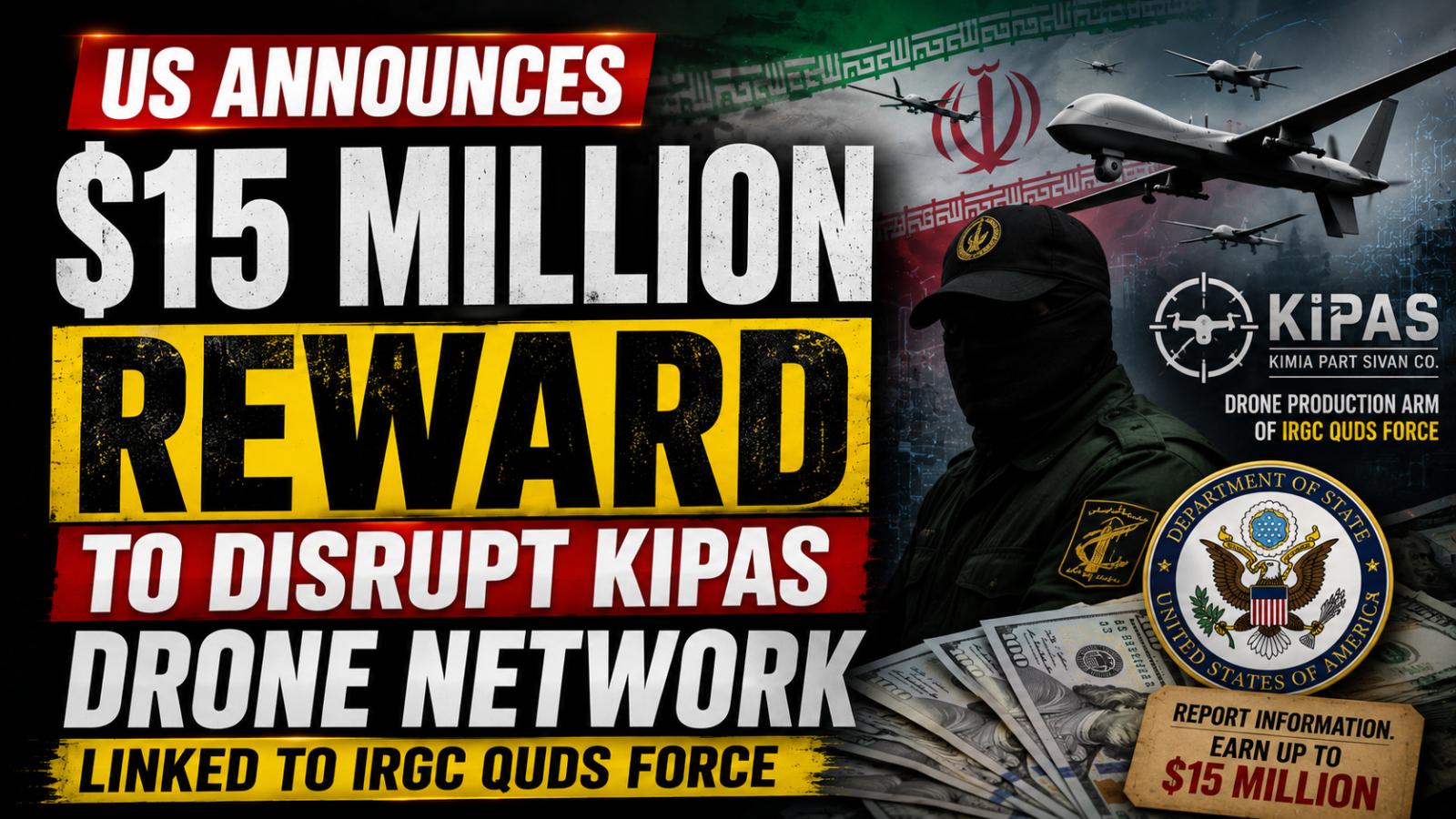
The United States has announced a reward of up to $15 million for information that disrupts the KIPAS drone network. Washington is seeking details about its finances, senior staff and alleged role in developing and supplying drones for Iran’s IRGC Quds Force.
US $15 Million KIPAS Reward Announced
The US State Department’s Rewards for Justice programme has offered up to $15 million for information that could disrupt the financial network of Iran-based Kimia Part Sivan Company, widely known as KIPAS.
The programme said it wants information about the company’s money flows, business partners, associates and senior personnel. Eligible informants may also receive relocation assistance, depending on the value of the information and the risks involved.
Rewards for Justice published the offer on July 30 and directed potential sources to its secure reporting channels, including a Tor-based tip line designed to protect identities. The programme presents the reward as part of a wider effort to expose financial networks that support activities Washington classifies as terrorism.
IRGC Drone Network and KIPAS Staff
The official Rewards for Justice page identifies seven people linked to KIPAS: Hasan Arambunezhad, Abolfazl Ramazanzadeh Moshkani, Mehdi Ghaffari Naghneh, Reza Nahar Dani, Abbas Sartaji, Hadi Jamshidi Zavaraki and Ehsan Mohaghegh.
US authorities allege that several of these individuals have played senior roles in drone testing, development and supply. The programme says KIPAS has supported the IRGC Quds Force’s unmanned aerial vehicle operations and helped supply Iranian-aligned armed groups in Iraq, Yemen and Syria.
Some names in early reports appeared in shortened or differently transliterated forms. The spellings above follow the official US government records, which provide fuller versions of the individuals’ names.
US Sanctions Target Iran UAV Operations
The US Treasury first sanctioned KIPAS in October 2021, saying the company had helped the IRGC Quds Force improve its drone programme. Treasury alleged that KIPAS conducted flight tests, supplied technical assistance and obtained important UAV components for the organisation.
In April 2024, the Treasury imposed sanctions on six senior KIPAS-linked individuals. It said they worked on drone testing, development and supply and acted for or on behalf of the IRGC Quds Force.
Washington has continued targeting wider procurement chains that supply Iran’s missile and drone industries. The strategy focuses not only on manufacturers but also on financiers, intermediaries, component suppliers and overseas companies accused of helping Iran bypass sanctions.
Why KIPAS Financial Information Matters
The reward is aimed at disrupting money rather than merely identifying drone engineers. Manufacturing advanced UAVs requires imported electronics, engines, navigation systems, raw materials, logistics companies and access to international payment channels.
Information about bank accounts, shell companies, commercial partners or purchasing agents could therefore help US authorities freeze assets and block transactions. It could also expose how sanctioned organisations continue obtaining foreign components despite years of trade restrictions.
The Treasury has said KIPAS procured drone components and assisted UAV programmes linked to the IRGC Quds Force. It has also connected Iranian drone production to armed groups operating beyond Iran’s borders.
Iran Rejects US Allegations and Sanctions
The United States designated the IRGC, including the Quds Force, as a foreign terrorist organisation in April 2019. US officials argue that the organisation uses military exports and international financial networks to fund operations and support allied armed groups.
Iran rejects Washington’s accusations and maintains that its drone and defence programmes serve legitimate national security purposes. Tehran also describes US sanctions as unlawful economic pressure.
The new KIPAS reward does not itself prove criminal conduct by every person named. It is an intelligence-gathering offer based on US allegations and sanctions findings. Its impact will depend on whether informants provide verifiable financial records, communications or evidence that allows authorities to interrupt the network.