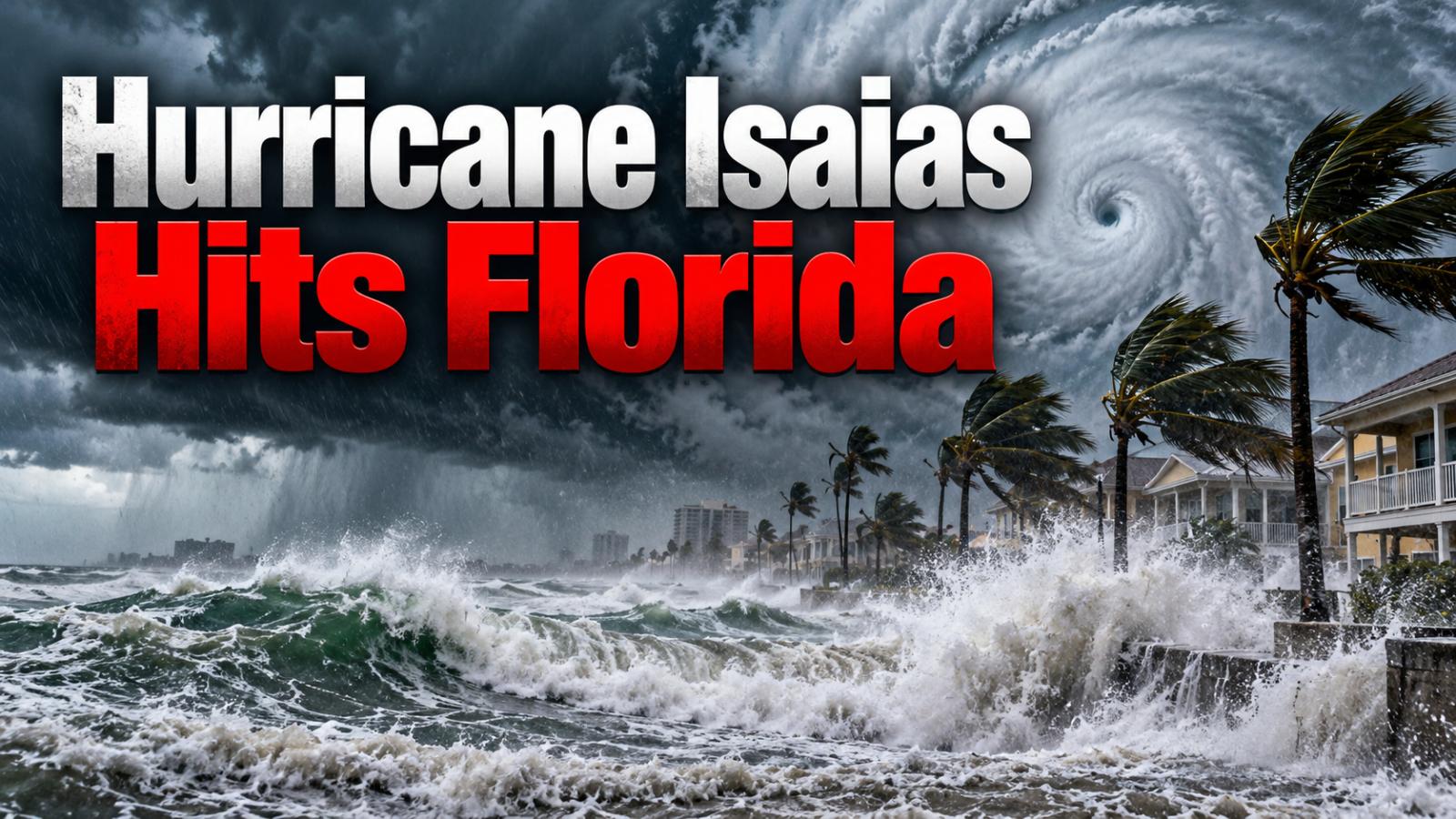
Hurricane Isaias hits Florida's Gulf Coast near Destin on October 9, 2026, bringing 105 mph winds, dangerous storm surge and heavy rainfall. The Category 2 hurricane triggered evacuations across Florida and Alabama, while officials warned of coastal flooding and hazardous conditions inland.
Storm Surge Threatens Florida's Gulf Coast
Hurricane Isaias made landfall near Destin at approximately 8:30 pm local time on Friday, according to the National Hurricane Center (NHC). The storm carried maximum sustained winds of 105 mph (165 km/h) and moved north at 19 mph (31 km/h), placing coastal communities under serious threat.
A National Oceanic and Atmospheric Administration (NOAA) station in Panama City Beach recorded water levels 5.6 feet above the mean higher high water mark. Forecasters warned that storm surge could reach nine feet in vulnerable areas near the Florida-Alabama border, potentially flooding roads, homes and coastal businesses.
Wind Gusts Reach Dangerous Levels
Powerful winds battered Florida's Panhandle as Isaias moved ashore. A weather station near Santa Rosa Sound recorded a gust of 116 mph (187 km/h), while another station near Pensacola reported a 100 mph gust.
The NHC warned that damaging winds and heavy rainfall could continue as the hurricane moved inland. Falling trees, damaged power lines and flooded roads posed additional risks to residents and emergency crews.
Evacuations Ordered Across Florida and Alabama
Authorities issued mandatory evacuations in several vulnerable coastal communities ahead of the hurricane's arrival. Emergency officials urged residents to follow evacuation instructions, avoid flooded roads and monitor local weather alerts.
Florida and Alabama mobilized emergency resources as the storm threatened homes, businesses and critical infrastructure. Officials also warned that dangerous conditions could delay rescue operations in severely affected areas.
El Niño Shapes the Atlantic Hurricane Season
Isaias became the first hurricane of the 2026 Atlantic season, an unusually late development for a season that began in June. Strong El Niño conditions increased wind shear across the Atlantic, limiting tropical storm development.
However, warm Gulf waters provided energy for the hurricane. Scientists warn that rising ocean temperatures can increase the moisture available to storms, while higher sea levels can worsen coastal flooding. These factors influence hurricane risks but do not alone explain an individual storm's formation.
Flood Risk Continues as Isaias Moves Inland
Forecasters expected Isaias to weaken after landfall, but its impacts could extend well beyond the coastline. Heavy rainfall, flash flooding and possible tornadoes remained concerns across parts of the southeastern United States.
Residents were advised to follow updated NHC forecasts and local emergency instructions. Authorities emphasized that weakening hurricane winds would not immediately end the danger from flooding and hazardous travel conditions.