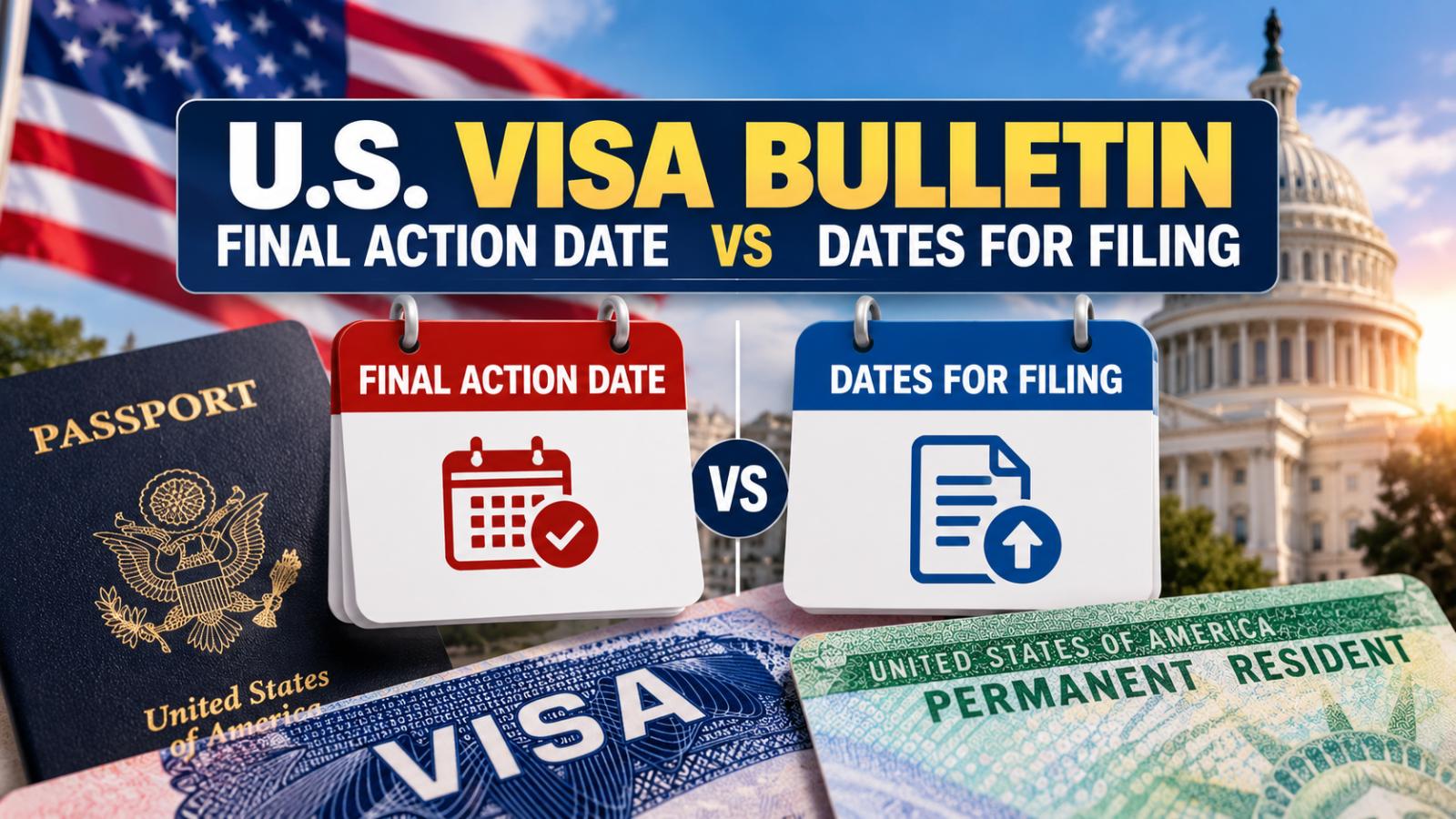
The US Visa Bulletin contains two important charts: Final Action Dates and Dates for Filing. Understanding how each works, how a green card priority date is compared with them and which chart USCIS permits applicants to use can help prevent filing mistakes.
The U.S. Department of State publishes two key charts in its monthly Visa Bulletin: Final Action Dates and Dates for Filing. For applicants waiting in numerically limited employment- or family-based green card categories, understanding the difference is essential.
What is a Final Action Date?
The Final Action Date determines when an immigrant visa number may be available for final approval.
For an oversubscribed category, an applicant generally must have a priority date earlier than the date shown in the applicable country and preference category before final action can occur. The State Department defines “C” as current and “U” as unavailable.
In practical terms, reaching the Final Action Date stage means the government may be able to approve an otherwise eligible immigrant visa or adjustment-of-status case if a visa number is available.
What are Dates for Filing?
The Dates for Filing chart generally represents an earlier point in the process.
For immigrant visa processing abroad, applicants whose priority dates are earlier than the listed filing date may be asked to begin assembling and submitting documents to the National Visa Center.
This date does not necessarily mean a green card can be approved immediately.
How does a priority date work?
A priority date establishes an applicant’s place in the immigrant visa queue. Applicants compare that date with the appropriate Visa Bulletin chart for their preference category and country of chargeability.
If the relevant cut-off date moves beyond an applicant’s priority date, the case may become eligible for the next applicable stage, subject to USCIS or State Department rules and visa availability.
Which chart does USCIS use for Form I-485?
Applicants applying for adjustment of status inside the United States should check USCIS each month.
USCIS determines whether applicants must use the Final Action Dates chart or may use the Dates for Filing chart to determine eligibility to submit Form I-485. The State Department bulletin specifically directs adjustment-of-status applicants to USCIS for that monthly determination.
Why the distinction matters
A priority date becoming eligible under the Dates for Filing chart does not necessarily mean the case can receive final approval. Final approval generally depends on visa availability under the Final Action Dates chart.
Applicants should therefore review both the monthly Visa Bulletin and USCIS filing-chart guidance before submitting an adjustment-of-status application.