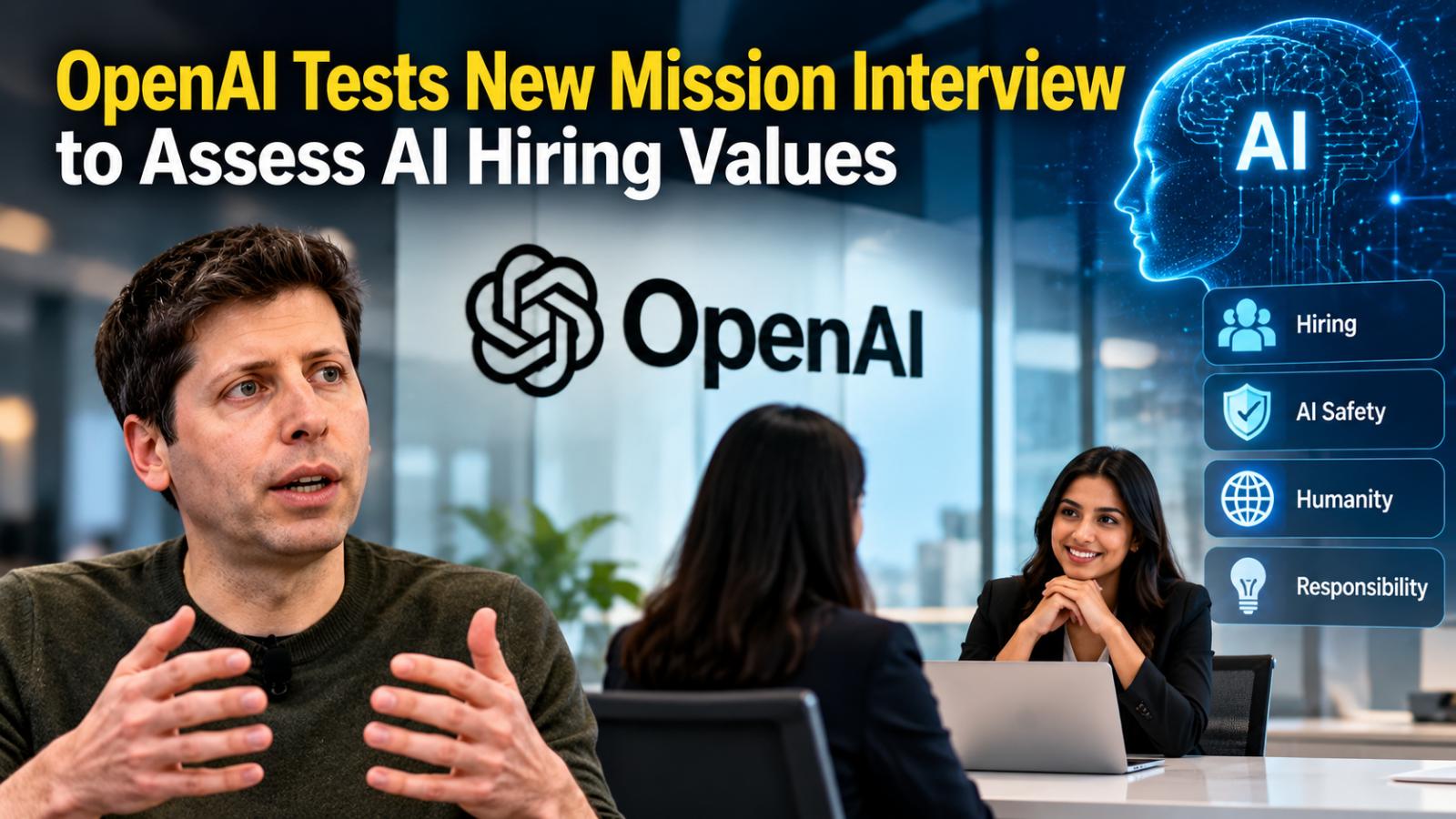
OpenAI is testing a new stage in its recruitment process designed to understand how prospective employees think about the wider impact of artificial intelligence and how they could contribute to the company’s goal of making advanced AI beneficial to humanity.
The move comes as debates around the risks and benefits of artificial intelligence continue to grow. OpenAI CEO Sam Altman has repeatedly discussed the possibility that increasingly powerful AI systems could bring both major benefits and serious challenges. Against that backdrop, the company is now putting greater emphasis on how future employees think about responsibility, judgment and the social impact of AI.
OpenAI has reportedly begun piloting what it calls a “mission interview” for candidates applying to selected teams, initially including marketing and human resources. The additional interview is intended to give applicants an opportunity to explain how they would contribute to OpenAI’s broader mission rather than focusing only on technical skills or past work experience.
OpenAI hiring process puts more focus on judgment and AI safety
The OpenAI mission interview does not appear to be designed around a single correct response. Instead, the company wants to understand how candidates think through difficult questions, weigh competing priorities and make decisions involving both the opportunities and risks created by artificial intelligence.
OpenAI has also indicated that skepticism and disagreement are welcome during these conversations. That approach suggests the company is looking for candidates who can question assumptions and explain their reasoning rather than simply repeat the organisation’s stated views.
To help make the process more independent, the mission interview is conducted by an employee from a different team than the one the applicant hopes to join. OpenAI is also developing a training programme to certify employees who will conduct these interviews.
The initiative forms part of a wider effort to make recruitment more consistent as OpenAI continues to expand. A standardised mission interview could give hiring teams a common framework for evaluating judgment, responsibility and mission alignment across different roles.
AI jobs at OpenAI raise questions about mission and compensation
OpenAI is not alone in evaluating candidates on broader organisational values. Major technology companies have long included culture or leadership assessments in their hiring processes. Amazon, for example, uses trained “bar raisers” from outside hiring teams to assess candidates against its wider leadership principles.
AI company Anthropic has also reportedly focused on understanding whether applicants are joining primarily because of the company’s mission or because of the high salaries available in the rapidly growing AI industry.
That distinction is becoming more important as leading artificial intelligence companies compete aggressively for engineers, researchers and other specialists. Senior positions at major AI firms can come with compensation packages worth hundreds of thousands of dollars, while stock awards can push total pay significantly higher.
Such financial incentives can make it harder for companies to determine whether candidates genuinely connect with their mission or are mainly attracted by compensation and career opportunities.
For OpenAI, the mission interview appears to be an attempt to make that assessment more structured. As AI systems become more powerful and influence more areas of business and society, the company is placing greater emphasis on recruiting people who can think critically about both the potential benefits and the risks of the technology.
The new hiring approach also reflects a broader shift across the AI industry. Technical skill remains important, but companies developing advanced AI increasingly appear to value judgment, responsibility and an ability to think through difficult trade-offs as part of the recruitment process.