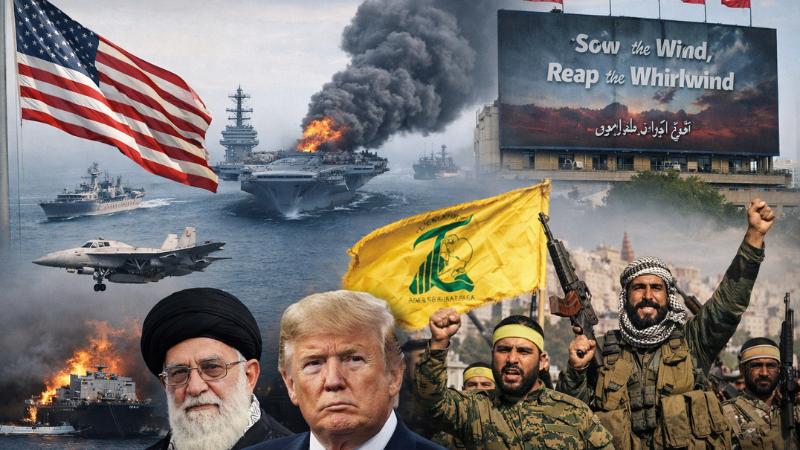
Tensions across West Asia intensified after allied militant groups aligned with Iran issued sharp warnings to the United States following the deployment of American warships to the region. Lebanon-based Hezbollah, Yemen’s Houthi movement, and Iraqi militias signaled that any military action against Iran would trigger a wider regional confrontation, underscoring the growing volatility as Washington weighs its next steps amid unrest inside Iran.
Hezbollah leader Naim Qassem cautioned that an attack on Iran would not remain a limited conflict, warning that such a move would ignite instability across the region. The group publicly committed to defending Iran’s Supreme Leader, Ayatollah Ali Khamenei, and raised concerns over reports suggesting that senior figures within allied organizations could be targeted in the event of a strike. Hezbollah urged its supporters to remain united against what it described as coordinated threats aimed at weakening Iran and its regional partners. Similar warnings were echoed by Kataib Hezbollah, an Iraqi paramilitary faction, which said that any attack on Iran would be met with a response amounting to total war.
The Houthis also escalated their rhetoric, threatening renewed attacks on commercial shipping in the Red Sea. The group released a video containing images of a vessel engulfed in flames, accompanied by a message implying further action. The Houthis have previously targeted more than 100 ships transiting the strategic corridor, describing the attacks as pressure tactics linked to Israel’s military campaign in Gaza. The latest threat has raised concerns over the security of one of the world’s most critical maritime routes at a time of heightened regional tension.
Iranian officials responded forcefully to the movement of US naval assets, warning that any violation of the country’s sovereignty would be treated as an act of war regardless of its scale. A senior official said Iran would respond in the hardest way possible to any military strike. In Tehran, authorities unveiled a prominent billboard bearing the phrase “Sow the Wind, Reap the Whirlwind,” reinforcing the message of deterrence. Ayatollah Khamenei has also directly criticized former US President Donald Trump, labeling him an international criminal and warning against misjudging the resolve of the Iranian population.
The evolving standoff reflects a series of shifting signals from Washington. After protests erupted across Iran in December 2025 amid a collapsing economy and a sharp decline in the value of the Iranian rial, the United States initially voiced support for demonstrators and warned Tehran against a violent crackdown. Attention later turned to exiled Crown Prince Reza Pahlavi, though Trump stopped short of endorsing him, citing doubts over his domestic support. Hints of potential military action were followed by a pause after warnings from Russia about severe consequences. Trump subsequently claimed that Iran would halt executions of protesters, saying this removed the need for immediate action, while also suggesting it was time to consider new leadership in Tehran. More recently, he stated that Iran appeared interested in reaching a deal.
These developments have appeared to draw Iran’s regional allies closer together rather than isolating Tehran. The coordinated warnings from Hezbollah, the Houthis, and Iraqi militias suggest a renewed unity within the so-called Axis of Resistance, with factions presenting a common front in defense of Iran and its leadership.
The protests inside Iran, which began as demonstrations over economic hardship, quickly evolved into broader calls for political change. The unrest is regarded as the most significant since the 2022–2023 movement triggered by the death of Mahsa Amini while in custody for allegedly violating dress code regulations. According to figures cited by the US-based Human Rights Activists News Agency, more than 5,000 people have died during the latest wave of unrest, highlighting the scale of the internal crisis now intersecting with mounting external pressure.