Iran challenges US CENTCOM role in West Asia security framework
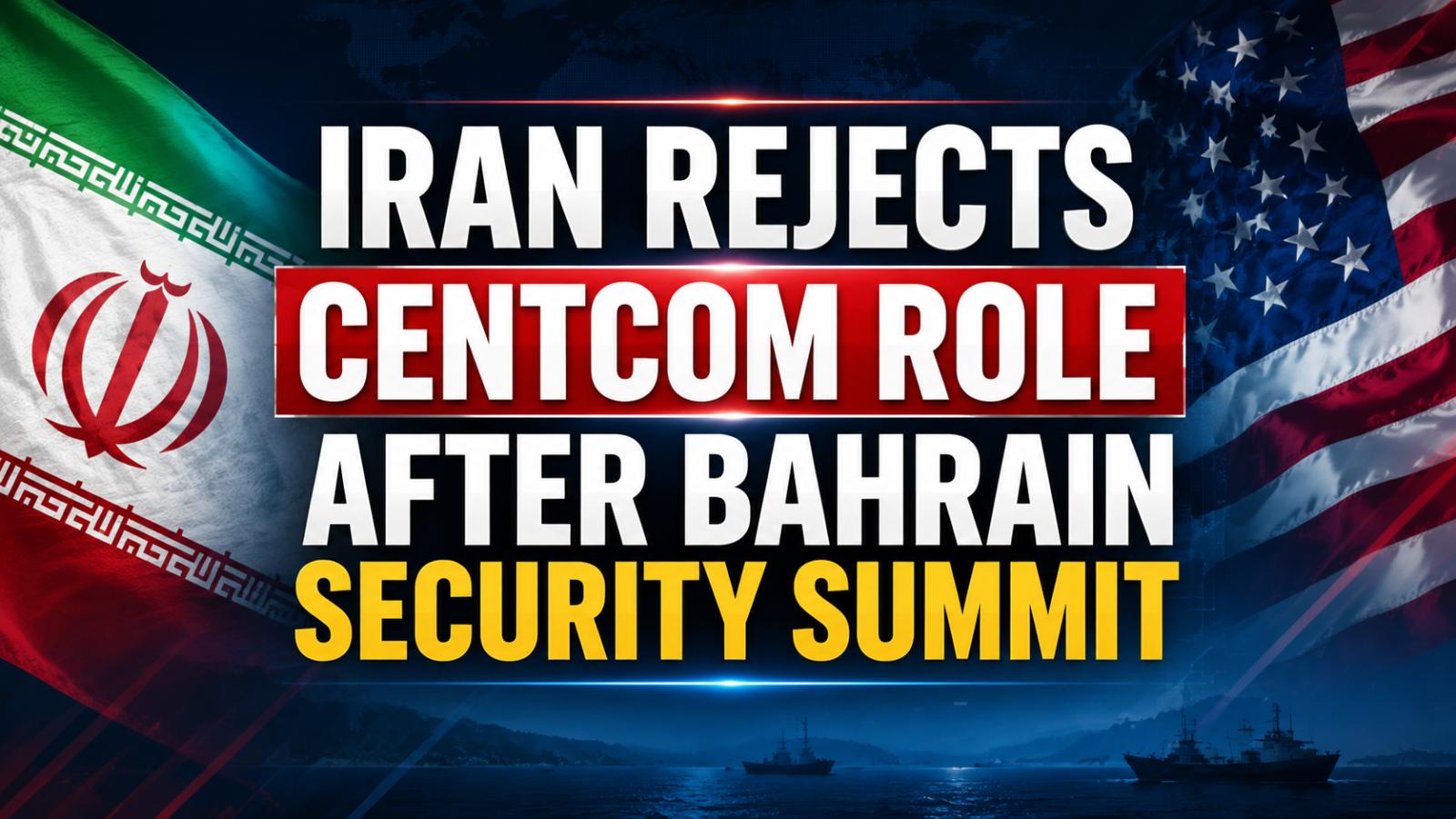
Iran has criticised the role of the United States Central Command in West Asia after a regional security conference in Bahrain brought together senior military officials from 12 countries to discuss air defence cooperation and maritime security. Iranian Foreign Minister Abbas Araghchi said peace in the region must be shaped by regional countries themselves and not by external military powers.
Bahrain summit focuses on air defence and maritime cooperation
The meeting, hosted by the Bahrain Defence Force in Manama, focused on strengthening regional defence coordination, improving air defence cooperation and protecting key shipping routes, including the Strait of Hormuz. The waterway remains one of the world’s most important maritime passages for global energy and trade, making security discussions around it highly sensitive for Gulf states and Iran.
Tehran rejects Western-led regional security model
Responding to the conference, Araghchi rejected the argument that Western military involvement has helped stabilise West Asia. He said lasting peace can only be sustained when it is comprehensive, inclusive and free from outside interference. His comments reflected Tehran’s long-standing position that regional security frameworks should not be directed by foreign forces.
Iran criticises foreign military presence in the region
Araghchi also questioned the record of CENTCOM in the region, arguing that the presence of outside militaries has created more insecurity than stability. He said Iran’s armed forces had shown that foreign powers could not guarantee regional safety, adding that countries in the region should take responsibility for their own security arrangements.
CENTCOM outlines multinational defence discussions in Bahrain
According to the US Central Command, the Bahrain conference was led by CENTCOM commander Admiral Brad Cooper and included military representatives from Bahrain, Egypt, Jordan, Kuwait, Lebanon, Oman, Qatar, Saudi Arabia, Syria, the United Arab Emirates and Yemen. The participants discussed the regional security environment and ways to improve defence cooperation among partner countries.
Strait of Hormuz highlighted as key global trade route
CENTCOM said the countries reaffirmed support for the free flow of commerce through the Strait of Hormuz. The statement comes at a time when maritime routes in the Gulf remain central to global energy markets and regional security calculations.
Iranian officials oppose Western influence in Gulf security order
Iran’s Deputy Foreign Minister for Legal and International Affairs, Kazem Gharibabadi, also criticised the Bahrain meeting. He rejected what he described as Western attempts to shape the security order of the Persian Gulf and Strait of Hormuz, saying the region’s legal and security framework could not be defined through a military summit led by outside powers.
Deepening divide over future of regional security architecture
The dispute highlights the continuing divide between Iran and US-aligned regional partners over how Gulf security should be managed. While Washington and its partners frame cooperation as necessary to protect maritime trade, Tehran argues that foreign military involvement deepens tensions and undermines regional sovereignty.