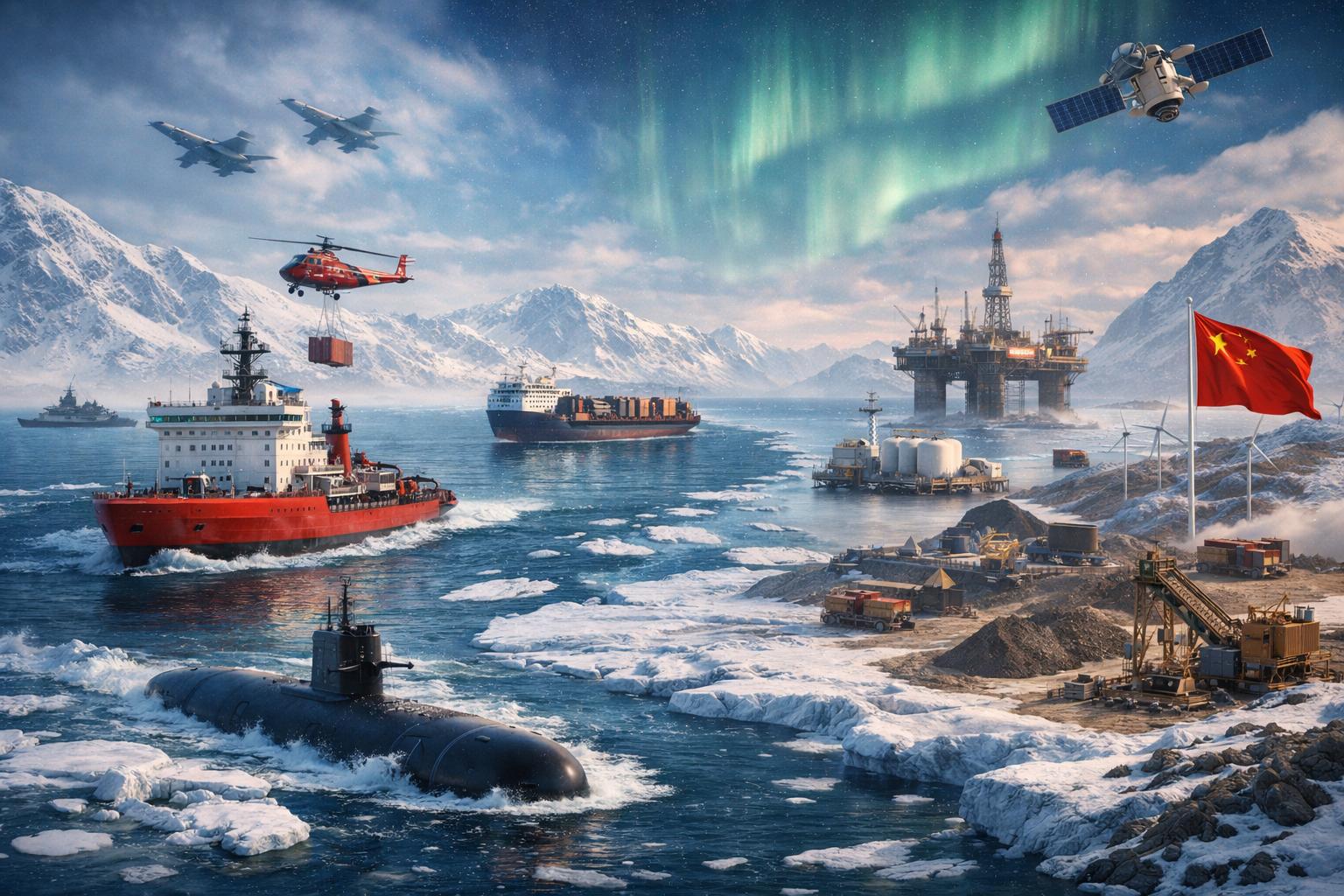
China’s push into the Arctic is driven by both commercial opportunities and energy security considerations. The Northern Sea Route, which follows Russia’s northern coast, offers a significantly shorter shipping path between East Asia and Europe, potentially cutting transit times by up to 20 days compared to traditional routes such as the Suez Canal. For a nation heavily reliant on exports, this provides not just efficiency but also a strategic hedge against chokepoints in other global could transform international shipping patterns and strengthen China’s influence in global trade.
In addition to shipping, China has invested in Arctic infrastructure and resource development, including airport projects and mining operations focused on rare earth minerals. These materials are critical for green energy technologies and military applications, making them strategically important. While framed as commercial ventures, these projects have raised concerns about dual-use potential. Icebreakers built for research could be adapted for surveillance, and commercial ports could serve as strategic footholds for naval activity.
China’s Arctic strategy reflects a broader effort to combine economic tools with strategic objectives. Investments in infrastructure, natural resources, and maritime capabilities are helping Beijing establish a foothold in a previously peripheral region. These efforts have heightened scrutiny from other nations, who are monitoring the potential military, technological, and economic implications of the Polar Silk Road initiative. Climate change is accelerating this shift by opening previously inaccessible shipping lanes. Thawing ice has made it feasible to navigate the Northern Sea Route regularly, creating new opportunities for trade while intensifying competition for influence. Arctic nations must now weigh economic growth, environmental protection, and security priorities as China’s presence grows.
The Polar Silk Road illustrates China’s approach to integrating commerce, climate, and strategic foresight. By developing infrastructure, controlling access to critical resources, and expanding shipping networks, the country is positioning itself as a major Arctic actor. Observers remain attentive to the dual-use potential of these developments, which could transform economic initiatives into instruments of geopolitical influence, marking the Arctic as a central frontier in 21st-century international relations.