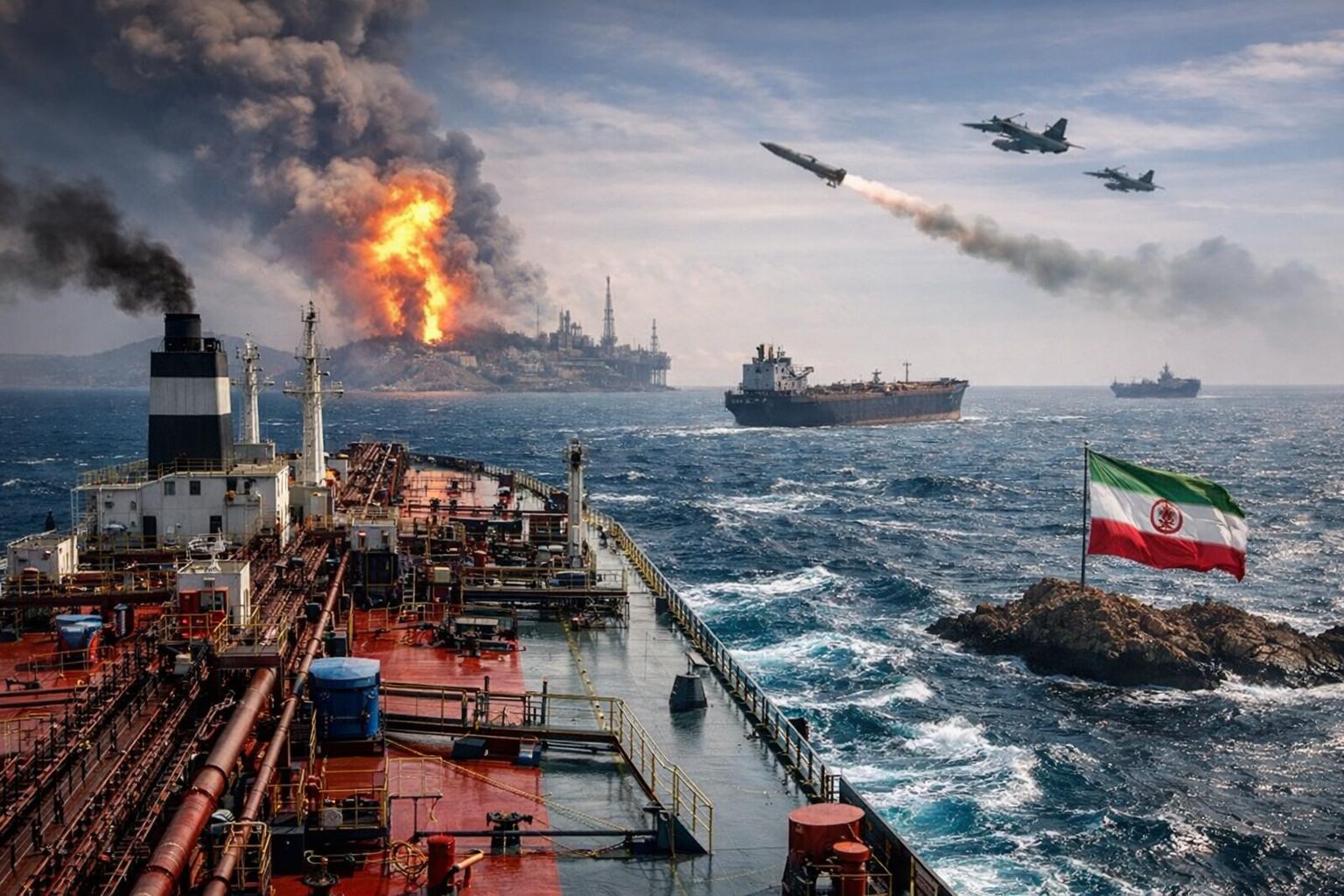
The global shipping industry is grappling with mounting financial strain as escalating conflict involving the United States, Israel, and Iran disrupts maritime traffic through the Strait of Hormuz. Within three days of hostilities and retaliatory strikes across the Gulf region, freight markets have recorded sharp increases in costs, with industry estimates pointing to potential losses amounting to tens of billions of dollars per day.
The Strait of Hormuz, a critical chokepoint for maritime trade, normally handles about 20 percent of global seaborne oil, or roughly 20 to 21 million barrels per day, along with a comparable share of LNG exports, primarily from Qatar. Since the outbreak of the Gulf conflict, traffic through the waterway has plunged by nearly 86 percent. Only a handful of tankers are transiting daily compared with the usual average of 130 vessels, leaving hundreds anchored on either side of the strait.
Congestion has reportedly affected nearly 750 ships, including around 100 container vessels representing about 10 percent of the global container fleet. Insurers have withdrawn or sharply increased war-risk insurance coverage, prompting many carriers to suspend operations or reroute vessels away from the region. Maersk has halted new bookings on key Middle East routes, while other major operators including MSC, CMA CGM, Hapag-Lloyd, and COSCO have also paused transits or diverted services.
Freight rates for Very Large Crude Carriers have surged to record highs, reportedly reaching up to $400,000 per day on certain Middle East to Asia routes. LNG shipping rates have climbed more than 40 percent, with some charters ranging between $41,000 and $61,500 per day. Carriers have imposed emergency conflict surcharges of up to $4,000 per container to offset rising security and insurance costs.
The disruption has triggered a sharp reaction in energy markets. Brent crude prices jumped between 10 and 13 percent, trading near $77 to $85 per barrel, amid concerns of prolonged supply interruptions. Analysts warn that extended instability in the Strait of Hormuz could remove up to 20 percent of daily global oil supply from the market, raising fears of another oil shock. With vessels stranded, longer routes via the Cape of Good Hope, and mounting insurance premiums, the shipping industry faces deepening economic pressure as uncertainty persists.