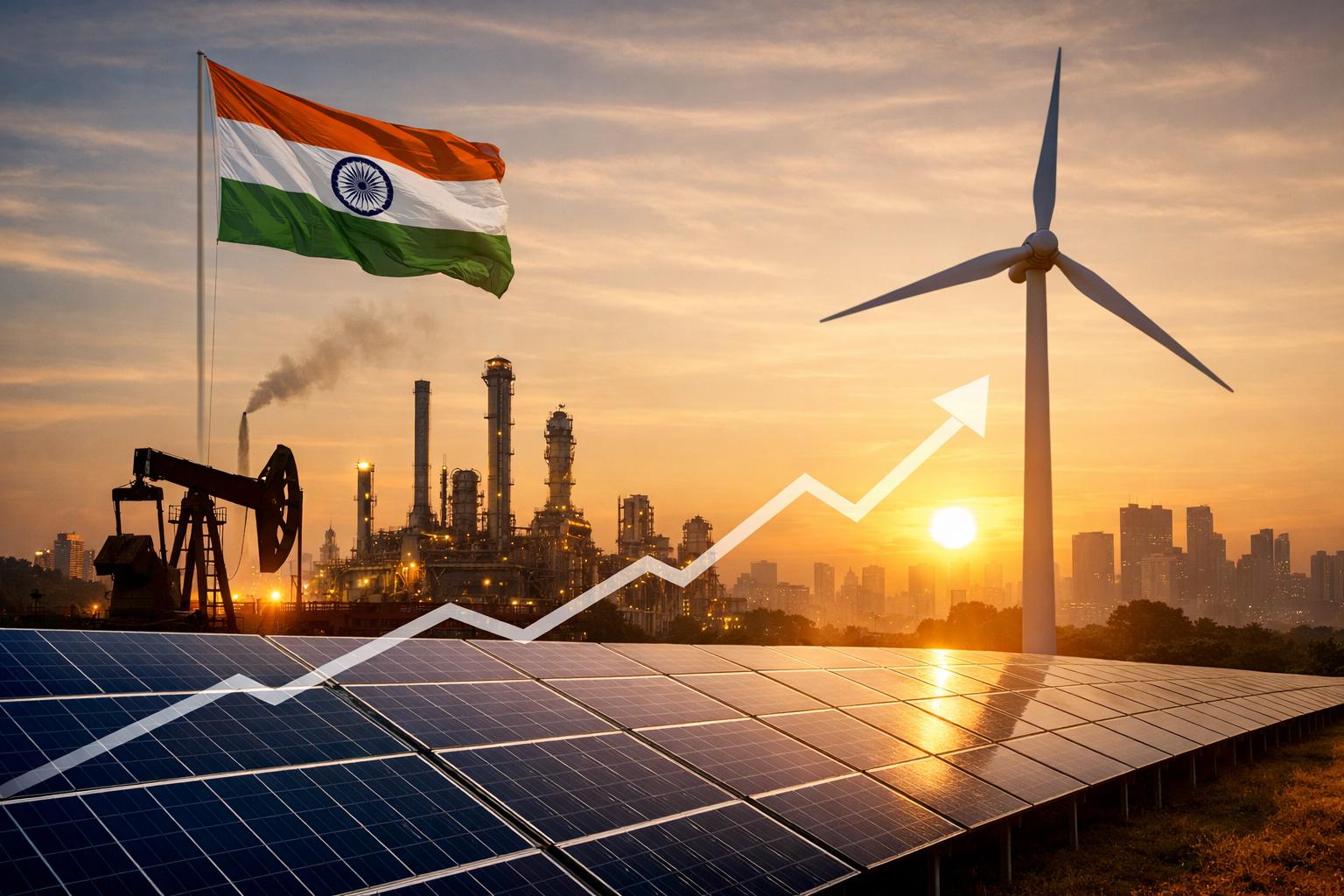
Data published in the Reserve Bank of India’s March Bulletin indicates that renewable sources accounted for 26.4 percent of India’s total electricity generation as of January 2026, rising from 22.1 percent in January 2025. This increase reflects a broader transition toward reducing dependence on imported fossil fuels and strengthening long-term energy security.
Solar power remains central to this transformation. As of February 2026, solar energy represented 54 percent of India’s installed renewable capacity, underscoring its rapid expansion from a supplemental source to a primary contributor within the clean energy mix. Lower costs, supportive government policies, and large-scale infrastructure development have accelerated solar adoption, while wind, hydroelectric, and biopower sources continue to stabilize overall supply.
The timing of this transition is significant. India’s electricity demand is rising alongside economic growth, and meeting that demand with domestic renewable energy reduces exposure to volatile global crude oil prices, particularly during periods of geopolitical uncertainty tied to Iran-related tensions in West Asia.
Economic indicators suggest that the shift is already having measurable effects. India’s oil intensity of GDP has declined, meaning the economy is generating more output per unit of oil consumed. This improved efficiency helps limit the impact of oil price spikes on inflation, trade balances, and currency stability.
In parallel, India has strengthened its external position through record-high foreign exchange reserves, giving policymakers additional flexibility to manage fluctuations in global capital flows and exchange rates. Together, these developments are reinforcing the country’s ability to absorb external shocks.
International observers have taken note. International Monetary Fund Managing Director Kristalina Georgieva recently highlighted India’s performance, noting that its growth rate is more than double the global average, reflecting not only cyclical recovery but also underlying structural improvements.
Looking ahead, India’s continued expansion of renewable capacity and a gradual shift toward less energy-intensive sectors are expected to further reduce its vulnerability to fossil fuel disruptions, positioning the country for more stable long-term growth.