Israel has become the first member of the United Nations to officially recognise Somaliland as an independent and sovereign state, marking a significant diplomatic development for the self-declared republic in the Horn of Africa. The announcement ends decades of international non-recognition for Somaliland, which has operated as a separate political entity since breaking away from Somalia in 1991 following a prolonged civil conflict.
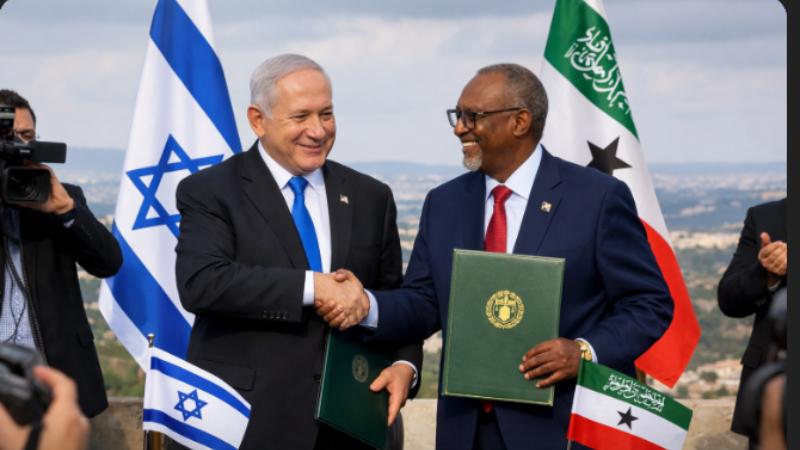
The recognition was formalised on Friday when Israeli Prime Minister Benjamin Netanyahu signed a joint declaration with Somaliland President Abdirahman Mohamed Abdullahi, establishing full diplomatic relations between the two sides. The declaration highlighted shared interests in regional stability and cooperation and was framed within the broader context of the Abraham Accords, the diplomatic framework aimed at normalising relations between Israel and other states.
Speaking after the signing, Netanyahu said Israel would pursue immediate cooperation with Somaliland across multiple sectors, including agriculture, health, technology, and economic development. He congratulated President Abdullahi on the milestone and extended an invitation for an official visit to Israel, signalling a willingness to deepen bilateral engagement beyond formal recognition.
In a message shared on social media, Netanyahu praised Somaliland’s leadership and described the agreement as a step toward promoting stability and peace in a strategically important region. Israeli officials indicated that the decision reflects growing interest in strengthening ties with African partners and expanding diplomatic outreach beyond traditional alliances.
Somaliland, officially known as the Republic of Somaliland, is located in northwestern Somalia and is home to a predominantly Sunni Muslim population. The region briefly gained international recognition in 1960, when it was acknowledged as an independent state by 35 countries, including Israel, before voluntarily uniting with Somalia later that year. Following the collapse of the Somali state and years of civil war, Somaliland declared independence in 1991 and has since maintained its own government, security forces, currency, and electoral system.
Despite its relative political stability compared to southern Somalia, Somaliland has long struggled to secure formal international recognition. Several countries, including the United Kingdom, the United Arab Emirates, Turkey, Denmark, and Kenya, have maintained informal diplomatic or economic ties with the region, but none had previously granted official recognition. Somalia’s federal government continues to view Somaliland as a breakaway province and has consistently opposed international efforts to acknowledge its sovereignty.
President Abdirahman Mohamed Abdullahi welcomed Israel’s decision, describing it as a historic moment and the beginning of a strategic partnership. In a statement posted online, he said Somaliland was prepared to join the Abraham Accords and pursue normalised relations with Israel, framing the recognition as a gateway to broader international engagement.
The move is expected to draw regional and international attention, particularly given the geopolitical sensitivity of the Horn of Africa and the longstanding dispute between Somaliland and Somalia. While Israel’s recognition does not automatically translate into wider international acceptance, it represents a significant diplomatic breakthrough for Somaliland’s leadership, which has spent more than three decades seeking global legitimacy.
Observers say the decision could encourage further debate within the international community about Somaliland’s status, while also reshaping diplomatic dynamics in both Africa and the Middle East. For Somaliland, the recognition marks a rare moment of external validation after years of operating in diplomatic isolation, potentially opening new avenues for trade, investment, and political cooperation.