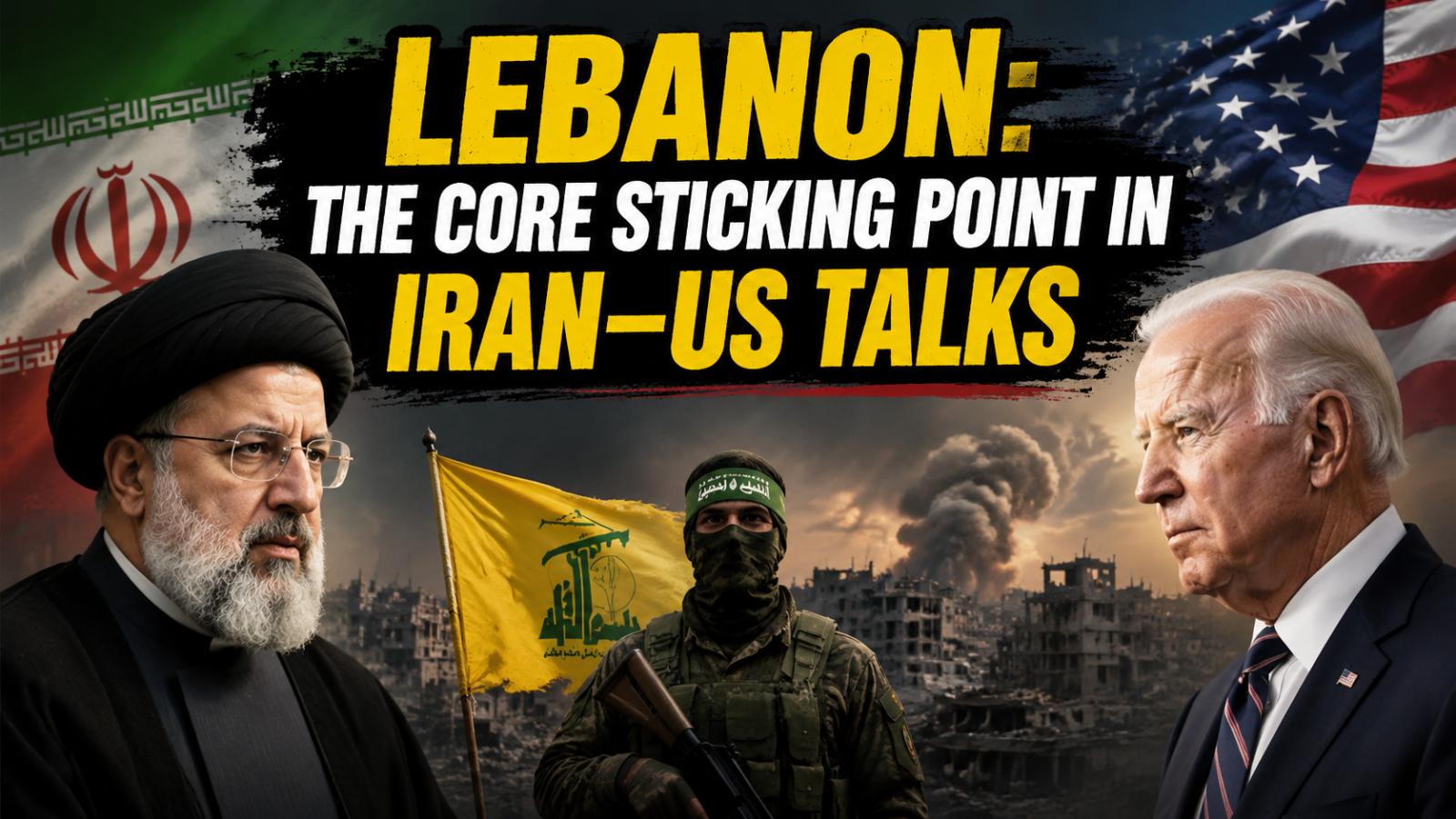
Negotiations between Iran and the United States are increasingly being shaped by events in Lebanon, where Hezbollah’s presence has turned a local conflict into a regional negotiation barrier. What was once a narrow security issue has evolved into a wider political and military deadlock involving multiple state and non-state actors.
Hezbollah’s dual structure complicates negotiations
Hezbollah operates simultaneously as a political party and an armed organisation, which makes it difficult to classify within traditional peace frameworks. This dual identity allows it to participate in governance while maintaining independent military capabilities, creating a parallel power structure inside Lebanon that limits state control.
Any diplomatic attempt that ignores this dual role tends to stall quickly, as regional stakeholders cannot agree on whether the group should be treated as a political actor or a military threat.
Internal balance of power inside Lebanon
Lebanon’s governance system is based on sect-based power sharing, which distributes authority among religious communities. Within this structure, Hezbollah maintains parliamentary representation and significant influence over policy discussions, particularly in matters related to defence and regional security.
This political integration reduces the likelihood of internal consensus on disarmament or restriction, since decisions require broad agreement across divided groups.
Military disparity and state limitations
The Lebanese state’s formal armed forces are significantly weaker in comparison to Hezbollah’s organised military infrastructure. The national army focuses primarily on internal stability and border management, while Hezbollah maintains independent logistics, fortified positions, and long-term supply networks.
This imbalance creates a structural limitation: even if political leadership supports stronger action, operational capacity remains insufficient to enforce it without risking internal instability.
Regional escalation and cross-border pressure
Ongoing tensions between Israel and Hezbollah in southern Lebanon continue to intensify the situation. Cross-border strikes and retaliatory actions have created a cycle of escalation that directly feeds into broader diplomatic discussions involving Iran.
Each escalation reduces negotiating flexibility, as regional actors use military pressure as leverage in parallel political talks.
Why a settlement remains difficult
The core issue is not purely military but structural. Hezbollah’s integration into political life, combined with its independent armed capacity, places it in a hybrid category that neither diplomacy nor force has been able to resolve.
As a result, Iran–US discussions remain constrained by Lebanon’s internal fragmentation and the absence of a unified national position on Hezbollah’s future role. Until that changes, the Lebanese file will continue to block broader regional agreements.