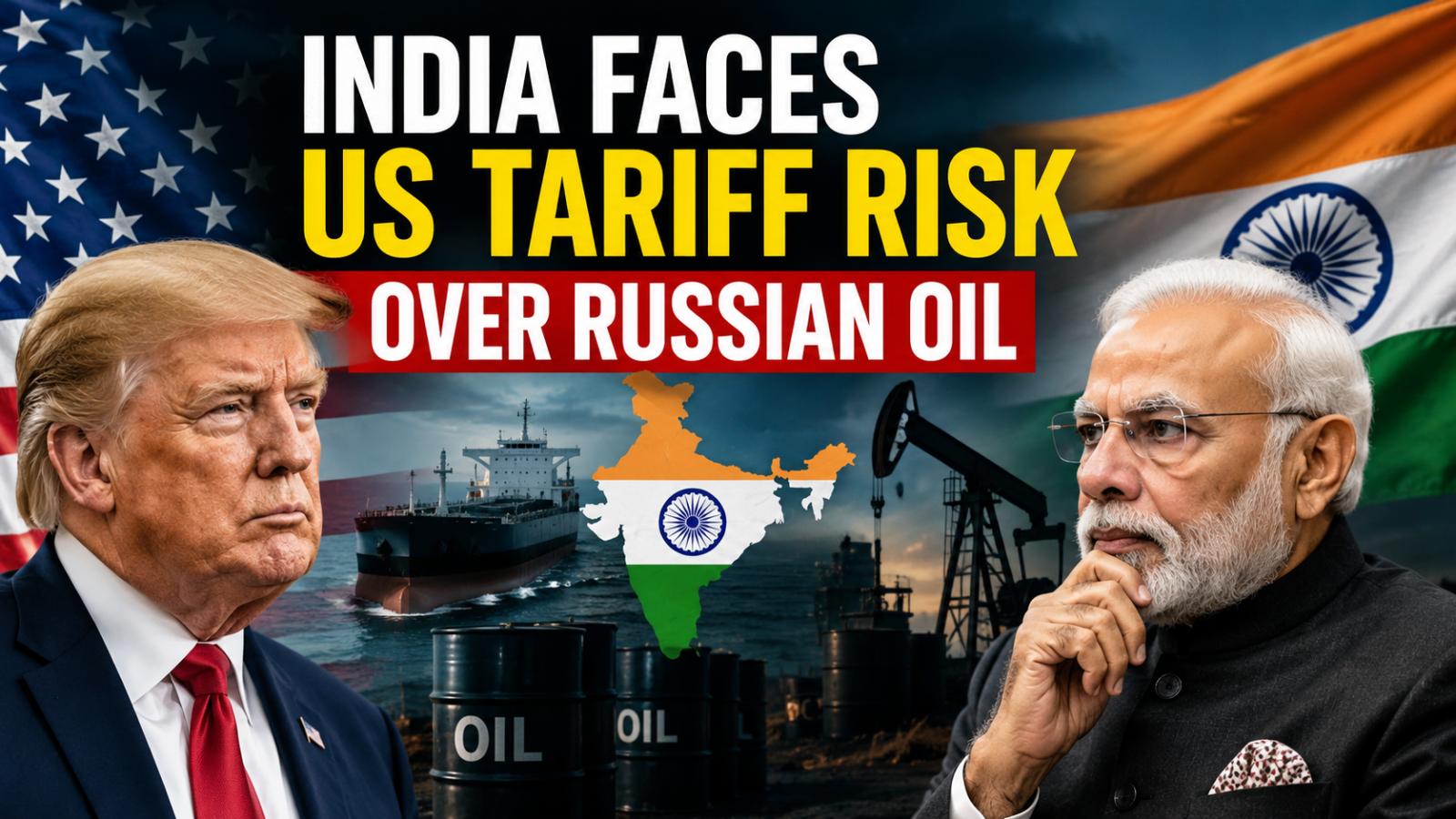
India faces renewed pressure over its Russian oil purchases after US President Donald Trump backed legislation designed to penalise countries that continue buying Russian energy. Although an earlier version proposed tariffs as high as 500%, the revised measure reportedly limits the maximum rate to 100%, making the original 500% figure outdated.
US sanctions bill targets Russian energy buyers
The legislation was originally promoted by Republican Senator Lindsey Graham, who died on July 12, 2026. A bipartisan group of senators subsequently revised the measure and renewed efforts to move it through Congress as part of Graham’s foreign-policy legacy.
The proposed law would authorise sanctions and tariffs against countries that remain heavily dependent on Russian oil and gas. India, China, Slovakia, Hungary and Azerbaijan have been identified among the largest buyers that could face scrutiny. However, the bill would give the president authority to grant exemptions when doing so serves US national interests.
The proposal has not yet become law. Any tariff would depend on congressional approval, presidential action, the final wording of the legislation and decisions on exemptions. Describing a 500% tariff as confirmed or imminent would therefore mislead readers.
India-US relations face another trade test
India considers the United States an essential partner in technology, investment, defence manufacturing and efforts to balance China’s regional influence. Washington also views New Delhi as a major Indo-Pacific partner.
However, Trump’s foreign policy relies heavily on tariffs, sanctions and market access as negotiating tools. This transactional approach creates pressure on India to align more closely with US priorities, particularly on energy purchases and relations with Moscow.
The White House imposed an additional 25% tariff on Indian products in August 2025 over Russian oil imports. President Trump later modified that measure in February 2026 after India committed to reducing Russian oil purchases, buying more American energy and expanding defence cooperation.
Russian oil remains central to energy security
India has defended its oil purchases as decisions based on price, availability and national energy requirements. Discounted Russian crude helped Indian refiners manage costs during periods of global supply disruption.
A US Treasury licence temporarily authorised the delivery and sale of certain Russian-origin crude loaded for India. General License 134C expired on June 17, 2026, ending that specific protection and increasing uncertainty for traders, refiners, banks and shipping companies handling affected cargoes.
The licence was narrow and cargo-specific. Its expiry did not automatically ban every Indian purchase of Russian oil, but it removed protection for transactions covered by that authorisation.
Strategic autonomy becomes harder to maintain
India is unlikely to abandon either Washington or Moscow completely. Russia remains important for defence equipment, energy supplies and diplomatic coordination, while the United States offers technology, capital and strategic influence that Russia cannot match.
New Delhi may respond by reducing Russian dependence gradually, expanding American and Middle Eastern energy imports and strengthening ties with Europe, the United Kingdom and other middle powers. Limited engagement with China may also help India avoid excessive dependence on any single geopolitical bloc.
Strategic autonomy still gives India negotiating flexibility, but it carries growing economic costs. New Delhi’s challenge is no longer simply maintaining relations with competing powers. It must now protect affordable energy supplies without exposing Indian exports, banks and businesses to escalating US trade and sanctions risks.