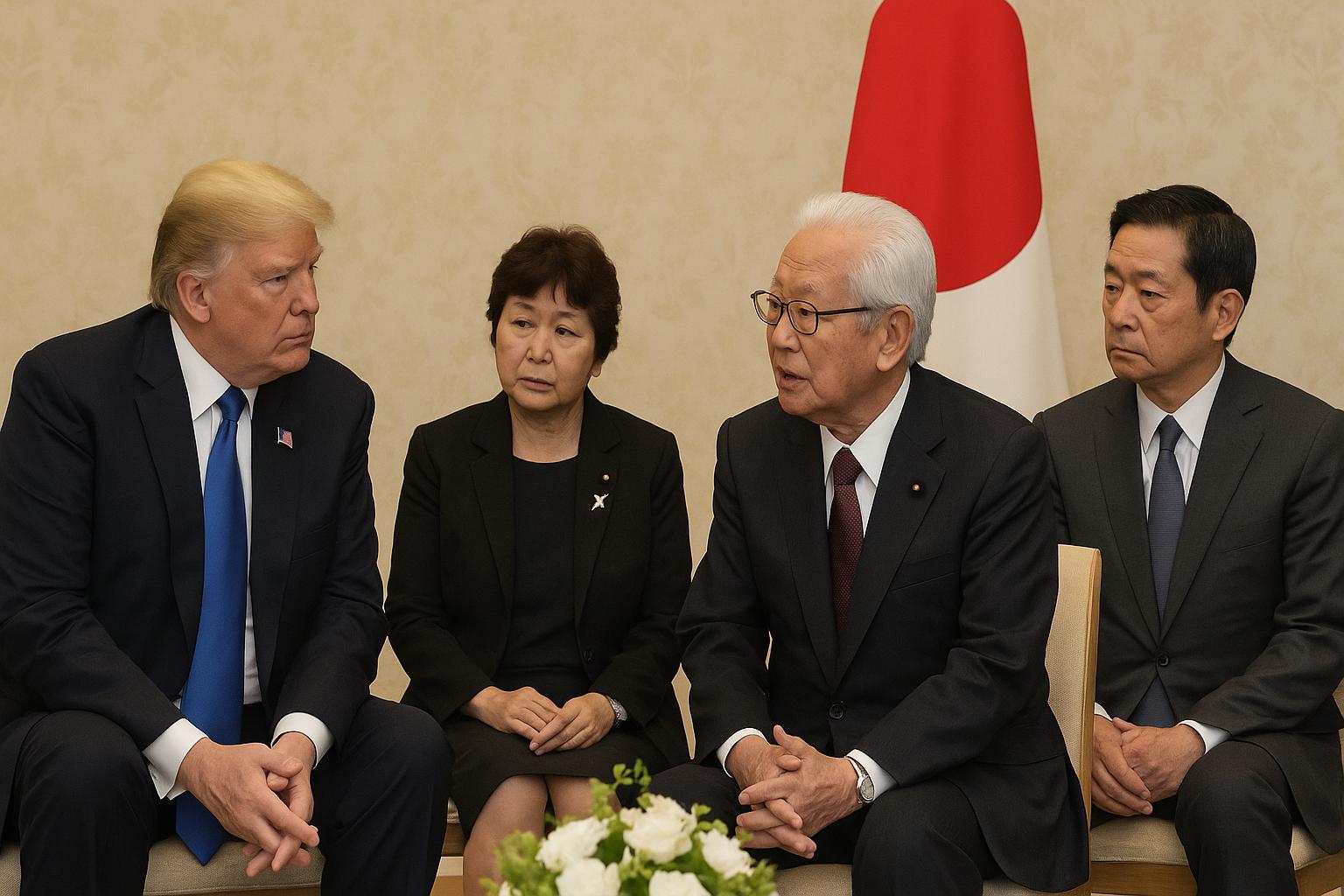
During his official visit to Japan on Tuesday, United States President Donald Trump met with the families of Japanese citizens who were abducted by North Korea several decades ago. The emotional meeting took place in Tokyo, where relatives of the victims shared their ongoing struggle for answers and appealed for international cooperation to bring their loved ones home. President Trump expressed deep sympathy and reaffirmed Washington’s full and unwavering support for Japan’s efforts to resolve the long-standing abduction issue.
The abductions, which occurred in the late 1970s and early 1980s, have remained one of the most sensitive and unresolved human rights concerns in Japan’s postwar history. Dozens of Japanese citizens were reportedly taken by North Korean agents, allegedly to train spies in Japanese language and culture. Although Pyongyang admitted in 2002 to kidnapping thirteen Japanese nationals, it claimed that only five had returned alive, while the others had died. Japan has consistently rejected those explanations, maintaining that several of the missing citizens may still be alive in North Korea.
President Trump’s engagement with the victims’ families underscores the humanitarian and diplomatic dimensions of this decades-long issue. He assured the families that the United States stands firmly alongside Japan in seeking truth and justice. His remarks emphasized the shared values of both nations and the importance of accountability in addressing human rights violations. The meeting offered renewed visibility to the families’ plight and reinforced Washington’s commitment to advocating for their cause on the international stage.
This encounter also carried significant geopolitical weight, as it came just before President Trump’s scheduled travel to South Korea — a critical leg of his Asia tour — and amid growing speculation about potential future dialogue with North Korean leader Kim Jong Un. The timing of the meeting reflected a broader diplomatic strategy, signaling that human rights concerns remain an integral part of the United States’ policy toward Pyongyang, even as broader discussions about denuclearization and security continue.
Japanese Prime Minister Fumio Kishida’s administration has consistently pressed North Korea for a full accounting of all abducted citizens. Tokyo considers the resolution of the abduction cases a core national priority, one that symbolizes Japan’s determination to defend its citizens and uphold international law. President Trump’s reaffirmation of support adds a layer of diplomatic pressure on Pyongyang, reminding the regime that these unresolved cases continue to affect its relations not only with Japan but also with the broader international community.
For the families, the meeting brought renewed hope that their stories are being heard at the highest levels of government. Many of them have campaigned tirelessly for decades, holding rallies, speaking at international forums, and appealing to global leaders. Their determination has helped keep the issue alive in public consciousness, even as direct progress with North Korea has stalled in recent years.
President Trump’s statements during the meeting were both empathetic and resolute. He expressed admiration for the families’ strength and promised that the United States would continue to support Japan’s calls for truth, transparency, and justice. He described the abductions as a “deeply tragic chapter” that demands closure and reaffirmed that the United States would continue to raise the matter in its diplomatic engagements with North Korea.
As tensions in the region persist, the issue of abducted citizens remains a reminder that diplomacy must extend beyond security and nuclear concerns to encompass human stories and moral obligations. For Japan, the abduction cases continue to represent a national wound, a symbol of loss and resilience. For the United States, reaffirming solidarity on this matter reinforces its image as a partner committed to justice and human rights in Asia.
While no immediate breakthroughs emerged from the meeting, the symbolism of the encounter carried powerful diplomatic weight. It demonstrated to both allies and adversaries that humanitarian concerns continue to shape international relations in the Asia-Pacific region. For the families, President Trump’s visit was not merely a gesture of support but a reaffirmation that their decades-long fight for answers remains part of the global conversation.
In the complex landscape of international diplomacy, such moments of empathy and commitment help sustain long-term efforts toward accountability and reconciliation. The families left the meeting with renewed determination, hopeful that continued advocacy from global partners will bring them closer to discovering the fate of their loved ones and, ultimately, achieving long-awaited justice.