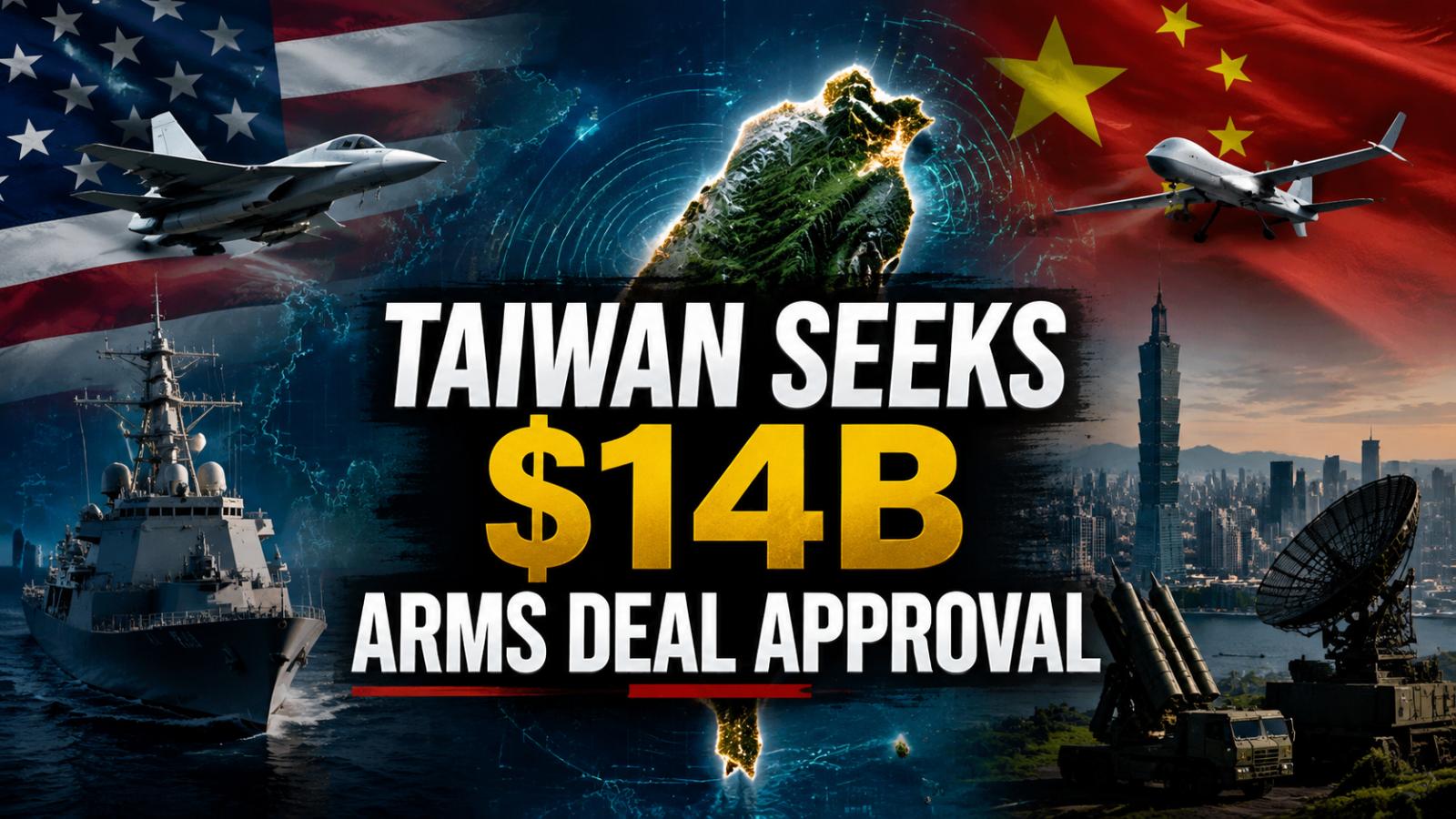
Taiwan has renewed its push for approval of a proposed $14 billion defense package from the United States, arguing that its security environment has become increasingly unstable. The request comes at a time when military activity and political messaging across the Taiwan Strait have intensified, placing additional pressure on Washington’s strategic decision-making.
US officials are currently evaluating the proposal through standard defense export channels, weighing supply constraints, regional stability concerns, and broader Indo-Pacific commitments. The outcome is expected to reflect not just bilateral priorities but also the wider balance of deterrence in Asia.
Taipei frames procurement as deterrence, not escalation
President Lai Ching-te has positioned the request as a preventive security measure rather than a move toward confrontation. The focus, according to Taiwan’s leadership, is on strengthening defensive capacity to ensure continuity of governance, infrastructure protection, and maritime security.
The planned procurement reportedly includes air defense systems, surveillance upgrades, and unmanned platforms aimed at improving rapid response capability. Taiwan is also increasing emphasis on domestic production to reduce dependency on external supply chains over time.
China signals strong opposition to expanded defense ties
Beijing has reacted sharply to the renewed arms request, reiterating its long-standing position that external military cooperation with Taiwan undermines regional stability. Chinese officials have warned against what they describe as steps that could encourage separatist sentiment.
The messaging reflects a broader pattern of pressure that has included diplomatic objections, military drills, and increased presence in surrounding waters. The response underscores how defense procurement decisions in Taipei are closely linked to broader cross-strait tensions.
Strategic balancing test for Washington
For the United States, the request places another layer of complexity on its Indo-Pacific strategy. While Washington maintains informal defense commitments to Taiwan under existing legal frameworks, it must also balance global supply limitations and ongoing security obligations in other regions.
Lawmakers and defense officials are expected to assess the package in terms of readiness impact, deterrence value, and escalation risk management. The decision is likely to be viewed as a signal of broader US posture toward China in the region.
Regional security environment continues to tighten
Beyond the immediate US–Taiwan–China dynamic, other regional actors are watching closely. Maritime disputes, airspace activity, and naval deployments across the Indo-Pacific have already contributed to a more crowded security environment.
Taiwan’s latest request reflects a wider trend of military modernization across the region, where states are increasing defense budgets and accelerating procurement cycles in response to evolving threat perceptions.