Cross-border military strikes reported
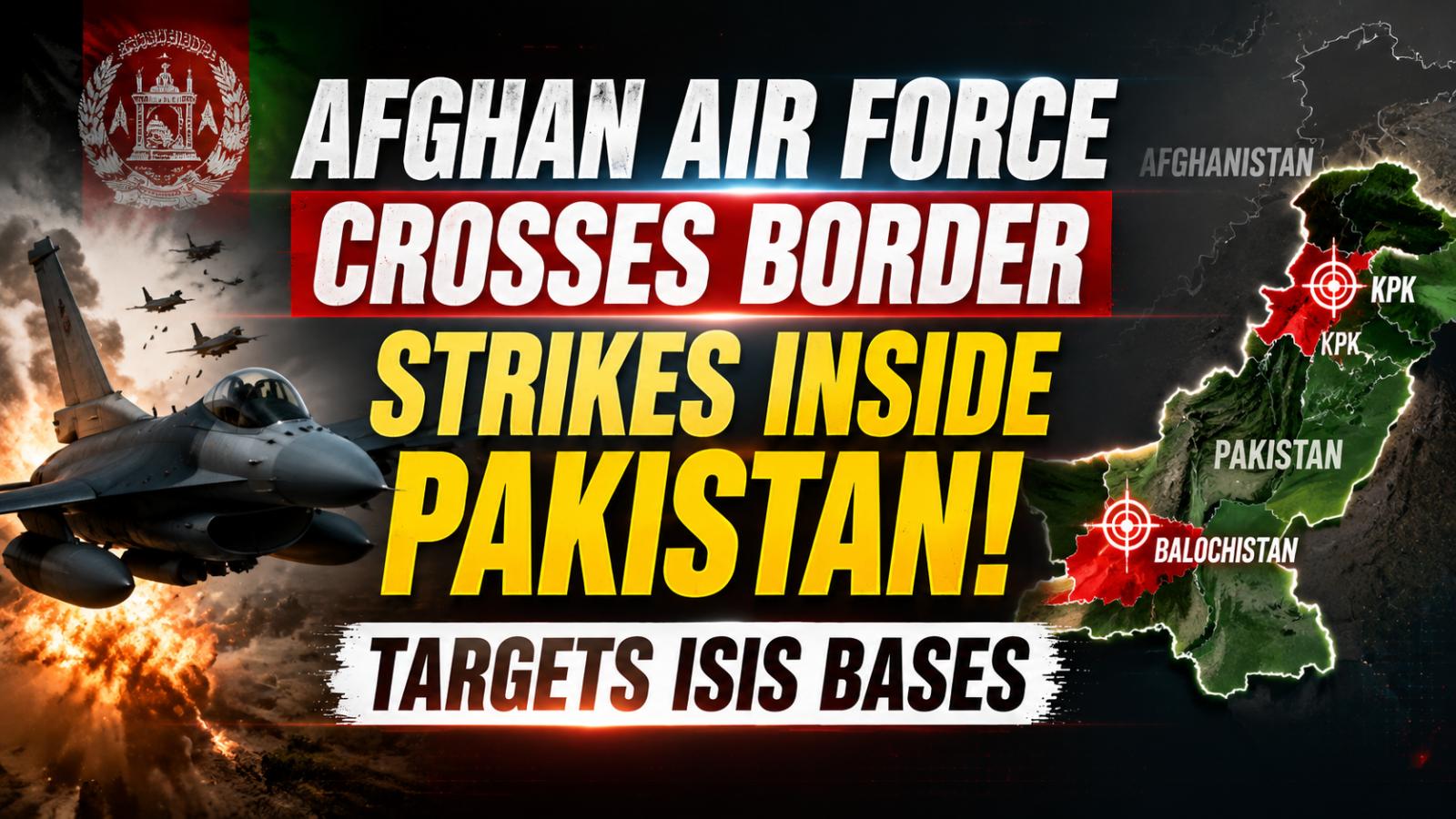
The Afghan Air Force has carried out airstrikes inside Pakistan, targeting what it described as ISIS-linked centres allegedly used to plan and coordinate attacks against civilians in Afghanistan. According to the Taliban-run Defence Ministry and reports cited by Tolo News, the strikes were aimed at dismantling operational hubs connected to cross-border militant activity.
The reported strikes took place in Pakistan’s Balochistan and Khyber Pakhtunkhwa provinces, regions that have long been associated with complex security challenges and militant movements. Afghan authorities claimed the targeted sites were being used to support terrorist planning operations that posed a direct threat to Afghan civilians and security forces. However, independent verification of the strikes and their outcomes has not been made available at this stage.
Rising regional security tensions
The development highlights continued volatility along the Afghanistan-Pakistan border, an area that has frequently witnessed security incidents involving militant groups, counterterrorism operations and cross-border allegations. Both countries have repeatedly accused each other of allowing militant elements to operate from within their territories, leading to periodic escalations in diplomatic and military tensions.
Afghan officials have maintained that the objective of the operation was to neutralize ISIS-linked infrastructure believed to be responsible for orchestrating attacks inside Afghanistan. The Defence Ministry has not provided detailed information regarding casualties or the extent of damage caused by the strikes.
Strategic implications for the region
Security analysts note that cross-border strikes of this nature reflect the evolving nature of counterterrorism operations in the region, where non-state actors continue to operate across loosely controlled border areas. The involvement of ISIS-linked groups adds another layer of complexity to an already fragile security environment in South Asia.
The situation also raises questions about regional coordination in counterterrorism efforts, as both Afghanistan and Pakistan continue to face internal and external pressures related to militant activity. While official responses from Pakistan have not yet been fully detailed, such incidents typically trigger diplomatic engagement and security assessments between the two countries.
Uncertainty over verification and response
At this stage, independent confirmation of the exact locations, scale, and impact of the reported strikes remains limited. As with many cross-border security incidents, competing narratives from involved parties make verification challenging. Further updates are expected as additional official statements emerge from both Afghan and Pakistani authorities.
The incident underscores the continuing instability in border regions and the persistent threat posed by militant networks operating across South Asia, keeping security cooperation and regional stability at the center of ongoing geopolitical concerns.