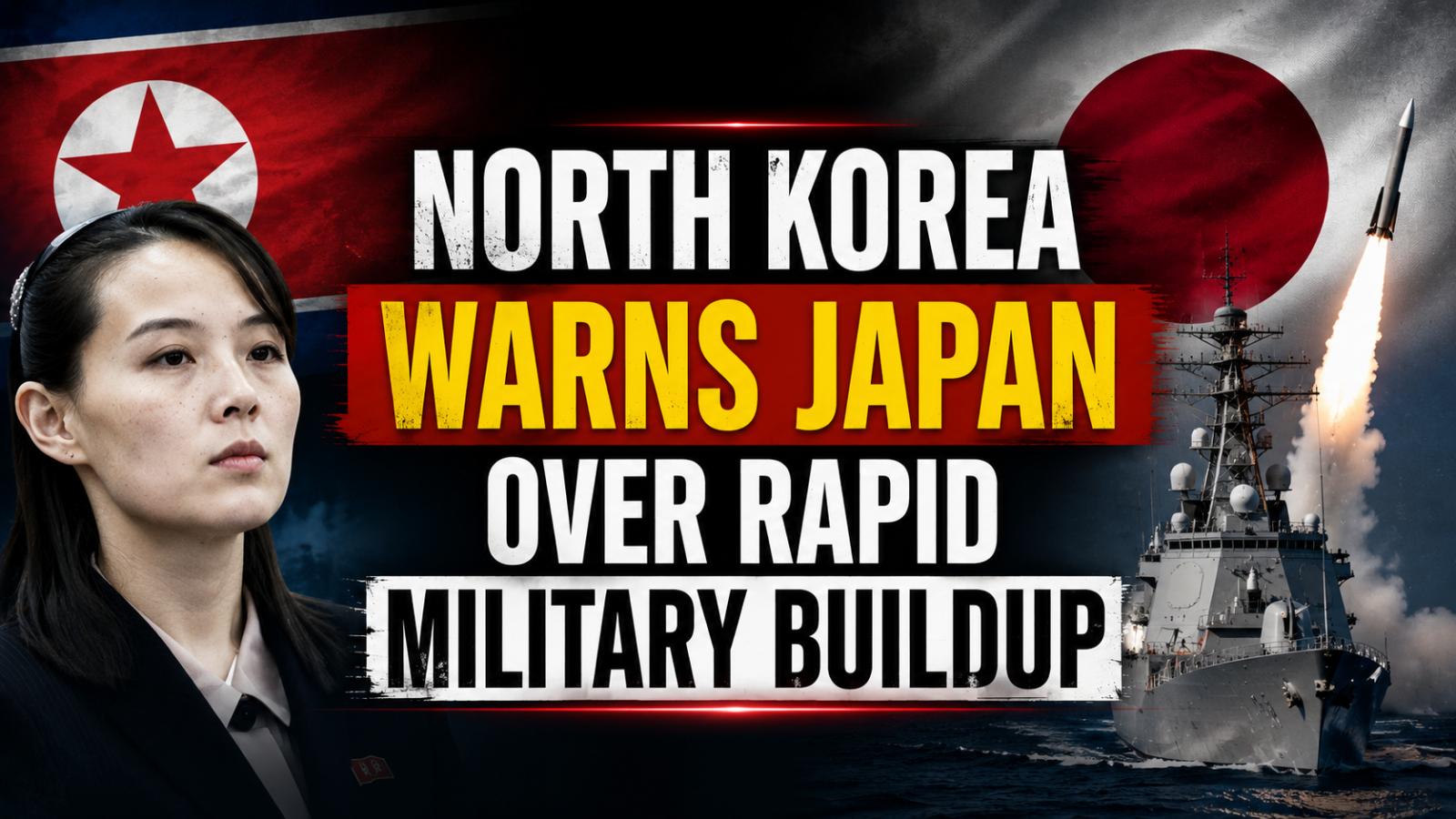
North Korea warns Japan that its growing long-range strike capability could trigger new military responses from Pyongyang. Kim Yo Jong cited Japan’s Tomahawk test, Pacific drills and higher defence spending, while Tokyo insisted that its military policy remains defensive.
North Korea Warns Japan Over Military Buildup
North Korea has accused Japan of transforming itself into a “war state” as Tokyo expands its military budget, acquires long-range weapons and strengthens security ties with the United States and other regional partners.
Kim Yo Jong, the influential sister of North Korean leader Kim Jong Un, issued the warning in a statement carried by the state-run Korean Central News Agency on Wednesday, August 5, 2026. She said North Korea’s leadership would prepare “additional military options” in response to Japan’s expanding strike capabilities.
Kim claimed that Japan was moving beyond a strictly defensive posture and developing the ability to conduct pre-emptive attacks and military operations outside its territory. She did not explain what measures Pyongyang might take, but her statement suggested that North Korea could use Japan’s defence expansion to justify further weapons development or missile demonstrations.
Japan Tomahawk Test Draws Pyongyang’s Anger
Kim specifically criticised Japan’s recent test launch of a United States-made Tomahawk cruise missile from the Aegis-equipped destroyer Chokai in the Pacific Ocean. She also cited Japanese participation in a US-led military exercise in the Philippines in May as evidence of a broader regional military strategy.
Japan’s Defence Ministry confirmed in March that modifications and crew training had given the Chokai the ability to launch Tomahawk missiles. The ministry said live-fire testing would confirm that the ship and its crew were ready for operational duties. Japan began receiving the missiles as part of a plan to strengthen its stand-off defence capability.
Tokyo plans to acquire hundreds of Tomahawks as it develops weapons capable of striking threats from greater distances. Japanese officials describe the programme as a counterstrike capability intended to stop an attack rather than launch an offensive war.
Kim Yo Jong Threatens Additional Military Options
Kim accused Washington of enabling Japan’s military expansion by supplying Tomahawk missiles, supporting ship modifications and assisting with testing. She argued that the growing range of Japanese weapons could place North Korea and other neighbouring countries within reach.
“We will never remain a passive onlooker,” Kim said, according to the KCNA statement. She warned that Japan’s actions could expose it to greater danger and said Pyongyang would make Tokyo regret its military choices.
The language represents one of Kim’s strongest recent warnings toward Japan. However, it does not confirm that North Korea has adopted a new military plan. Pyongyang frequently presents US, Japanese and South Korean security cooperation as a threat while using those activities to defend its own nuclear and missile programmes.
Japan Defends Higher Military Spending
Japan says its military expansion responds to a deteriorating security environment shaped by China’s growing forces, North Korea’s nuclear weapons and missile launches, and Russia’s military activity.
The Japanese government’s latest defence assessment identifies China as its greatest strategic challenge and calls for stronger long-range missile, drone and defence-production capabilities. Japan is undertaking its largest military expansion since the Second World War and has pushed defence-related expenditure toward 2% of gross domestic product.
Tokyo maintains that its Self-Defence Forces operate under Japan’s pacifist Constitution and international law. The government argues that stronger deterrence can prevent conflict by making an attack more costly.
Japan’s colonial rule over the Korean Peninsula from 1910 until 1945 continues to shape regional attitudes. North Korean statements regularly invoke that history when criticising Tokyo’s military policy. Still, the present dispute concerns more than historical memory: Japan is gaining weapons with substantially greater range, while North Korea continues to expand its missile and nuclear capabilities.
That combination increases the danger of an arms race in which each government describes its own buildup as defensive while treating its neighbour’s preparations as evidence of aggressive intent.