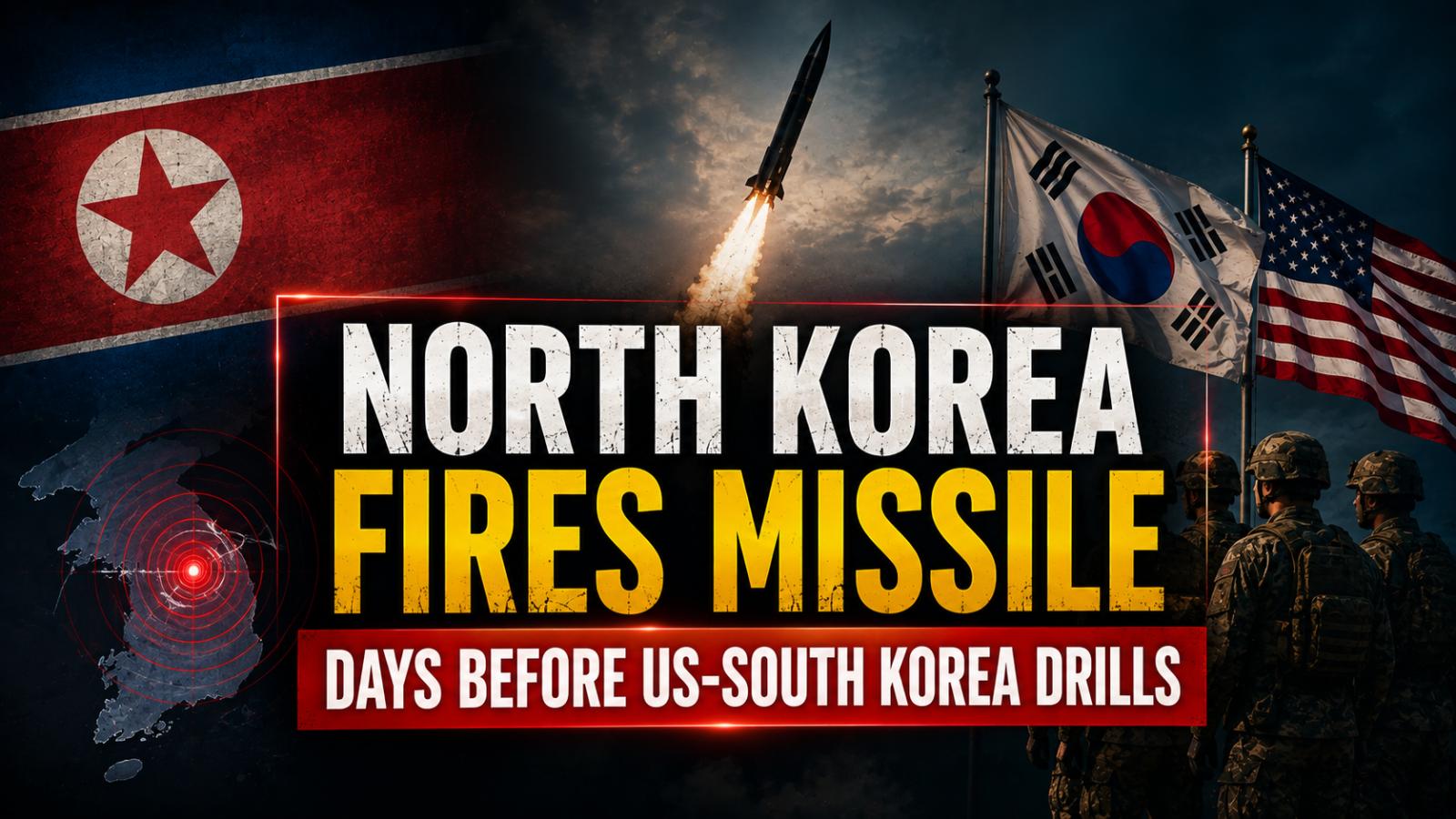
North Korea fired a ballistic missile from its eastern Wonsan area early Wednesday, sending it more than 700 kilometres toward waters off the Korean Peninsula just days before major US-South Korea military exercises. The launch has renewed regional tensions, with Seoul and Tokyo condemning the test while Washington said it posed no immediate threat to US personnel or allies.
Wonsan launch sends missile more than 700 km
South Korea's Joint Chiefs of Staff detected the launch from the Wonsan area at around 6 a.m. local time on August 12. The ballistic missile travelled more than 700 kilometres before falling into waters off North Korea's east coast, according to South Korean authorities.
Japan also detected the launch and said the suspected ballistic missile had already fallen. Tokyo lodged a protest against Pyongyang, while South Korea's national security officials convened an emergency meeting to assess the situation. The US Indo-Pacific Command said it was consulting closely with South Korea and Japan.
The exact missile type had not been publicly confirmed in the initial assessments. That distinction matters because speculation that it was hypersonic or submarine-launched should not be reported as fact until military authorities complete their analysis.
US Korea drills begin days after missile test
The timing has drawn particular attention because the annual Ulchi Freedom Shield exercise is scheduled for August 17-27. The drills are intended to improve the readiness of US and South Korean forces for possible security threats on the Korean Peninsula.
Around 18,000 South Korean personnel are expected to participate alongside US forces. Approximately 28,500 American troops are stationed in South Korea under the longstanding security alliance.
Pyongyang has repeatedly condemned US-South Korea exercises as rehearsals for an invasion, while Seoul and Washington maintain that the training is defensive. North Korea has previously conducted missile tests around major allied exercises, making Wednesday's launch significant as the latest Ulchi Freedom Shield approaches.
Seoul warning follows latest North Korea missile
South Korea described the launch as another provocative act and urged Pyongyang to stop missile activities that violate UN Security Council resolutions.
The latest launch is reportedly North Korea's 11th suspected missile test of 2026, highlighting the continuing pace of its weapons programme. Japan's own defence assessment says North Korea continues to develop ballistic missiles designed to fly on irregular trajectories as well as weapons Pyongyang describes as hypersonic missiles.
Military planners are also studying lessons from North Korea's growing defence relationship with Russia and the battlefield experience reportedly gained by North Korean personnel connected to the Ukraine war.
Japan alert adds to regional security concerns
Japan has also hardened its response to North Korea's expanding missile capabilities. Tokyo has increased defence spending and is strengthening air and missile capabilities as security concerns grow around North Korea, China and Russia.
North Korea, meanwhile, has accused Japan of using regional threats to justify military expansion.
Wednesday's launch does not establish that Pyongyang intends to escalate further during the upcoming exercises. However, its timing ensures that the drills will begin under heightened scrutiny. With Seoul, Washington and Tokyo watching closely, any additional missile activity could further increase tensions across Northeast Asia.