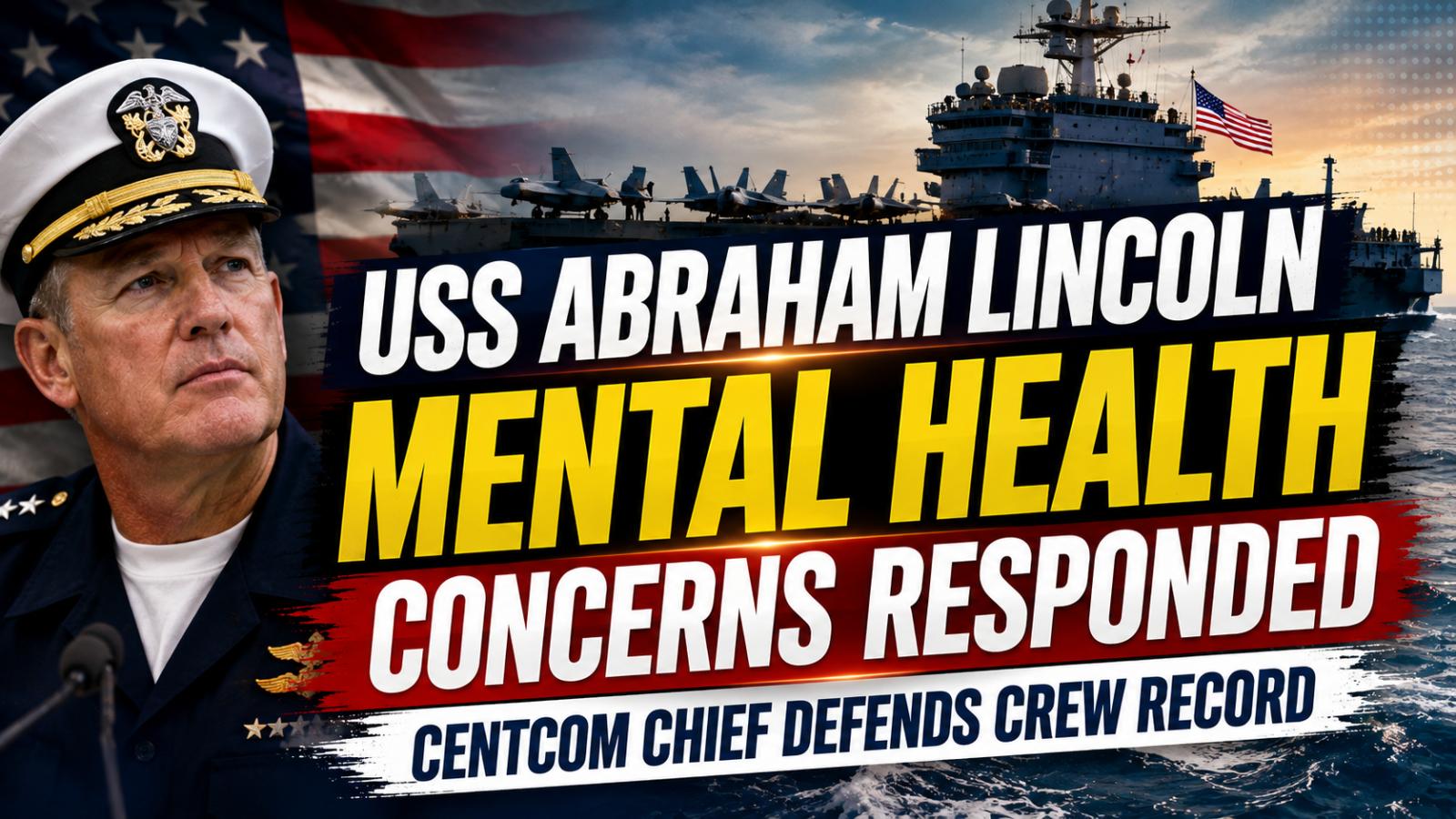
USS Abraham Lincoln mental health concerns are drawing scrutiny after its unusually long deployment, prompting CENTCOM commander Adm. Brad Cooper to defend the crew's resilience. Cooper said the carrier has among the Navy's lowest number of reported mental health cases while acknowledging the strain of prolonged service at sea.
CENTCOM response addresses mental health concerns
Cooper spoke after visiting the USS Abraham Lincoln during a regional tour of the Middle East. He described his time aboard the aircraft carrier as “awe-inspiring” and praised sailors and Marines for their performance during an exceptionally demanding deployment.
Addressing questions about crew wellbeing, Cooper said the Lincoln currently has among the lowest number of mental health-related cases across the Navy's 11 active aircraft carriers. However, he did not suggest that conditions were perfect, acknowledging that extended periods at sea are difficult and that service members respond differently to stress.
Cooper also praised the carrier's leadership for treating mental health and crew resilience as priorities. His comments represent a more nuanced response than simply dismissing concerns surrounding the ship.
Long deployment puts carrier crew under scrutiny
The controversy centers on the extraordinary length of the Lincoln's deployment and conditions experienced by its roughly 5,000 sailors and Marines.
The carrier departed San Diego in November 2025 and was later redirected to the Middle East as the conflict with Iran intensified. It has spent more than 200 consecutive days at sea, setting a modern record for a US aircraft carrier.
Families and sailors have raised concerns about food and water supplies, plumbing problems, disrupted mail, long working hours and limited opportunities for rest. Stars and Stripes reported that relatives described shortages and the strain created by the absence of regular port calls.
Reports have also raised allegations of serious mental health incidents involving sailors. Those claims have prompted lawmakers to demand greater transparency about conditions aboard the carrier. The Navy and CENTCOM have disputed portrayals suggesting a widespread crisis.
Navy concerns prompt additional support
The Navy has taken steps to address crew wellbeing while defending the carrier's operational record.
Acting Navy Secretary Hung Cao said additional mental health support would be sent to the Lincoln and confirmed that the ship would return home as part of a carrier rotation. Navy officials have emphasized that the crew operated under demanding combat conditions while completing thousands of aircraft sorties.
The deployment has included about 200 days in a combat zone. The carrier's air wing has flown more than 10,000 sorties and expended roughly 1.5 million pounds of ordnance, according to military figures.
Those operational achievements do not resolve the questions about whether such lengthy deployments are sustainable. Military experts have warned that prolonged periods at sea can affect morale, maintenance and readiness even when reported clinical mental health cases remain comparatively low.
Trump rejects criticism over Lincoln deployment
President Donald Trump has taken a more dismissive position on concerns about the deployment's length.
Asked on August 14 whether the Lincoln had been deployed too long, Trump responded that it was “not nearly long enough.” He also rejected the suggestion that families were concerned about conditions aboard the carrier.
Trump nevertheless confirmed that the Lincoln would soon leave the region and be replaced by another aircraft carrier. The rotation comes as the Navy manages competing demands across the Middle East and Indo-Pacific.
The dispute now extends beyond the number of formally recorded mental health cases. It raises a broader question about how long sailors can remain deployed in high-intensity operations without adequate opportunities for rest and recovery.
Cooper's comments provide important context by showing that the Lincoln's reported mental health caseload compares favorably with other carriers. But comparatively low case numbers do not automatically invalidate sailors' and families' concerns about living conditions, fatigue or morale.
With the Lincoln preparing to return home, attention will increasingly turn to what the Navy learns from one of the longest and most demanding carrier deployments in recent history—and whether those lessons change how future wartime deployments are managed.