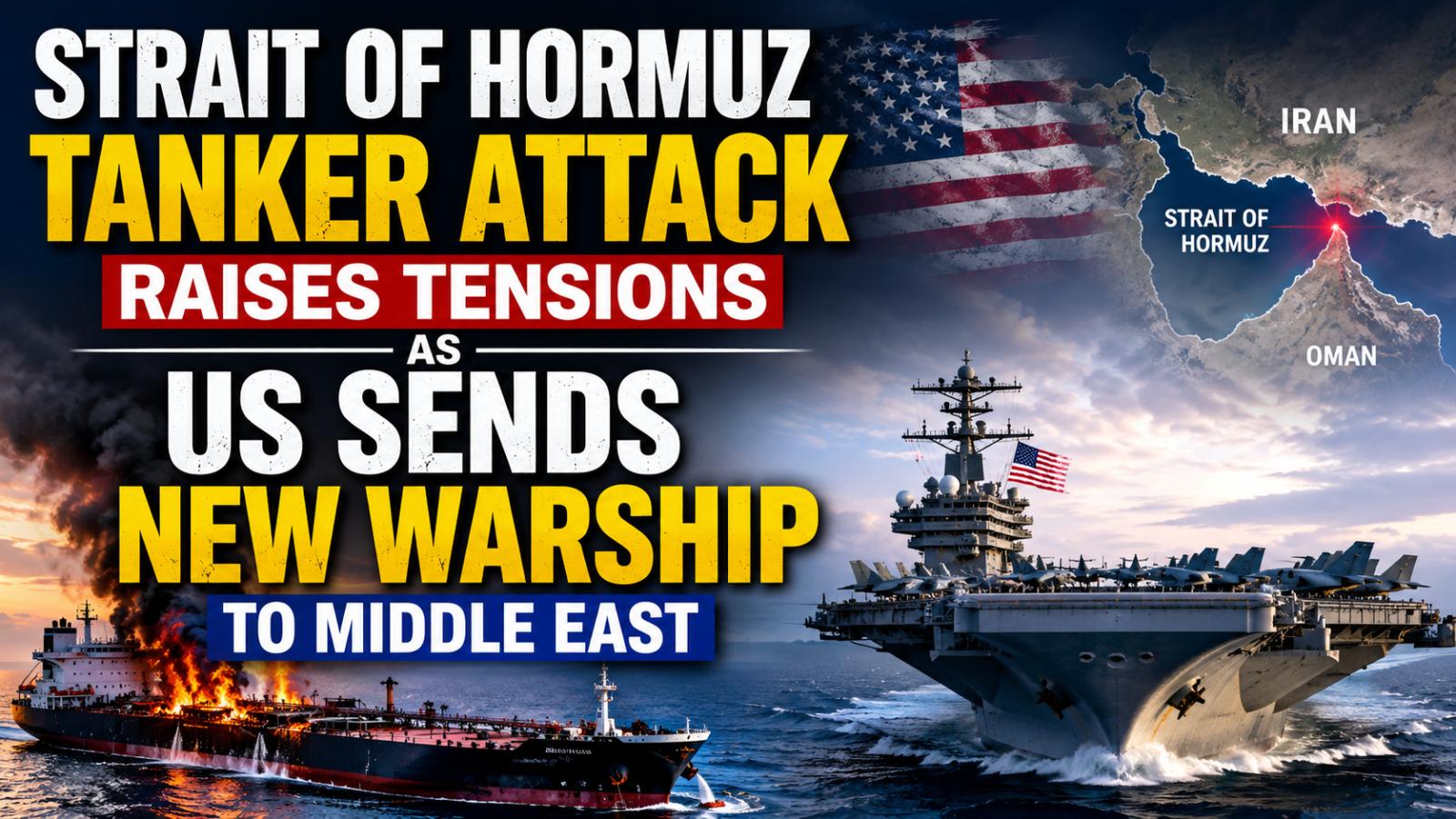
Tensions in the Strait of Hormuz have intensified after another commercial tanker was struck while moving through the strategic waterway, as the United States prepares to deploy an additional aircraft carrier strike group to the Middle East.
The latest incident has added to concerns over the safety of commercial shipping between Iran and Oman. The vessel reportedly caught fire after being hit, but the crew was said to be safe. Responsibility for the attack has not been independently confirmed.
The Strait of Hormuz remains one of the world’s most important energy routes, carrying a significant share of global crude oil and liquefied natural gas supplies. Any disruption in the area can quickly affect shipping costs, insurance rates and international energy markets.
Commercial Shipping Faces Growing Risks
Commercial vessels using the Strait continue to operate under heightened security concerns because of missiles, drones and other military activity in the region.
Shipping traffic has already been disrupted, with fewer vessels crossing the waterway compared with normal levels. Some shipping companies have adjusted routes, delayed sailings or increased security precautions because of the growing threat.
The latest tanker strike has increased fears that the situation could worsen if attacks continue or military forces expand their presence.
US Sends Additional Aircraft Carrier to Region
The United States is preparing to send the USS Theodore Roosevelt Carrier Strike Group to the Middle East as part of a planned military rotation.
The deployment is expected to strengthen the US naval presence in the region and provide additional air, surveillance and defensive capabilities.
The carrier group will eventually relieve another US carrier already operating in the area. The move signals Washington’s intention to maintain a strong military presence while tensions with Iran remain high.
Aircraft carriers allow the US to deploy fighter jets and other military resources from international waters without relying entirely on land-based facilities.
Iran Increases Pressure on Shipping
Iran has also tightened its position on commercial vessels crossing the Strait of Hormuz.
Authorities have warned that ships accused of violating navigation requirements could face fines, detention or other penalties.
Tehran has argued that vessels using the waterway should follow its transit rules and security procedures. These measures have added another layer of uncertainty for shipping companies already dealing with military threats and rising operating costs.
The combination of restrictions, attacks and naval activity has made the Strait increasingly difficult for commercial operators to navigate.
Diplomatic Efforts Continue
Despite rising tensions, regional governments are continuing diplomatic efforts aimed at restoring safer commercial traffic.
Talks have focused on navigation rules, maritime security and measures that could allow shipping to move more freely through the Strait.
However, the latest attack shows how fragile the situation remains.
Even if agreements are reached on shipping procedures, commercial vessels may continue to face risks unless broader political and military tensions are reduced.
Global Energy Markets Watching Closely
The Strait of Hormuz is a critical route for international energy supplies. Any prolonged disruption could affect crude oil and natural gas exports from major Gulf producers.
Energy traders and shipping companies are closely monitoring developments because further attacks could push freight and insurance costs higher and create additional uncertainty for global oil prices.
With another US carrier preparing to enter the region and commercial shipping still facing serious risks, the Strait of Hormuz remains a major geopolitical and energy flashpoint.