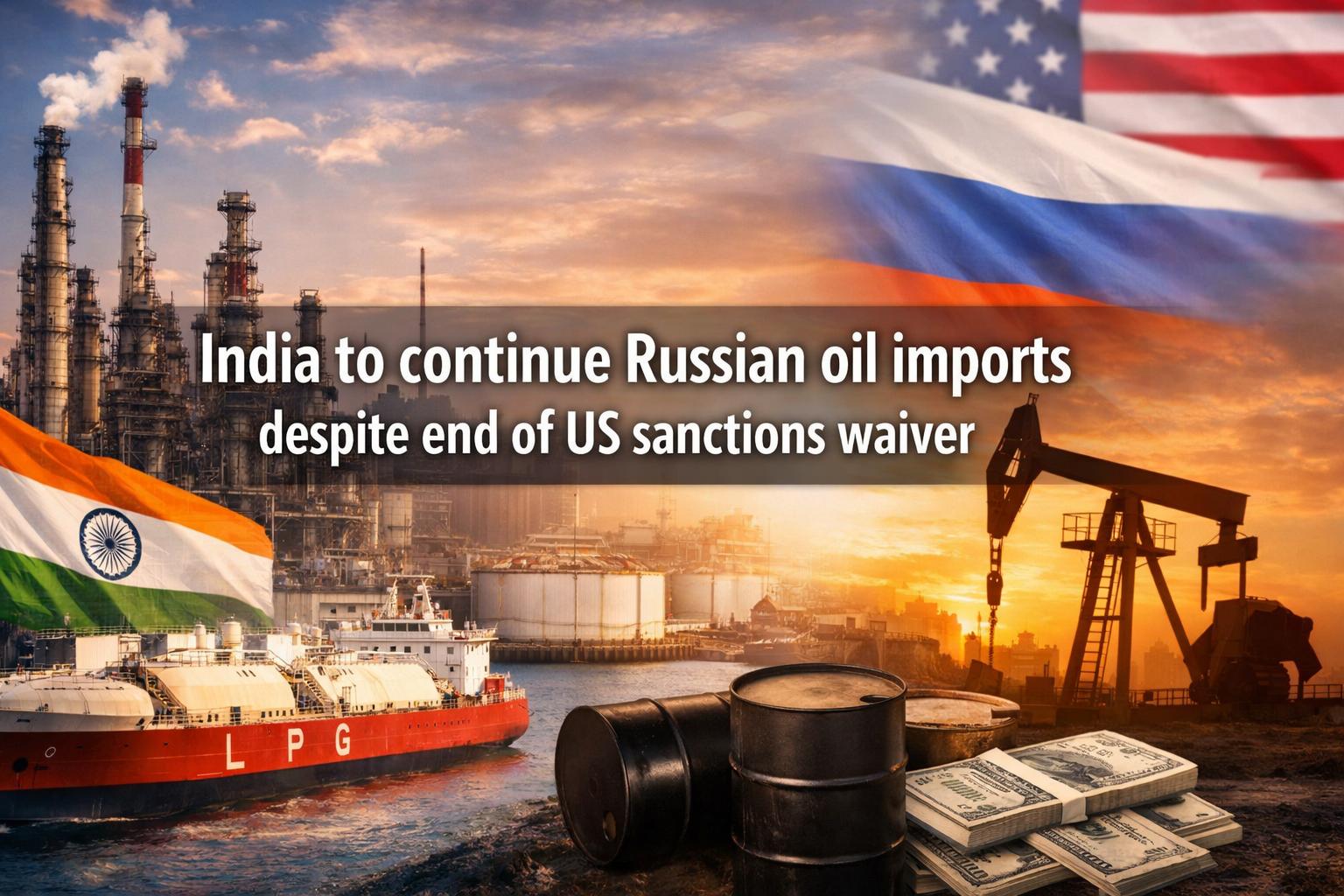
India is set to continue importing Russian crude oil and Liquefied Petroleum Gas (LPG) even after the expiration of the 30-day sanctions waiver granted by the United States on April 11, 2026. Officials indicated that the country’s energy import strategy is guided by sovereign priorities and commercial considerations rather than external sanctions frameworks. Indian refineries are expected to maintain their existing procurement approach by sourcing supplies from non-sanctioned entities and compliant shipping channels.
The decision comes as the United States signaled a tougher stance on energy trade involving sanctioned nations, including Iran, while allowing the waiver related to Russian oil to lapse without renewal. Despite this, Indian authorities have reiterated that such policy shifts do not dictate domestic energy planning. Officials noted that efforts are ongoing to secure additional LPG supplies from Russia, alongside continued crude imports under permissible conditions.
Recent data highlights the significance of Russian crude in India’s energy mix. In March 2026, imports from Russia reached between 1.98 and 2.06 million barrels per day, marking the highest level since mid-2023. Russian oil accounted for nearly 36 percent of India’s total crude imports over the past two fiscal years, reflecting its growing role in meeting domestic demand. India also emerged as one of the largest global buyers of Russian fossil fuels during this period.
At the same time, Indian refineries are diversifying their sourcing strategy. Contracts have been secured for approximately 800,000 tonnes of LPG from suppliers including Australia, Russia, and the United States. Industry executives indicate that the US is likely to remain a key LPG supplier until supplies from West Asia stabilize amid ongoing geopolitical tensions.
Government representatives have emphasized that India’s energy procurement is increasingly diversified, with crude oil sourced from over 40 countries and LNG imports expanding significantly in recent years. This multi-source approach aims to ensure energy security while maintaining flexibility in a volatile global market.