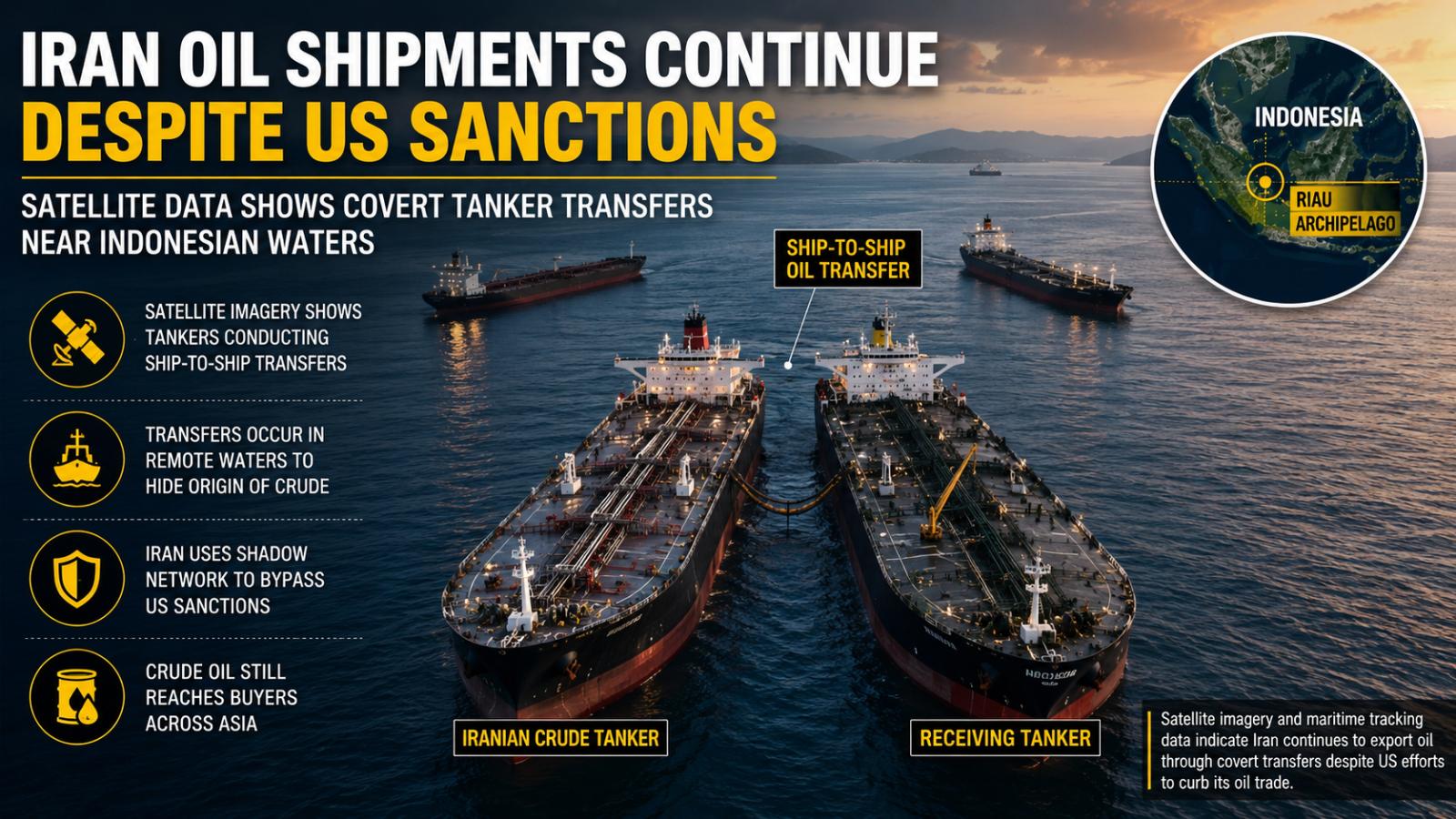
Iran oil shipments are continuing despite tighter U.S. sanctions, with satellite imagery and maritime tracking data suggesting Tehran is still moving crude through covert sea transfers.
The findings point to an active shadow shipping network that allows Iranian oil to reach buyers in Asia even as Washington works to restrict crude exports from the Persian Gulf.
Satellite Data Points To Covert Tanker Transfers
Maritime tracking records and satellite images reportedly show several tankers conducting ship-to-ship oil transfers near Indonesia’s Riau Archipelago, a busy maritime zone often linked to opaque crude trading.
Analysts say the vessels appeared side by side in patterns consistent with offshore oil transfers. In such operations, crude is moved from one tanker to another before continuing toward buyers under changed shipping records or ownership details.
Why The Riau Archipelago Matters
The Riau Archipelago sits near major Asian shipping routes, making it a strategic location for tankers seeking to avoid scrutiny. Its heavy maritime traffic can make suspicious transfers harder to track.
Energy and shipping experts say these routes are part of a wider system involving intermediaries, offshore cargo swaps and complex ownership structures designed to obscure the origin of sanctioned crude.
US Pressure Faces Global Enforcement Challenge
The United States has sought to tighten restrictions on Iran’s oil sector to limit Tehran’s export revenue. But the continued movement of Iranian crude shows how difficult it is to enforce sanctions across international waters.
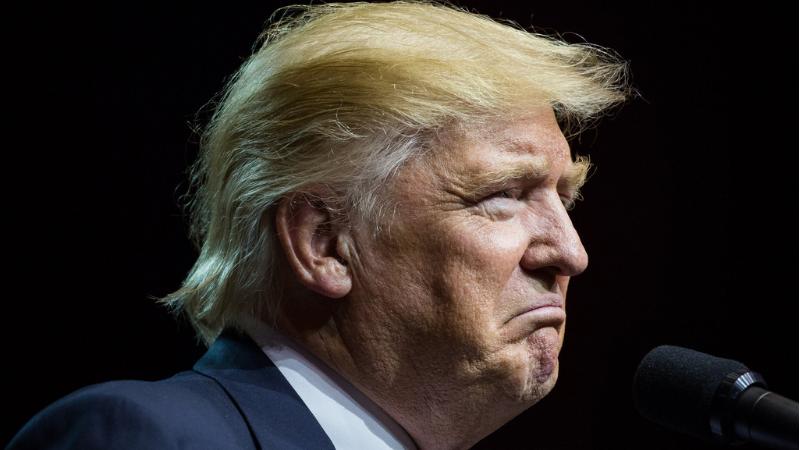
The continued movement of Iranian crude also comes ahead of Trump’s Beijing visit, where Iran-China oil trade is expected to be a major discussion point. Read full coverage on Trump Heads to Beijing as Iran‑China Oil Trade Tests US Pressure.

For global energy markets, the data highlights a larger reality: even aggressive sanctions can struggle against shadow fleets, remote sea transfers and buyers willing to keep Iranian oil flowing.